
by IAN ROSE
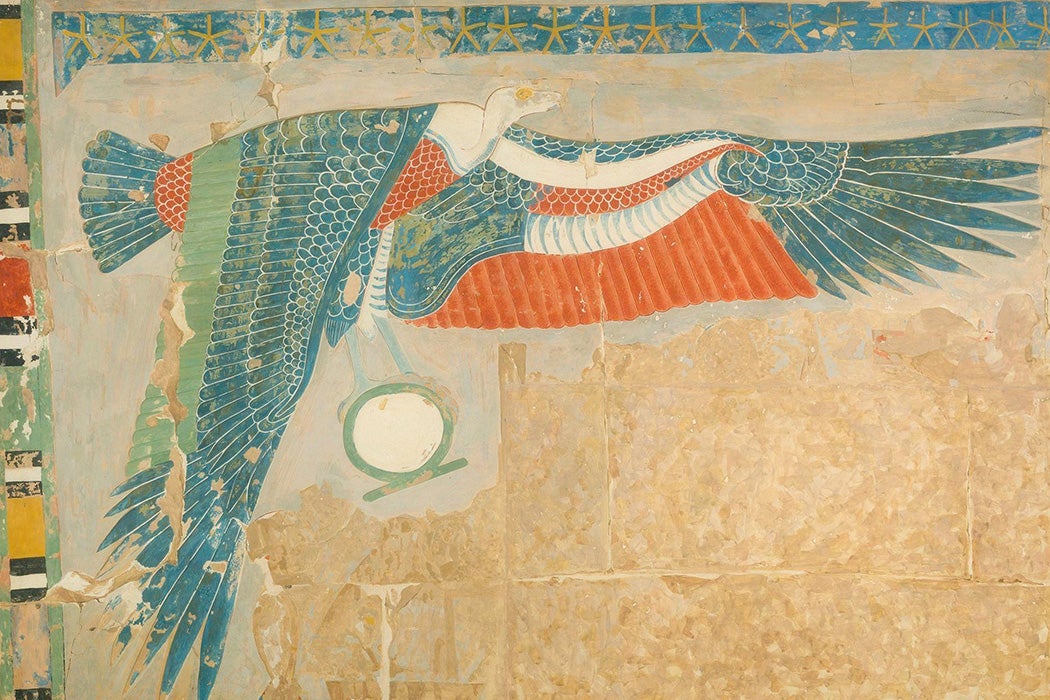
By turns worshipped and reviled, the bird frequently associated with death has appeared in art works for thousands of years. Here’s a short history.
Vultures may have the worst marketing in the entire avian world. In reality, they’re both useful and majestic, practical and beautiful, and yet, those are rarely the adjectives anyone first thinks of when they hear the word “vulture.”
Twenty-three species of vulture soar over five continents, and include some of the largest flying birds on Earth. They perform a vital role in the ecosystems they inhabit, cleaning up carcasses that would otherwise continue to rot, thereby reducing the spread of deadly diseases like anthrax and rabies. Nevertheless, their association with death marks them in the popular imagination as the very antithesis of cleanliness. They are regarded as dirty, greedy, untrustworthy creatures, an image that has largely followed them through thousands of years of art. There are other ways to see and depict the vulture, as there are other ways to consider death; indeed, how a society chooses to represent the bird says as much about the artist and culture as it does the subject.
Vultures, With Us From the Start
Vultures were intimately involved in some of the world’s oldest known works of art and craft, with creative uses of the animal’s body parts as tools in the ancient world. Found in the Hohle Fels cave in Southern Germany, a flute made from the bone of a griffon vulture dates back at least 35,000 years; its sophistication—five finger holes and a V-shaped mouthpiece—suggest that the craft of vulture bone flutes is even older.
Probably the oldest surviving representation of a vulture may be from about 11,000 years ago near what is now Anatolia, Turkey. The so-called “Vulture Stone” of Göbekli Tepe shows an animal with its unmistakable beak shape and neck stripes, holding an object—perhaps an egg—in its claw, as if offering it to an unseen recipient. Some archeologists believe the site to be the premises of the oldest human-built temple in the world today.
Indigenous people have depicted vultures in their artwork and stories variously as messengers of the gods, ferrying dead souls to the afterlife, or malicious spirits that bring death with them.
To the Kamayurá people of Brazil, the Milky Way in the night sky was ruled by Urubutsin, a two-headed vulture god, who once greedily kept all the light in the universe to himself. Later defeated, he was forced to share that light, giving half to the sun and moon. Some researchers have found that around the first century AD, images of vultures were more common than those of other animals among discovered gold artifacts. In many early Mesoamerican cultures, the animal was also depicted on pottery and statues. Based in Central America, the Maya had a complicated spiritual relationship with the vulture. Though they associated it with death and misfortune, the Maya also honored the vulture as a sacred creature. That balance is more common in Indigenous belief systems across the world than in Western religions. Neither good nor evil, the vulture is simply a force of nature with both positive and negative aspects, and clearly an important one across cultures and traditions.
The Mother Goddess of Egypt
Nomads likely first traversed the area known today as Egypt at least 400,000 years ago, as evidenced by carved stone tools found throughout the region. It was not until about 6000 BCE that they started settling in these areas, including along the Nile River; much later these groups coalesced into the earliest form of the country we know as Egypt. From the beginning, the vulture was a central symbol of the region as well as of its new ruling class of pharaohs and of the important deity, the goddess Nekhbet.
Nekhbet was the patron first of the city of Nekheb, then of the whole of Upper Egypt; from the beginning, she was symbolized by the vulture. Vultures were associated with death, but also life and birth. In fact, the Egyptian word for mother was written with the vulture hieroglyph. Nekhbet’s priestesses performed their rites dressed in vulture feathers. The sacred association of vultures spread from Nekhbet to goddesses like Isis and Mut, interestingly always retaining its link with the feminine side of the Egyptian pantheon.
JSTOR Daily for more