
by MAINA WARURU
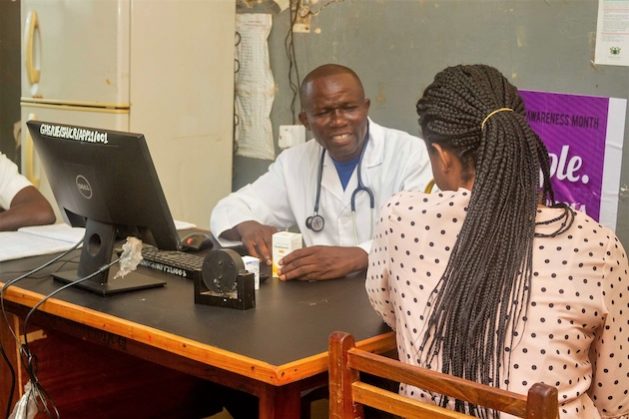
The World Health Organization’s African regional office and partners published over 25 peer-reviewed articles in scientific journals in 2023 as part of efforts to address the imbalance in global research and ensure that Africa was better represented in the production of health research academic literature, a new report shows.
The office, through its Universal Health Coverage, Communicable and Non-Communicable Diseases (UCN) Cluster, published on a range of health challenges and diseases, including the risk of zoonotic disease in countries ranging from Uganda, Malawi, Tanzania, Ghana, and Nigeria, investigating infectious and non-infectious diseases, and public health approaches to ease Africa’s disease burden.
This research is critical to the continent, says Africa’s Regional Director, Dr. Matshidiso Moeti.
“The WHO African Region arguably bears one of the greatest burdens of disease globally. This has always been exacerbated by poverty, which, in the decade prior to COVID-19, was on the decline. Now, however, these gains have been reversed, not only by COVID-19 but by a series of severe shocks during the 2020–2022 period,” said Dr. Matshidiso Moeti, the Regional Director for Africa,” she told IPS.
“Major threats include climate change, global instability, slowing economic growth, and conflict. This makes it ever more important that we at the WHO Regional Office for Africa focus on the central promise of the 2030 SDG agenda, which is to ‘leave no one behind’, using a health systems strengthening approach to move towards universal health coverage.”
According to the Ending Disease in Africa: Responding to Communicable and Noncommunicable Diseases 2023 reportreleased in April, WHO scientists were able to publish their work in reputable journals, including the Social Sciences and Humanities Open, supporting Africa’s efforts to raise her scientific research production, estimated at only 2 percent of the world’s total.
The works also found homes in open access journals, including America’s Public Library of Science (PLOS), where they are accessible for free by the scientific community and the general public.
Besides Africa-based scientific publications such as the Nigerian Journal of Parasitology, highlighting the need to support the role local publications can play in elevating African science and, by extension, helping address imbalances in global research.
“A country’s ability to create, acquire, translate, and apply scientific and technological advancements is a major determinant of its socioeconomic and industrial development. Many of Africa’s current and future health challenges can only be addressed by conducting research on population-based approaches towards effective disease prevention and control, which are then translated into policy and practice,” the report noted in introducing the work.
“Despite Africa’s disproportionate burden of disease, the region produced 0.7 percent of global research in 2000, 1.3 percent in 2014 and an estimated 2 percent more recently. In response, the UCN Cluster and partners published over 25 peer-reviewed articles in scientific journals in 2023 as part of efforts to address the imbalance in global research, and ensure regional representation in academic literature.”
Inter Press Service for more