
by MICHAEL HARRIOT
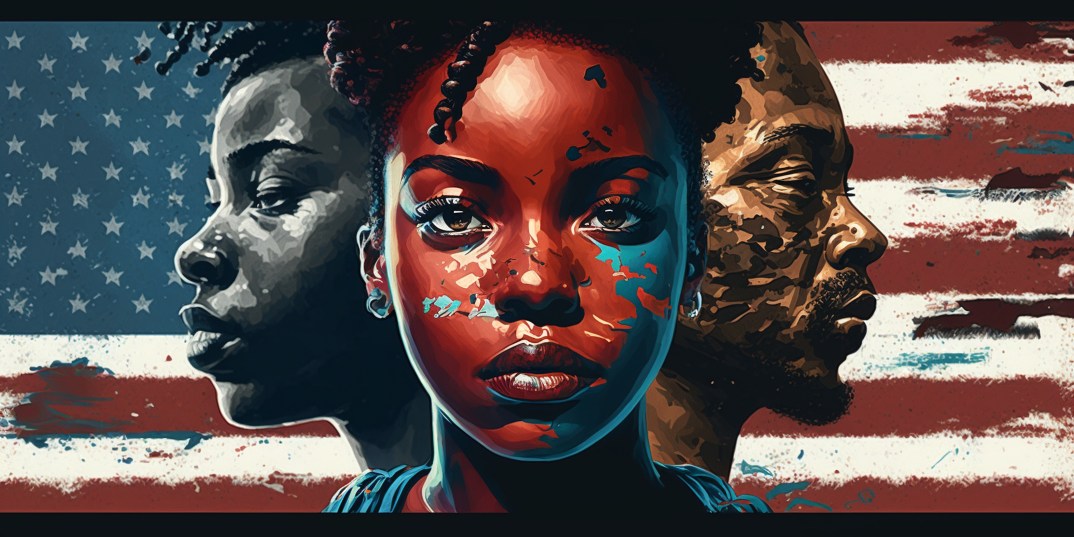
“We built this country.”
– Black people
If you survived the American education system’s social studies curriculum, you might believe that Black people have slowly but generously achieved full citizenship into a country that white people created with their own hearts, hands and imaginations. Even the suggestion that America does not belong to white people will elicit consternation or a chuckle. When confronted with the idea that their beloved nation couldn’t exist without Black people, Erasure-Americans might tacitly acknowledge the small part that slavery played in America’s origin story, but that’s it.
That is not it.
To close out Black History Month, we decided to dispel some of the mythology around white history by explaining exactly how Black people built this country.
5. All Lives Matter
Although the United States has a mediocre ranking when it comes to life expectancy and access to health care, America is still the most medically advanced country in the world because Black doctors and scientists made America great at medicine. Their innovations form the foundation of America’s public health system and medical research, and the way medicine is practiced around the world are Black creations. In fact, one could argue that four Black American entities may have saved more lives than all of the white doctors combined.
- How Charles Drew won World War II: Whether it is a car accident or cancer treatment, every two seconds, Dr. Charles Drew’s process for collecting and storing blood saves an American life. After creating blood banks and the Bloodmobile, Drew served as the head of the Blood for Britain Project and prepared the U.S. for World War II by developing a system to collect, package and store dried blood plasma. Not only did Drew’s innovation save the lives of Allied soldiers, British civilians and Nazi concentration camp survivors but, according to the surgeons general of the U.S. Army and Navy, Drew’s innovation was “the greatest lifesaver of World War II.”
- Henrietta Lacks saved the world: You likely know the story of how the nonconsensual harvesting of Henrietta Lacks’ cancer cells led to innumerable medical innovations, including hormone replacement, radiation treatment and many other drugs. Black scientists at Tuskeegee University created the process of mass-producing the HeLa cells used in Jonas Salk’s polio vaccine. The Nobel Prize-winning scientists at the Human Genome Project used that same process. We wouldn’t have a COVID vaccine without HeLa cells. Speaking of vaccines …
- The pro-vaxxer who saved America: If an enslaved man named Onesimus had not saved the city of Boston from smallpox by introducing inoculation to American medicine, George Washington’s immunization requirement wouldn’t have turned the American Revolution in the Continental Army’s favor. Onesimus’ gift directly led to the creation of the smallpox vaccine, which caused Thomas Jefferson to support America’s first vaccine mandate, which led to smallpox being declared the first infectious disease to be eradicated from earth. During its 3,000 years of existence, smallpox caused an estimated 400 million deaths.
- The first ride-or-dies: In 1965, a team of Black delivery drivers in Pittsburgh stopped taking vegetables to needy people in their community and, instead, began providing rides to medical appointments. After taking emergency medical classes, one member, Nancy Caroline, wrote a textbook on their training, which became the national standard for Emergency Medical Services. The availability of professional emergency medical care and transportation created a significant drop in mortality rates in nearly every statistical category — from heart disease and gunshot wounds to car accidents and pregnancies. And it’s all because Black people were America’s first paramedics.
4. Democracy
In 1932 [it’s actually 1832], 21-year-old minister Tunis Campbell founded an anti-colonialism society and vowed “never to leave this country until every slave was free on American soil.” Before the Civil War, he worked alongside abolitionist Frederick Douglass organizing conventions to create a “Black agenda.” He helped free slaves. He funded Black schools. You know what? You can just listen to “TheGrio Daily” episode about Campbell.
Even though Campbell’s name is not widely known, his words are. In 1868, after white terrorists expelled Campbell and 32 elected Black officials from the Georgia legislature, he traveled to Washington, D.C., to speak to lawmakers about protecting Black people’s right to vote. Sen. Charles Sumner was already working to change the Constitution by adding a list of things that people could not do to deprive freedmen of their voting rights. Campbell, however, knew that white people would always find a loophole. Instead, he suggested that they just needed to specify that voting rights “shall not be denied on the basis of race or former servitude.”
Cambell’s suggestion didn’t just form the basis of the 15th Amendment, according to historian Russell Duncan, the Supreme Court may have used his specific wording to declare poll taxes, racial gerrymandering and grandfather clauses unconstitutional. It gave Hawaiians the right to vote and ended the all-white primary, causing a shift in national politics. If you include the Civil Rights Movement and Black women’s contributions to white women’s fight for suffrage, one fact becomes abundantly clear.
America was not a democracy until Black people made it one.
3. Resistance
Grio for more