
by NORMAN FINKELSTEIN
Norman Finkelstein
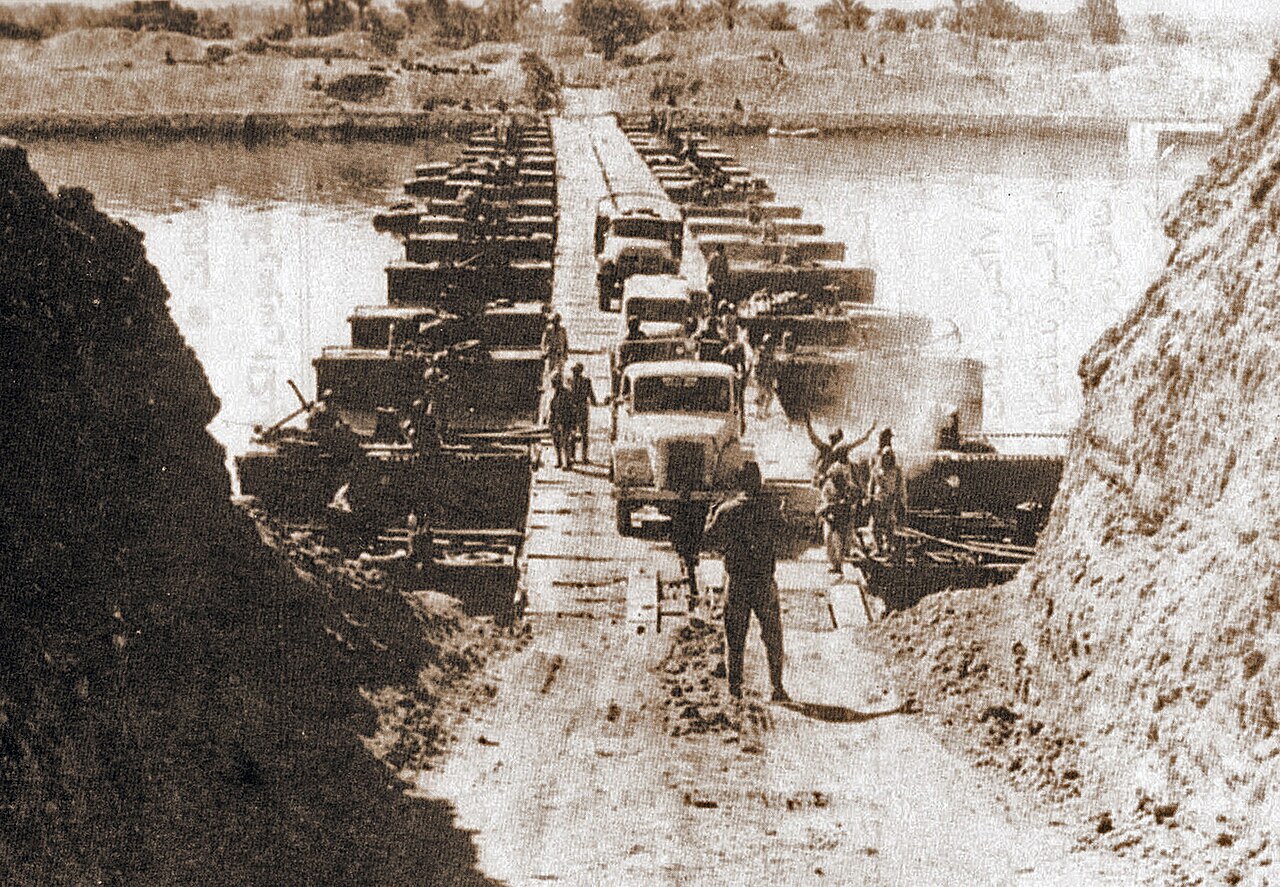
Okay, folks, for those of you who’ve just joined us, the protocol is going to be I’m going to speak on the background, the historical background to the current situation, and then Mouin Rabbani will speak on what’s currently unfolding or has unfolded since October 7th. There have been many comments along the lines of “this is the biggest shock to the Israeli political military establishment since the October 1973 war,” which was one day more than 50 years ago, a half-century. So what I want to do first of all, because I think many of you have no recollection or no knowledge of the historical background. So even references to the October 1973 war won’t mean much to folks here. And I want to fill in that background, focusing on those aspects of the historical context which are relevant to understanding what’s going on now. So, with your permission, I’m now going to go through that long history, but it’s going to be in a very compressed form and you’ll feel free if you have any questions to ask me about that history. I’m also going to say that on the whole, I won’t document any of my claims. However, if you have any doubts about the claims I make, then you should feel free, either to question me afterwards, or I can point you to sources which will provide, I think, adequate documentation. So just beware, I can’t for every point I make document it, otherwise we’ll never get to the current situation, or its context is the June 1967 war. In the course of the June 1967 war, Israel conquered several territories, they being the Syrian Golan Heights, the Egyptian Sinai, The West Bank in Gaza. And those came to be called or came to be denoted “the Occupied Territories” or sometimes the term, the abbreviation was used “the OPT” — the Occupied Palestinian Territories. Immediately after the June 1967 war, the UN General Assembly and then the UN Security Council — both bodies — focused on trying to establish terms for resolution of “the Israel-Arab conflict.” It wasn’t yet called “the Israeli-Palestinian conflict.” It was a broader dimension, Israel-Arab conflict and the basic terms were embodied in what came to be called or numbered U.N. Resolution 242. U.N. Resolution 242, which was passed by the Security Council unanimously, UN Resolution 242 had essentially two components:
Component number one was that in accordance with the principle laid out in the preamble to U.N. Resolution 242 that it is inadmissible to a conquered territory by war, Israel was obliged under international law to withdraw from the territories it conquered in the course of the war, during the June 1967 War, they being, to repeat myself, the Golan Heights, the West Bank, including East Jerusalem and Gaza, and the Egyptian Sinai.
The other component of U.N. Resolution 242, in accordance with the principle that every state in the UN system had a right to live in peace with its neighbors, the second component was that the Arab states had to recognize Israel’s right to exist as a state in the region, in a conformity with the principles of the U.N. Charter. That was the quid pro quo, full Israeli, full recognition of Israel’s right to exist as a state in the region. Now, when the resolution was passed, the U.N. appointed a special mediator named Gunnar Jarring to try to achieve some sort of settlement on the basis of those principles. From the beginning it was clear that the main protagonist in the drama would be Egypt. Egypt back then was the most formidable power in the region, and there was a recognition that there was no possibility of a settlement without Egyptian acquiescence, Egyptian agreement. Gunnar Jarring went on a peace mission, shuttled diplomacy back and forth between Egypt and Israel, Finally, after several abortive attempts, he resolved to put forth the terms to end the conflict. And he presented those terms to Egypt, and he presented those terms to Israel. The terms were in strict conformity with that U.N. Resolution 242. Egypt accepted the terms of the “Jarring Mission.” And then the ball was in the court of Israel. Egypt accepted not only to recognize Israel, but it accepted to sign a formal peace treaty with Israel. And now, as I said, the ball was in Israel’s court, and in a very dramatic moment, Israel replied, and now I will quote Israel, “Israel will not withdraw to the pre-June 1967 lines.” That means Israel refused to abide by one component of U.N. Resolution 242, namely, “it’s inadmissible to conquer territory by war,” and therefore Israel was obliged to relinquish control of all the territory it conquered in the course of the 1967 war.
Now, at that point, at that point in 1971, when Israel refused to abide by international law, and refused to abide by U.N. Resolution 242 in particular, the Secretary General of The U.N. — his name was U Thant. He was from Burma and he was a remarkably decent human being — probably in my opinion for what it’s worth — the only decent Secretary General the U.N. ever had. He was a very modest person, he was a Buddhist, but he was also remarkably so in his position, he was remarkably honest. He said right after the rejection by Israel of those terms for ending the conflict, he said, “there can be little doubt that if the present impasse in the search for a peaceful settlement persists, new fighting will break out sooner or later.”So, given Israel’s recalcitrance, its refusal to abide by international law, as U Thant pointed out, a war then became inevitable. New fighting will break out sooner or later.
Israel proceeded after its refusal to accept the terms of a settlement, Israel then proceeded to expand its settlements in, at that point, it was in the Sinai Peninsula, which was Egyptian territory. It became clear that Israel was never going to relinquish control of the Sinai, the Egyptian Sinai. And at that point, Egypt kept saying, or the head of state of Egypt at the time, Anwar El-Sadat, kept saying “we’re going to attack. You’re not giving us any option. You refuse to relinquish the territory you conquered. You’re ignoring international law, you’re not giving us any option except to wage a war.”
As I wrote in a book published decades ago now, I said, because this October war, as most of you know, came to be called “a surprise.” Israel was shocked. And in fact, as I wrote, “no war in history has been launched with as much advanced publicity as the surprise attack in October 1973.[1]” You might ask yourself the question, “Why did Israel ignore these warnings by Anwar Sadat that he was going to attack?” And there you have to sort of get into the mindset of the present Israeli leadership and the present population. The view among the Israelis, and this was pervasive, was that war is not an Arab game, that the Arabs had no military option. That being, after the humiliating defeat that the Arabs suffered in June 1967, what’s sometimes called the Six-Day War, the idea became entrenched in the Israeli leadership but also the people themselves, that Arabs were incapable of fighting. So the foreign minister at the time in Israel, General Moshe Dayan, who was famous back in the day, I don’t know how many of you will know him for the pirate’s patch in one of his eyes, and as the hero of the June ‘67 war, he said, “the weakness of the Arabs arises from factors so deeply rooted that they cannot, in my view, be easily overcome.” The moral, the technical, and the educational backwardness of their soldiers. Yitzhak Rabin, another formidable figure in Israeli military history, but also in Israeli political history, said at the time, “there is no need to mobilize our forces whenever we hear Arab threats,” meaning the threats by Sadat. “The arabs have little capacity for coordinating their military and political action.” The foreign minister at the time, Abba Eben, commented in his memoir that the atmosphere of manifest destiny, which regards the neighboring people as lesser breeds, has begun to spread in the national discourse. And a military historian, an Israeli military historian, he commented that the nickname that was given to Egyptian soldiers was they were called “monkeys.”
So what one can conclude, I think, about that October 1973 war was, number one, it wasn’t really a surprise in the sense that once Israel refused to withdraw from the Sinai, as U Thant said, a war became inevitable. But the other point I would make, because it was commonplace back then, and it’s now commonplace in the current discussion surrounding the events in Gaza and Israel — it’s being discussed in terms of what happened in October 1973, as today, in having been an intelligence failure. But ultimately in my view it was not an intelligence failure, it was a political failure. Israel could have had peace, but born of the racist assumption that Arabs would not resist, it chose conquest. That was the problem then, and it seems to me, as I think Mouin will get to, it’s the problem today. It’s not fundamentally an “intelligence failure,” it’s fundamentally a political failure because the political calculus of the Israelis was, and is, that you can so humiliate, so subdue the Arabs, and they’re so inherently incompetent, that at the end of the day, force will prevail and the Arabs in general — or the Palestinians in particular — will acquiesce.
Okay, let me now turn to the background to the current situation. First of all, and those of you who are familiar with the basic facts, you will forgive me for giving a kind of encyclopedia entry, but it seems to me that unless you know those basic facts, you really can’t understand what’s happened. Number one, 70 percent of Gaza’s population comprises refugees from the 1948 war and their descendants. That is, 70 percent of Gaza’s population comprises people who were expelled from their homeland in 1948 and the descendants, (and at this point the descendants of the descendants), of those who were expelled. Under international law, 70 percent of the population, as refugees. Number two, half the population of Gaza — its population is 2.1 million — half of it consists of children. We’re talking, and I don’t think it should ever be forgotten, we’re talking about children. Younger than probably anybody currently listening to this podcast. Number three, Gaza is among the most densely populated places on God’s earth. It’s more densely populated than Tokyo and that population is confined to a strip that’s five miles wide and 25 miles long. What does that mean in practical terms? Well, I was looking around this morning for an analogy or a way to picture what that means. What that means is, I jog every morning along the Coney Island seashore. That’s five miles. That’s how wide Gaza is — my morning jog — and its length is less than the length of a marathon. It’s 25 miles. That’s Gaza. Five miles, my morning jog, by 25 miles, a marathon.
Half the population of Gaza is currently unemployed. I was looking back at a book I wrote a few years ago, which goes through the history, that figure has stayed constant. About half the population has been unemployed since about, at least since 2010, but probably longer. 60% of the youth are unemployed. About half the population is classified by relief agencies as suffering from severe food insecurity. Barring the rarest of exceptions, no one can go in Gaza and no one can go out of Gaza. So, if you imagine a society on a starvation diet confined in an area that’s among the most densely populated in the world, and in which half the population is below the age of 18, that is classified as children, then you won’t be surprised when you hear that the former conservative British Prime Minister, David Cameron, he described Gaza as an “open-air prison.” You might not like to hear it, but Baruch Kimmerling, who was one of Israel’s leading sociologists before he prematurely passed, he described Gaza as far back as 2003 — now bear in mind, that’s before Israel ratcheted up the blockade of Gaza, to which I’ll get — in 2003, he described Gaza as “the largest concentration camp ever to exist.” That’s Gaza.
Now, how did Gaza become Gaza? From a denotation on a map to an object of ceaseless death and destruction. So, allow me to repeat myself, 1967, U.N. Resolution 242, full Israeli withdrawal in exchange for agreement to let Israel exist at peace with its neighbors. Beginning in the early 1970s, the representative Palestinian organization at the time, the Palestine Liberation Organization, it acquiesced in those terms for resolving the conflict, what came to be called the two-state settlement. The P.L.O. accepted it. For Israel, this was a source of panic, because if the Palestinians accepted a resolution of the conflict in accordance with 242, then Israel was going to be put on the spot. “Why don’t you agree to the terms of international law?” So Israel, in a panic, did what it always does: It tried to provoke the Palestine Liberation Organization in order to elicit from it some sort of military action. Then Israel comes in with the intent of trying to destroy the P.L.O.. Why did Israel want to destroy the P.L.O.? Well, a very good Israeli historian named Avner Yaniv, he said because Israel had to stop the Palestinian peace offensive. And in order to do that, it launched an attack on Lebanon in June 1982. At the time, the P.L.O. was headquartered in Lebanon, and in the course of that war, Israel killed, the estimates are between 15,000 and 20,000 Palestinians and Lebanese, overwhelmingly civilians. After the — Mouin, are you still with us? – [Mouin: Yes, I am.] Okay, do you realize we can’t see you? [Mouin: Oh, sorry. I was just getting a glass of water.] Okay, just want to make sure you’re there because I’m here this particular history Is actually a living history for quite a number of us is Sana Kassem here?
Nicholas Keller
I don’t think Sana was able to get in — we’re at capacity.
Mouin Rabbani
She is here. She’s probably muted.
Norman Finkelstein
Oh, can you unmute Sana? Sana, are you there?
Norman Finkelstein
I want to recognize Sana because she was in Beirut in August 1982 during the brutal Israeli bombing of Beirut. She’s a survivor of it. And she’s been, besides being a mother and being a wonderful, wonderful teacher, she’s been on the front line fighting for the rights of Palestinians since that horrible invasion. When you hear the numbers now, as shocking as they all were, I always have to remind people, all the numbers, in all the Israeli attacks on Gaza and even now they pale in comparison with the horror that Israel inflicted on Lebanon in 1982. Well, the Palestinians were defeated in 1982, at least the military aspect, suffered a major defeat. And things look like what happens periodically. It looked like it was the end of the Palestinians or the Palestinian struggle. National Security Advisor named Zbigniew Brzezinski, he famously said, “Bye-bye P.L.O.,” That it’s over.
Well, in 1987, the Palestinians in the occupied territories, seeing that they were getting no support from abroad, decided to take their fate into their own hands. And they launched what came to be called the Intifada, an overwhelmingly nonviolent civil revolt against the Israeli occupation of those territories. I did spend quite a lot of time there in the summers during that civil revolt. And for those of you who don’t remember it, I can only say it was a deeply inspiring uprising by the masses of the Palestinian people, the most ordinary Palestinian people from ages, literally from ages, I would say from ages three to ninety. You saw infant kids and you saw grandmothers who in their own way were participants in that non-violent civil revolt. The Israelis launched a very brutal repression of that revolt, it was famously compressed in the slogan of, at the time, Defense Minister Yitzhak Rabin when he said “we’re going to inflict force, might, and beatings” on the Palestinian civilians to get them to surrender.
For various reasons, not worth going into now, that first Palestinian Intifada or the Palestinian Revolt, the civil revolt, was in-fact defeated. And the climax of that defeat came in 1993, what’s called the Oslo Accord. And that anniversary was just, so-to-speak, celebrated. It was 30 years ago. It was September 13, 1993, so it was 30 years ago this past month. And actually, Mouin Rabbani wrote something quite, I thought, insightful on what happened at Oslo. The bottom line of Oslo is very simple: It was, as Edward Said, the professor and spokesperson for the Palestinians, put it just at the time, he said it was a “Palestinian surrender.” Israel decided to rationalize its occupation, and rationalizing the occupation meant, why should we do the dirty work and look bad before international cameras? Let’s hire some Palestinians to do the dirty work for us. And the P.L.O. at that time was desperate and also was already very corrupt. And so the P.L.O. basically, to put it crudely, but I think accurately, it switched sides. It now became Israel’s subcontractor to maintain the Israeli occupation, as it were, by remote control. And we have to say, Israel was remarkably successful. It was for the Israelis an experiment: Can we create a class of collaborators who will do all of our dirty work, if in exchange we give them some of the perquisites of power?
Now back then, I remember, many people doubted that the Israelis would ever serve, excuse me, the Palestinians would ever serve as willing accomplices of the Israeli government. And though that doubt has by now been dispelled, what’s called the “Palestinian Authority,” which is in effect the descendant of the Palestine Liberation Organization, is a willing collaborator with Israel. Then there was another attempt under President Clinton to seal an agreement between Israel and the Palestinians. That attempt came in Camp David in 2000. I don’t want to go into the intricacies of Camp David. I will simply present the essence of it. The essence of it came to be called the Clinton, named after our President Bill Clinton, “the Clinton parameters” for resolving the conflict. The Clinton parameters, to speak candidly, they were not awful, they were not terrific, but they were, you might say, a basis to achieve a settlement. The Palestinians and the Israelis accepted the parameters with — both sides basically used the same expression — with reservations. However, after when there was an agreement, when the negotiations were resumed in this area called Taba, which is part of Egypt, at some point the current prime minister at the time Ehud Barak cut off the negotiations and the attempt to achieve a settlement proved abortive. Soon after that, the Palestinians again, Mouin, correct me, it’s the second Intifada begins what month, September 2000?
Mouin Rabbani
Yeah, late August and then September, yes, 2000.
Norman Finkelstein
O.K. The Palestinians again go into civil revolt against the Israeli occupation. Now, again I can’t go into the details, but I would like to just establish basic facts. That second intifada began in the same civil manner as the first intifada. But the Israeli Prime Minister at the time, Ehud Barak, decide that “we have to inflict maximum death from the get-go to prevent this Intifada from spiraling out of control like the first one.” So Israel fired within the first few days of the second Intifada, Israel fired a million shells at the Palestinians protesting non-violently. And by the end of the third week, I think, the proportion was 20 Palestinian deaths versus one Israeli death. Well, in the face of that, it was perfectly predictable that at some point the Second Intifada would go out of control and would turn violent. And that’s in fact what happened. There was substantial deaths on the Palestinian and Israeli side. It was 2,400 Palestinians killed, 800 Israelis killed — it was about three to one — vast majority were civilians, and that basically, it petered out. It never officially ended, the Second Intifada, nor did the First Intifada really. It never officially ended, but that second revolt petered out. The next major event comes in 2005, when the Israelis in Gaza redeployed their forces. That’s falsely depicted in the press as Israel having withdrawn from Gaza. Israel never withdrew from Gaza, its settlers were removed from Gaza, but Israel simply redeployed its forces from within Gaza to the perimeter of Gaza. But Israel, from that day until today, under international law, remains the occupying power in Gaza.
So, as Human Rights Watch reported, whether the Israeli army is inside Gaza or redeployed along its periphery, it remains in control. To this day, Israel is still the occupying power in Gaza. Now, I’ll have some things to say about that in the course of the conversation, because in my opinion, it is not accurate any longer to speak of Israel as an occupying power. Gaza, the West Bank, East Jerusalem, they have all been incorporated as part of Israel. What is happening now is not a war in the sense of a conflict between two states. It’s internal. And it can best be regarded, in my opinion, you have to figure out the right language and no language is ever perfect, but it should be regarded, either a slave rebellion reminiscent of the slave rebellions in my own country, the United States, or it should be regarded as Israel has established a Gulag archipelago. For those of you who know that reference, the Gulag archipelago the slave labor camps that were established under the Soviet Union in the Stalin-era, Israel has established a Gulag archipelago, but within its own country. It’s not a war — as is now being said — between Israel and a foreign state. At minimum, at minimum, Israel remains an occupying power, but in my opinion, for reasons I can get to later, it’s in-fact no longer an occupying power, it’s dealing with a civil revolt from a slave population.
In 2006 — and that’s where we get to the current situation — in January 2006 there were parliamentary elections in the occupied Palestinian territories and Hamas won those parliamentary elections. Jimmy Carter was in Gaza, our former president, the former American president, Jimmy Carter was in Gaza at the time of the elections, and he called them “completely honest and fair elections.” They were so honest and fair that they deeply disappointed Senator Hillary Clinton, who said at the time, “we should have made sure that we did something to determine who was going to win.” That’s the US idea of a democratic election.
Now, immediately as Hamas came into power, its position on recognizing Israel was going through an evolution. Up until then, it refused to recognize Israel’s existence. But as one of the UN leading figures in Gaza at the time said, after the election, Hamas was evolving and could evolve still more. And one of the leading experts on Gaza, he wrote later, that a political solution was within reach on the Hamas side, but only if the active interference of the United States, and the passivity of the European Union had not sabotaged this experiment in government. There were real possibilities on the Palestinian side, and in particular the Hamas side, to achieve a settlement on the basis of international law. Israel, the U.S., and the E.U. sabotaged them. That’s not all that happened. Israel then instituted its blockade of Gaza. Now it annoys me to no end when people keep referring to the blockade as having begun 16 years ago, in 2007. It began when Israel was dissatisfied with the results of that Palestinian election. That’s when the blockade began, or as the UN representative at the time put it, economic activity in Gaza came to a standstill, moving into survival mode. That’s when the troubles began that climaxed in the events of the past week, when the people were told, instructed, commanded, exhorted, to carry out an election, they did, but because the results were not what the U.S., Israel, and Israel and the E.U. wanted, they were punished by the infliction of that blockade.
In 2007, the U.S., the EU, and Israel attempted a coup to overthrow the government in Gaza, the Hamas government. Hamas foiled the coup, and at that point, Israel and the U.S. and E.U. ratcheted up the blockade. Beginning in December 26th, 2008, Israel launched, not the first, not the second — there were so many it’s very hard to count — launched its murderous assaults on Gaza. This one, to which I’m now going to refer, Operation Cast Lead, was the best known, and it was, as compared to previous Israeli assaults on beside what happened in Lebanon in 1982, Israel launched what Amnesty International called “the 22 Days of Death and Destruction.”
Why did Israel launch Operation Cast Lead? Was it something the Gazans did? Was it a provocation? The people of Gaza instigated? No. It was very clear at the time, and it’s still clear today. Israel had suffered a dramatic military defeat in 2006 in Lebanon when to war with the Hezbollah and the Hezbollah inflicted a massive defeat on Israel. What the head of Hezbollah, Sayyed Nasrallah called “the divine victory.” And Israel now was concerned — I’m not sure if “terrified” is the right word, but concerned that what it calls its “deterrence capacity” had been undermined. That is to say, after the victory by Hezbollah, the Arabs would no longer fear Israel. And so Israel wanted to restore its deterrence capacity and launched a murderous assault on Gaza. In the course of the assault — let me just get the numbers right — 1,400 Gazans were killed. Up to four-fifths of them were civilians. 350 Gazan children were killed. On the Israeli side, ten combatants were killed, and three children were killed. Israel also massively targeted the infrastructure of Gaza and flattened 6,000 homes in Gaza.
One noteworthy result of that event — and it probably represented a high point of international support for the Palestinians — was that a noted South African Zionist Jew named Richard Goldstone issued a report in his name in which he documented in fine detail what he called war crimes and possible crimes against humanity that Israel inflicted in the course of those “22 days of death and destruction.” He later retracted his name from that report for reasons which to this day remain a mystery. In 2014, Israel then launched another intensive assault on Gaza. It was called Operation Defensive Shield. It lasted 51 days. The head of the president of the Red Cross, his name was Peter Moorer. He visited Gaza and now I’m calling him, he said, bear in mind, this is the president of the International Committee of the Red Cross. He’s seen many a warzone. In fact, his job is to visit war zones. And he said after visiting Gaza, “I’ve never seen such massive destruction ever before.” 550 children were killed, 18,000 homes were destroyed. The last thing before I turn the remarks over to Mouin, in one last desperate attempt, in one last desperate attempt to break that blockade of Gaza, which turned it into the world’s largest concentration camp ever, with the other curious distinction of it being a concentration camp where half the inmates are children. The last desperate attempt by the people of Gaza before today to break out of that concentration camp, came in 2018, “the Great March of Return,” where Palestinians overwhelmingly and non-violently tried to breach that blockade of their home. And there weren’t many human rights reports issued, but there were some. And the most exhaustive and authoritative one, concluded, and now I’m calling from memory — but my memory is pretty good on these things — Israel targeted, it targeted, remember, a non-violent civil protest to try to break that blockade of Gaza. It targeted children, it targeted medical personnel, it targeted journalists, and it targeted people who have physical disabilities as in on wheelchairs. At some point, the brutality just became insupportable and as in the past, that protest too, petered out.
Now there were a couple of other Israeli-Gaza exchanges, but I think you got the general picture and now we come to the present, and I’m going to allow Mouin is an old friend of mine, and sometimes I think he’s too modest in his credentials. I would say he’s by a wide margin the most astute, competent, and precise commentator on the Israel-Palestine conflict today. [Mouin: My, my, my.] No, I think it’s true. And so I always look forward and not only look forward, I always learn a great deal reading from him. I want to just say one last thing and then it’s over to you. Please. There are a few people here who know me personally, Sana being one, Mouin being another, and I had when I — in 1982 — I made a commitment, “I’m not going to abandon the Palestinian people, come what may, I’m sticking to this cause.” By 2020, and I know Sana, who’s here, will not be happy with what I say, but you’ll know it’s true, I had given up. I thought the cause was lost. I didn’t see any point at this moment to do anything anymore. So as of 2020, I had started to write these huge legal documents going into more and more and more and more detail and I thought, what am I doing? More and more detail, documenting more and more about the cause that’s lost. And I had given up. And when I read Mouin’s account recently, it’s still unpublished, of the situation today, I had actually learned things I didn’t even know. You talked about “the Unity War” of 2021. It went way over my radar. So I rely on Mouin to keep me up to date and to provide the background to what’s happening now.
Mouin Rabbani
Thank you very much, Norm, and as always, for your very detailed and insightful synopsis of the relevant history. I – actually — my article was published while you were giving your introduction, which is why I was at times looking away, and I put a link to it in the chat function, if anyone wants to look it up.[2] So, what I’d like to do is to take a few minutes to help explain why we are now in the midst of the crisis we’re experiencing. As Norm explained, Hamas won the 2006 elections that were held among Palestinians residing in the occupied territories and they were effectively blocked from governing by a combination of the Palestinian Authority and the Western powers. This led to growing conflict at the conclusion of which, Hamas in 2007 seized power in the West Bank. I’m not going to repeat any of the history that Norm has already provided us, except to say that if you were to look at the situation from the perspective of those who launched what is called “Operation Desert Flood” or “Desert Storm” yesterday, they would see the following. Hamas has been ruling the Gaza Strip since 2007, and it had reached the point where it was no longer being taken seriously — particularly by Israel. And what I mean by that is that Israel had reached the conclusion that really the only thing Hamas cares about is maintaining and perpetuating its rule over the territory of the Gaza Strip and its people, and all the statements it makes about the Al-Aqsa Mosque, about deepening settlement in the West Bank, about all these other issues, are just rhetoric that it uses to legitimize itself and issues that can be safely ignored. And at the same time the Israeli-Egyptian blockade of the Gaza Strip was not really being significantly relaxed.
Norman Finkelstein substack for more