
by DAVID NORTH
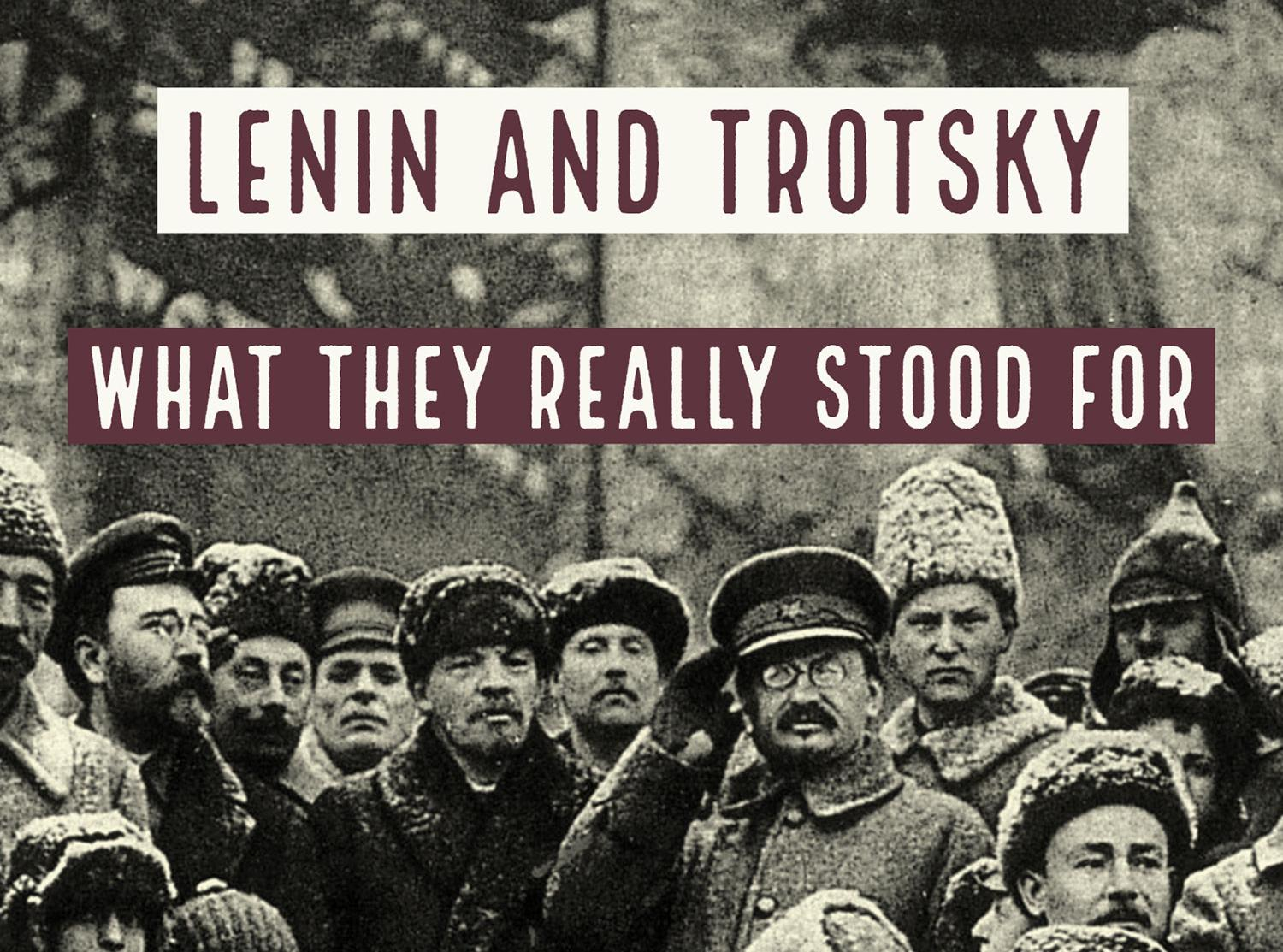
This is the first of a series of lectures that David North, chairman of the International Editorial Board of the World Socialist Web Site and the Socialist Equality Party (US), gave at the University of Michigan in November 1993 as part of the International Committee of the Fourth International’s celebration of the 70th anniversary of the Left Opposition. The essay reviews in detail the political origins of the Left Opposition, which was founded in October 1923, in the context of the objective situation confronting the Bolsheviks after the 1917 revolution and the different political tendencies within the Bolshevik Party.
Why should we study the Left Opposition?
This evening we begin the first in a series of three lectures devoted to the origins of the Left Opposition, founded by Leon Trotsky and other leading figures in the Russian Communist Party 70 years ago. Some of you may be attending this lecture in the hope that you will learn more about the Russian Revolution. That is a perfectly valid reason for being here tonight; and I hope that you will find this and the next two lectures informative. However, I must say that the founding of the Left Opposition is an event of more than merely historical interest. The world in which we live has been shaped, to a far greater extent than most of you can even imagine, by the outcome of the political struggle that began some 70 years ago in Soviet Russia; and it is not possible to understand the present world political situation without understanding the issues that were raised by the Left Opposition.
To justify this evaluation of the contemporary significance of the Left Opposition we need only to point to the events that have transpired in what is now known as “the former USSR.” In the fall of 1987, I delivered four lectures here at the University of Michigan on the occasion of the 70th anniversary of the October Revolution. At that time, I explained the view held by the International Committee of the Fourth International, with which the Workers League is affiliated, that the policies of Gorbachev would result in the collapse of the Soviet Union and the restoration of capitalism.
At that time, I should point out, Gorbachev was considered one of the titans of our time, acclaimed as the architect of a spectacular program of social, political and economic reform. ‘Perestroika’ and ‘Glasnost’ were terms that had obtained international currency, even if very few people — including Gorbachev himself — knew exactly what they meant. Gorbachev’s popularity was then at its peak, not only in bourgeois circles, but also — I should say, especially — within the milieu of the middle-class radical left.
The Workers League and the International Committee maintained that Gorbachev represented the most powerful sections of the Soviet Stalinist bureaucracy; that he was attempting to deflect the growing opposition within the working class to the Stalinist regime while protecting the interests of the bureaucracy; that the economic content of his reforms were essentially pro-capitalist, and, as such, represented the climax of the decades-long Stalinist betrayal of the program, ideals and aspirations of the October Revolution.
All that has happened over the past six years has vindicated that assessment. Gorbachev was named ‘Man of the Decade’ by Time Magazine, and, soon thereafter, was swept from the political scene. Gorbachev was replaced by Boris Yeltsin, who was himself a Stalinist bureaucrat who had spent some 30 years inside the Communist Party, and it was under his auspices that the Soviet Union was dissolved in December 1991.
The collapse of the Soviet Union is, it goes without saying, an event of enormous significance. But it is remarkable how poorly understood it really is. The breakdown was hardly foreseen, certainly not by the imperialist regimes who were supposedly the most irreconcilable enemies of the Soviet Union. To the extent that any explanation at all is offered for this spectacular collapse, it is that the fall of the USSR represents the ‘failure’ of socialism in general, and of Marxism in particular.
But these declarations hardly rise to the level of a genuine explanation. They simply assume what remains to be proved. But here we come to the basic fallacy that has for decades served as the fundamental premise of that exercise in political propaganda that is known in the universities as ‘Sovietology.’ The starting point of ‘Sovietology’ is the crude identification of Stalinism with Marxism. Upon this foundation, the policies pursued by Soviet governments over a period of seven and a half decades are generally presented as if they formed a seamless whole. The history of Bolshevism supposedly begins with Lenin and ends with those who are referred in the capitalist media, even to this day, as ‘Communist hardliners.’ Not too long ago the memoirs of [the high ranking Soviet official] Yegor Ligachev appeared under the title — no doubt recommended to him by his American publishers — The Last Bolshevik. One has only to glance through Mr. Ligachev’s book to convince oneself that this old bureaucratic timeserver has about as much in common with Bolshevism as a veteran official of the Internal Revenue Service. Ironically, the line of Cold War ‘Sovietology’ coincides completely with that of the Stalinists themselves, who, until fairly recently, claimed to be the defenders of Leninism and what they claimed to be Marxist orthodoxy. Indeed, before 1985, Yeltsin, too, would have described himself as an irreconcilable Marxist. There are, it must be noted, a considerable number of works by serious scholars which do not accept this view, but it is not their work that formed the basis of what passed for public discussion on the nature of the USSR.
Those views that conflict with the virulent anti-Communism of the political establishment have been kept, for the most part, from the attention of the public, and it’s very difficult for a correct and scientific assessment of the Soviet Union and its leadership to be made known.
A letter that was not published
I’ll just give you an example from our own experience. In July 1990, in response to an article in The New York Times, I wrote the following letter:
Recently, your editorial board belatedly condemned the dispatches of Walter Duranty, the Soviet correspondent of the Times during the hey-day of the Stalin era, as among the worst that ever appeared in your newspaper.
That may well be true (that is, that Duranty was the worst reporter they ever had), but it could be legitimately argued that the reports of your present-day correspondent, Bill Keller, hardly represent an improvement.
For example, Mr. Keller writes in the Times of July 13, 1990 that Gorbachev ‘could revel in the knowledge that he had neutralized the orthodox Marxists as a power within the party…”
It seems that Mr. Keller is poorly informed about the history of the Soviet Communist Party. The “orthodox Marxists” within it — i.e., the Left Opposition led by Leon Trotsky —were “neutralized” by the Stalinist apparatus, through mass expulsions carried out at the Fifteenth Party Congress of December 1927 and then through exile and imprisonment. Later, in the course of the Moscow show trials and accompanying blood purge of 1936-39, the “orthodox Marxists” were systematically murdered. Leon Trotsky, the co-founder of the Soviet Union, was assassinated by a Stalinist agent in Mexico in 1940.
Mr. Keller’s identification of the Ligachev faction as ‘orthodox Marxists’ and of Ligachev himself as a ‘doctrinaire Marxist-Leninist’ is as politically ludicrous and intellectually dishonest as the late Duranty’s depiction of the Moscow Trials as beyond legal reproach. Since the late 1920s, Marxism has played no role whatsoever in the formulation of Soviet policy. The Communist Party has been for more than 60 years the political instrument of the ruling Stalinist bureaucracy.
Gorbachev, Ligachev and, for that matter, Yeltsin have served the Soviet bureaucracy for decades. The disputes between them are not over the finer points of Marxist theory, but over how to defend the privileges of different strata of the bureaucracy as the Stalinist regime moves — as Leon Trotsky foresaw long ago — toward the restoration of capitalism.
In the 1930s, the Times, through the dispatches of Duranty, helped mobilize American liberal opinion in support of Stalin’s liquidation of his Marxist adversaries. Today, while excluding from its columns the views of those who oppose Stalinism from the Left, the Times persists in identifying Marxism with a bureaucracy which historically has been its most vicious enemy. This may serve the political agenda of the Times‘ publishers but it has little to do with objective truth.
This letter was not published — not merely because I had insulted the Times’ editors, but rather because the letter raised issues of fact which simply cannot be reconciled with the ideological interests of the capitalist class. What becomes of the theory of the ‘seamless’ continuity of Bolshevism, from Lenin to Gorbachev, or at least to Chernenko, if, in fact, the consolidation of power by Stalin and the bureaucracy he led was achieved not only by the murder of virtually every significant political figure in the Revolution and the Civil War, but also the physical annihilation of hundreds of thousands of writers, scientists and artists whose intellectual and cultural work was somehow linked to the heroic early years of the Bolshevik regime?
If it is true that the Stalinist regime emerged not as the necessary and inevitable product of the October Revolution, but rather as its antithesis, then this fact must have the most profound implications, not only for our understanding of the past, but also of the present.
In the aftermath of the collapse of the Stalinist regimes in Eastern Europe and the dissolution of the USSR, a mood of triumphalism prevailed within the bourgeoisie. The end of the USSR, we were told, signified the end of socialism and Marxism. A book called The End of History reflected the prevailing mood: mankind had, it was claimed, arrived at its final destination — the unfettered and unrestrained triumph of capitalism. This was given political meaning with the proclamation of a “New World Order,” where the United States would impose, without serious challenge, its will all over the globe.
This madness, however, did not last all that long. It was easier for the editorial writers, media pundits and university think tanks to declare Marxism and socialism dead than to abolish the tendency of the rate of profit to fall, peacefully dissolve the antagonism between world economy and the nation state, and ban the class struggle. With or without the approval of the propagandists and ideologists of the ruling class, both the laws of world history and those of the capitalist mode of production operate much as they were analyzed by Karl Marx.
Little more than two years since the collapse of the USSR, world capitalism is mired in its greatest systemic crisis since the 1930s. The economies of all the major capitalist countries stagnate. The relations among the leading imperialist states are at their worst since the years before the Second World War. In fact, the internal coherence of these states has never been so fragile. It is a debatable whether Belgium, Italy, Britain, Spain or Canada will even exist in their present nation-state form by the end of the decade. Other nations, by the way, could be added to the list.
Worle Socialist Web Site for more