
by LUI BRIZUELA
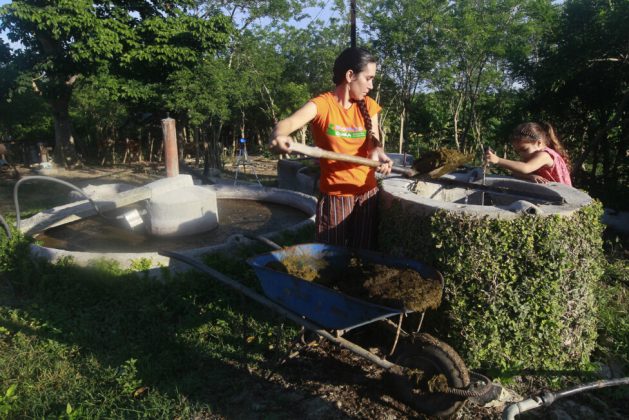
Combining technologies and innovations to take advantage of solar, wind, hydro and biomass potential has made the Finca del Medio farm an example in Cuba in the use of clean energies, which are the basis of its agroecological and environmental sanitation practices.
Renewable energy sources are used in many everyday processes such as electricity generation, lighting, water supply, irrigation and water heating, as well as in cooking, dehydrating, drying, baking and refrigeration of foodstuffs.
“We started out with windmills on artesian wells and hydraulic rams to pump water. That gave us an awareness of the amount of energy we needed and of how to expand its use,” said farmer José Antonio Casimiro, 65, owner of this agroecological family farm located in the center of this long Caribbean island nation.
The farmer expressed his appreciation of the help of his son, 41, also named Antonio Casimiro, in the installation of the two mills at Finca del Medio, during the days in which IPS visited the farm and shared in activities with the family.
“There was no one to assemble or repair them. We both had to study a great deal, and we learned to do a lot of construction things as we went along and perfected the techniques,” said Casimiro junior, referring to the equipment that is now inactive, but is capable of extracting some 4,000 liters of water daily from the water table.
When rainfall is abundant and the volume of the 55,000-cubic-meter-capacity reservoir rises, the hydraulic ram comes to life. The device diverts about 20,000 liters of water to a 45,000-liter tank, 400 meters away and 18 meters above the level of the reservoir.
“The only energy the rams use is the water pressure itself. Placing it on the highest part of the land makes it easier to use the slope for gravity irrigation, or to fill the animals’ water troughs,” explained Chavely Casimiro, 28, the youngest daughter of José Antonio and Mileidy Rodríguez, also 65.
An artist who also inherited the family’s “farming gene”, Chavely highlighted some twenty innovations made by her father to the hydraulic ram, in order to optimize water collection.
Other inventions speed up the assembly and disassembly of the windmills for maintenance, or in the event of tropical cyclones.
“We have been replacing the water supply with solar panels, which are more efficient. They can be removed faster (than the windmill blades) if a hurricane is coming. You can incorporate batteries and store the energy,” said Casimiro.
“Let’s say a windmill costs about 2,000 dollars. With that amount you can buy four 350-watt panels. That would be more than a kilowatt hour (kWh) of power. You buy a couple of batteries for 250 dollars each, and with that amount of kWh you can pump the equivalent of the water of about 10 windmills,” he said.
But the farmer said the windmills are more important than the energy they generate. “It would be nice if every farm had at least one windmill. For me it is very symbolic to see them pumping up water,” he said.
Inter Press Service for more