
by SCOTT FERGUSON & WILLIAM SAAS
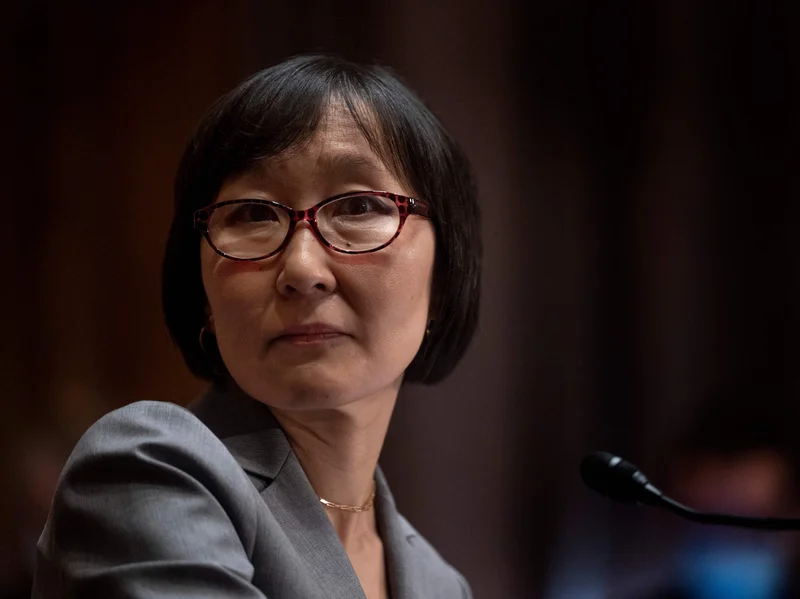
This month, we discuss democratic possibilities for public finance with Saule Omarova, the Beth and Marc Goldberg Professor of Law at Cornell University and President Biden’s original nominee for Comptroller of the Currency. Omarova’s work on financial regulation and banking law has long informed how we at Money on the Left understand the modern monetary system. Her and Robert Hockett’s “finance franchise” metaphor for modern banking-–according to which the federal government is the franchisor and chartered banks are all franchisees–renders an often-times opaque system intuitive and readily politicizable. Throughout our conversation, we learn from Omarova about how she arrived at this work, what other metaphors she and Hockett considered as alternatives, and exciting democratic possibilities for social policy development, including proposals for a National Investment Authority and a public banking system called “the people’s ledger.”
Visit our Patreon page here: https://www.patreon.com/MoLsuperstructure
Music by Nahneen Kula: www.nahneenkula.com
Transcript
The following was transcribed by Mike Lewis and has been lightly edited for clarity.
Scott Ferguson: Saule Omarova welcome to Money On The Left.
Saule Omarova: Thank you so much. Thanks for having me.
Scott Ferguson: We’re so glad that you could join us today. Maybe to kick off our discussion, you can tell our listeners a little bit about your professional and academic background, how you got into thinking about law and finance from the point of view that you pursue?
Saule Omarova: Sure. So I am currently teaching at Cornell Law School. I write and teach on a variety of subjects that have to do with financial markets, financial institutions, and various regulatory issues in finance, understood broadly. I came into academia from private practice, I was a bank regulatory lawyer primarily, but also have done a lot of transactional work with various regulated financial institutions, broker dealers, insurance companies, and so on, so forth. And I did it in New York City, as part of the specialized financial institutions group. I really, really enjoyed the work, it was really difficult and quite demanding, particularly of a young lawyer with no prior experience.
I came into the legal practice actually not thinking about banking law, even as a potential area in which I would pursue my career because prior to law school, I did a PhD program, and I’ve completed my doctoral studies at the University of Wisconsin at Madison, in political science. I studied comparative political economy, and was interested in economic development and all of this wonderful, interesting historical stuff. So as a lawyer, I was thinking I was going to be just a business corporate lawyer. And then I ended up being in the financial institutions group.
What I’ve learned in that practice was quite invaluable, and it spurred my interest in returning to academia, to share the knowledge, but also to contribute to the discussion of public policy matters that as a practicing lawyer, I simply didn’t have the luxury of thinking about or addressing in any significant way. I did spend one year in the Treasury Department between my leaving the law firm and becoming a law professor, which was also focused on potential regulatory reform and financial stability, oversight, and so on. That was actually right before the bottom fell out of the subprime mortgage market. I left the Treasury in early July of 2007, and quite literally a couple of weeks later, things began unfolding.
So my academic career began in the midst of an unfolding global financial crisis. And of course, given the fact that financial regulation and financial markets was something I was interested in to begin with, this was a very, I suppose, fortunate set of circumstances in terms of directing my research interest into law and finance. And as I continued to learn about finance and financial regulation from an academic perspective, rather than from a purely practical perspective, gradually, I came to appreciate and realize that my long forgotten, perhaps, academic training in comparative political economy and institutional, developmental, political science, whatever you call it, actually had a lot to contribute in terms of shaping the perspective with which I approached various legal and policy issues in financial regulation, and kind of presumptively focusing my attention on structural issues, because that was really what I’ve been interested in all along.
I gradually started expanding my research, beyond writing about specific dysfunctions and specific regulatory and policy problems in the regulation of banking institutions, including banking conglomerates, so called bank holding companies or financial holding companies. Expanding that focus to encompass broader, perhaps deeper issues in what it means to have this type of a dysfunctional banking system or malfunctioning banking system at the center of the financial market that is itself supposed to serve the interests of the real economy, and real people. That’s how I started researching and writing about issues of power and structure in finance, and I suppose that’s why I’m here right now talking about it.
Billy Saas: So I first became aware of your work in a paper that you co-wrote with Robert Hockett on the “Finance Franchise”. And of course, you’ve done subsequent work on The People’s Ledger. I’m curious, in the context of this bio that you’ve just given us. I think a lot of academics when they come into contact initially with heterodox economic, financial or monetary theory, it seems like a surprise. Or things need to be relearned. But I wonder about your history as a regulator, and that sort of journey that you took… Could you kind of narrate that experience for us when it came time to kind of think about finance as a franchise? Was it novel or did it just sort of make sense in the structural thinking that you were prone to do at the time?
Saule Omarova: I suppose it was both a surprising development and something that did not surprise me at all, more of a natural trajectory, I guess, of my thinking and learning and experience, both as a practitioner and academic. But the surprising part was, perhaps the excitement of a discovery, and the excitement in that moment when, suddenly, a lot of the pieces that you’ve been thinking about or writing about, or talking about, fall into place, more or less, to cohere into a whole of which you were not aware of previously. That was something that I don’t think anybody can kind of predict, or that’s definitely going to happen. Certainly not for my work.
Every time I start writing a paper, It’s always a process of a lot of doubt, and worry, and thinking about, is it really new enough? Is it interesting enough? Is it valuable to share with people? So the “Finance Franchise” was kinda like that, but it was also a different experience, because it was a co-authored work. When you are collaborating with somebody else, the dynamics change. Bob Hockett and I, we started talking and discussing various issues in finance a few years before the “Finance Franchise” was actually published. And it was not our first quarter piece, we’ve written a couple of shorter ones, and a really longer one about the developmental finance state previously, so this was a process.
What I am really grateful for in that process was that chance to find a comrade-in-arms in a way academically, someone who shared certain fundamental premises and understandings, but brought to the partnership a complementary set of ideas and knowledge. For example, I am not, and I do not consider myself an expert on monetary economics per se. I have never been formally trained, I don’t have a degree in economics, and whatnot. So it was really fascinating for me, to start from my usual, typical, let’s start from the ground, from the understanding of the mechanics in the market, certain financial instruments or certain market dynamics and relationships, that financial institutions and regulators and various other actors in the economy enter in starting from that understanding, building up toward the whole. Whereas Bob came into this experience, perhaps from a slightly different perspective, which was absolutely complementary. He has tremendous knowledge of economic literature and philosophy and history, so we worked really well together and it was truly a great partnership.
That was the “Finance Franchise” and I remember we’ve gone through many, many iterations of the draft. We developed and discarded multiple metaphors for the arrangement that we were trying to describe. I remember talking about the solar system and how the federal reserve, the central bank, the sovereign public is the sun, and emits that full faith and credit as the energy into the universe, and the first layer of planets would be commercial banks, and then the outer layer capital markets, and so on, so forth. We were writing and rewriting this draft. And at some point, we have decided to discard that particular metaphor for the sake of coherence and certain writing editorial choices.
That was the process. And I, perhaps I don’t know if Bob has a different recollection of that process. Perhaps what he valued is not exactly the same as what I value, but I really did value that chance to really build something from scratch. Because for both of us, I don’t think I will be speaking out of turn here on behalf of my colleague. But I think for both of us, that concept of the “Finance Franchise” — that particular public private partnership type arrangement in the creation and distribution of sovereign money and credit throughout the modern economy — that concept continues to be the foundation of whatever work we’re doing separately now.Billy Saas: I know that when I came to that work, I had been fairly deeply immersed in Modern Monetary Theory and heterodox economic discourse, generally. There was something special about that, that seemed to sort of click things into place in a new way. And the metaphor, just want to say, is very effective, very useful. And I think, as a metaphor, it’s not too far out of bounds from what it’s attempting to describe or carry over. It fits, it’s fitting. And I’ve found it very useful to share with students in courses
Monthly Review Online for more