
by SAMUEL FARBER
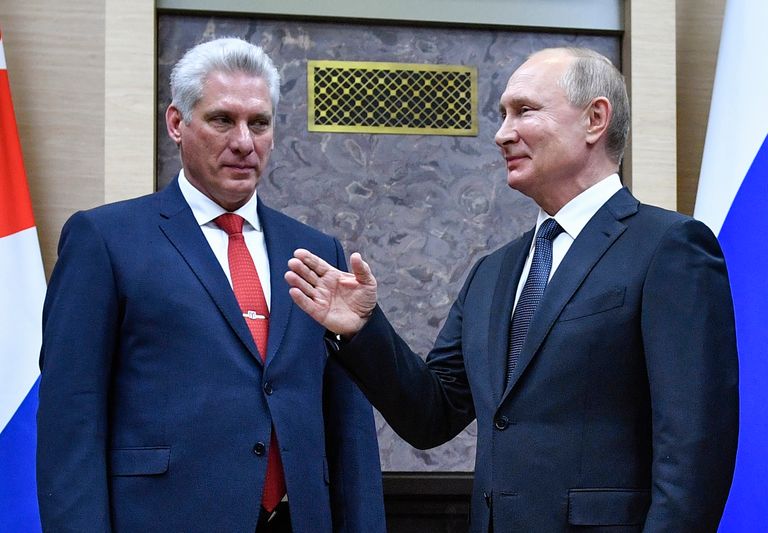
Right-wing Russians want to push Cuba toward a neoliberal economy.
At the beginning of this year, Russia signed an agreement with the Cuban government promising to significantly increase its participation in the Cuban economy. This comes more than 30 years after the collapse of the Soviet Union and the period of the great influence and close association that Moscow had with Havana.
But why now? Putin is eagerly looking for allies wherever it can find them, especially considering the military, economic, and political impact that the Russian invasion of Ukraine and its subsequent crisis like the rebellion led by Prigozhin has had on Russia. However, the Russian economy was weak even before the invasion of Ukraine. The economic weight of Russia does not principally reside in its manufacturing and industrial power but on its status as a mayor extractor and distributor of hydrocarbon products, and on a smaller scale as producer and distributor of other services and products such as weapons.
Although Russia was apparently successful in its neoliberal campaign from 2024 to 2018 in reducing inflation and implementing budgets with surpluses, as well as in creating large monetary reserves and a lower national debt, it failed to overcome its chronic low rate of economic growth. A 2019 Chatham House study by Philip Hanson points out that this success was achieved at the expense of great sacrifices by the Russian people, especially among retirees, and through the prevention of massive protests by the repressive Russian system. This autocratic system, according to Hanson, with its characteristic corruption and its intrusions in the economy and society, constitutes an obstacle for private investment and competition. Hanson ignores the role of the state in boosting economic growth in the Soviet Union and China, albeit in a highly brutal and harshly antidemocratic manner. Yet, Hanson is correct to argue that any attempt to establish reforms in Russia, like the rule of law, runs the risk of destabilizing the existing political system. For these reasons, concludes the British study, such an attempt will not likely be made.
Foreign Policy In Focus for more