
by WUDAN YAN
Traders in Bangladesh used lead chromate to enhance the spice’s appearance. Then scientists and policymakers stepped in.
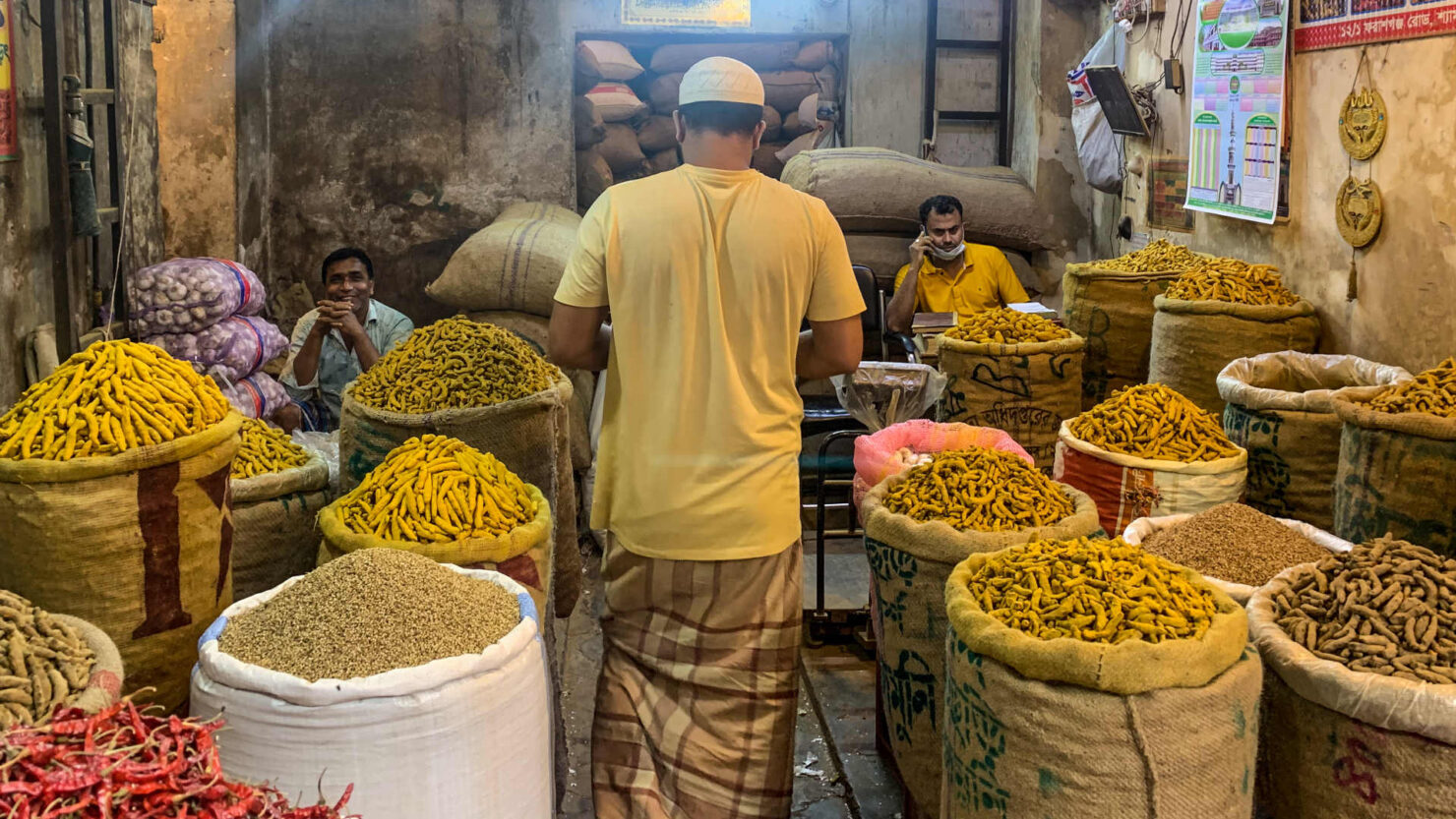
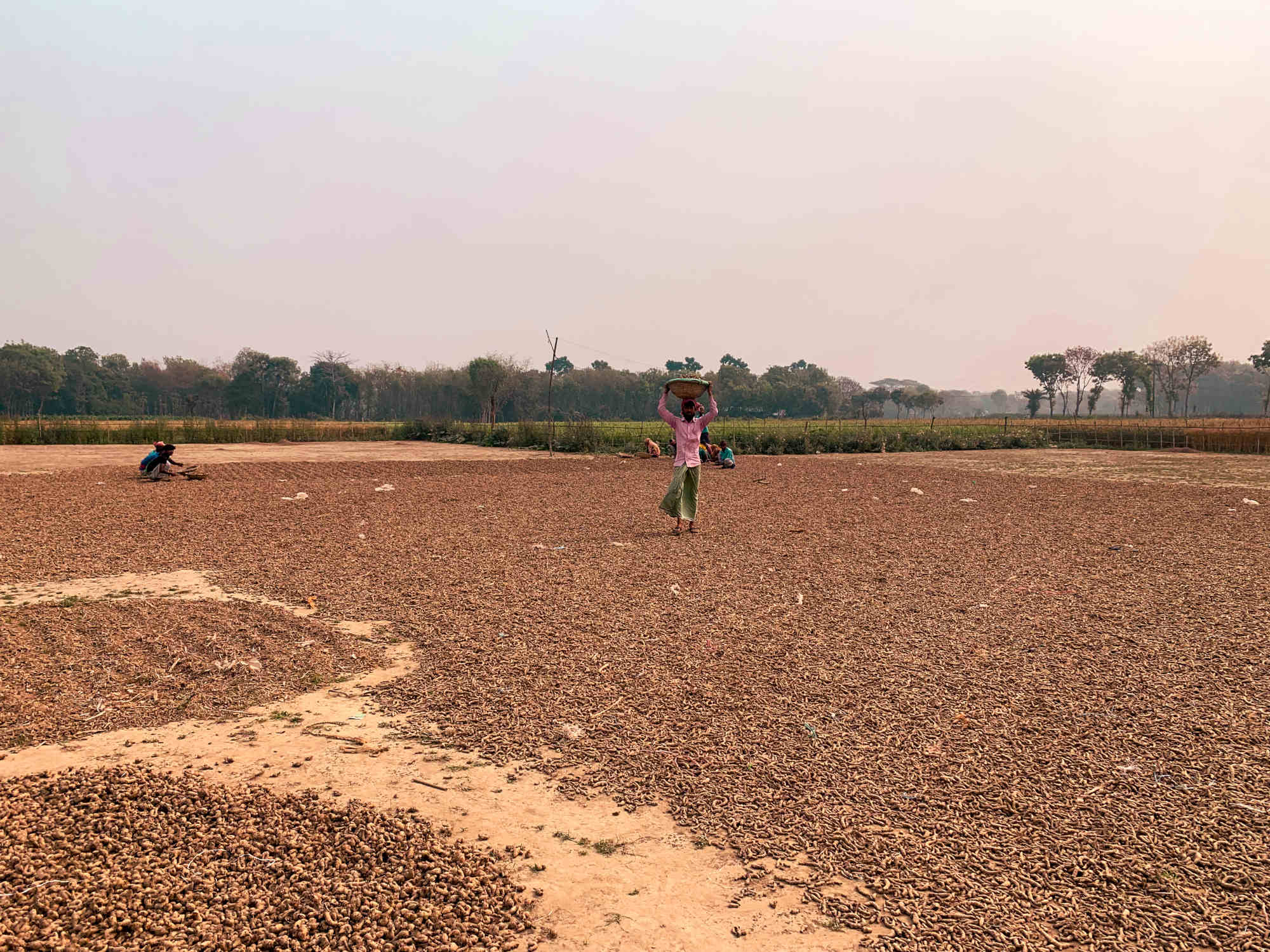
Before the heat of the day set in, dozens of people were already gathered under a large banyan tree at the twice-weekly turmeric market in Ataikula, Bangladesh. The season for harvesting turmeric was quickly coming to an end. Those who had arrived watched from the shade as other farmers brought their haul on motorbikes and auto rickshaws on the dirt road, their harvests to be combined in large piles atop orange and blue tarpaulin mats. Traders would buy however much they wanted in bulk.
Mohammad Abdullah Sheikh wandered around the market helping farmers weigh their sacks and traders make their purchases. Over the last 30 years, he’s become well acquainted with the space, as his turmeric processing business and trading facilities are headquartered next door. He buys most of his turmeric from this market and processes it to sell to larger food manufacturers and wholesalers across the country.
For most of his turmeric trading career, Sheikh engaged in an open secret: While processing raw turmeric to powder, he added a chemical called lead chromate to get the tubers to glow yellow. Sheikh and the locals refer to the compound as peuri — and nearly all the farmers and traders at the market are familiar with it. Lead chromate is a chemical used in paints to, for instance, make school buses yellow, and it can enhance the radiance of turmeric roots, making them more attractive to buyers.
For decades, Sheikh didn’t know the exact harm that peuri could cause. That changed in the fall of 2019, when researchers from the nonprofit International Center for Diarrheal Disease Research, Bangladesh, or ICDDR,B, traveled to Ataikula and adjacent districts in the northwest to meet with Sheikh and others in the turmeric business. The researchers warned them that consuming lead chromate could lead to kidney and brain damage or cause developmental delays in children. By that point, the spice had made its way out of the country: The problem had already gone global.
That outreach was the culmination of years of work conducted by an international group of researchers, including a research scientist at Stanford University. They worked together with the ICDDR,B and Bangladesh’s Food Safety Authority to protect the country’s food supply from further lead exposure. The impacts of this intervention were significant, and summarized in a study published recently in the science journal Environmental Research. When researchers sampled and tested turmeric across the country before and after the intervention, the level of adulteration in this one study dropped from 47 percent to 0 percent.
Undark for more