
by JAYATI GHOSH
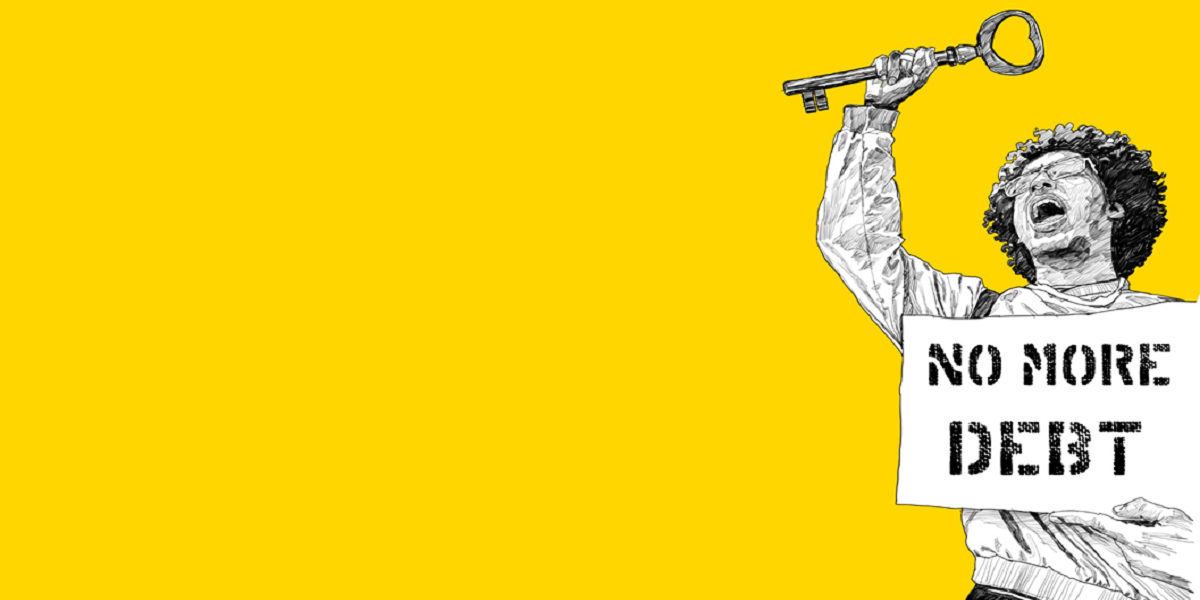
Jayati Ghosh speaks about the growing debt crisis in the global south, the IMF’s never-ending affinity for austerity and the need to confront the power of financial capital
Liam Kennedy: This year, 91 low and middle-income countries are expected to spend 16.3 per cent of their revenue on debt repayments – the highest level in 25 years. How did we get here and what does this mean?
Jayati Ghosh: From the turn of the century, and especially after the global financial crisis (GFC), global investors got much more interested in what they called “emerging markets” or what I’d call developing countries. This was celebrated by the IMF, Davos, the World Economic Forum – private finance was going to be somehow emancipatory for these people and places.
But this borrowing comes at a much greater cost to debtor countries
[through the higher interest rates of private borrowing]
, and international finance remains very hierarchical so these big players are encouraging countries to borrow even more. Of course, there is a much longer history of colonialism and extraction that predates the GFC which cannot be ignored. But meanwhile, there is an explosion of lending on bond markets which has created huge uncertainty in debtor countries as the value of bonds can change massively overnight as investors sell the bonds looking for larger profits elsewhere. This often meant that debtor countries faced even higher borrowing costs, as a consequence of being deemed risky, even though they had done nothing wrong.
So many countries end up in a situation, with multiple creditors, where they are using one loan to pay off another, trying to implement various conditionalities that are often regressive, all the while unable to invest in the things that are actually going to bring prosperity and growth to their country. This obviously is going to end in tears, which is basically where we are at right now. Then, of course, the pandemic impacts developing countries the hardest (through decreased tourism and exports) and the war in Ukraine has increased food and fuel prices, a result of corporate greed and not genuine supply constraints.
It’s worth noting here that there is also the entry of China into the global debt system from the mid-2000s onwards. There is a tendency in the Western media to say ‘oh it’s all China’s fault’ and ‘they have created debt traps’, but this is nonsense. China is now the largest bilateral lender for many countries, some of the lending was self-serving and involved vanity projects (a good example is Hambantota port in Sri Lanka) but some of it did create infrastructure that is useful and was needed. Their behaviour is really no different from many other large creditors.
LK: There is an interesting tension here in that the IMF has a long history of structural adjustment programmes in the global south that have been broadly regressive and cemented disparities between countries. At the same time, more recently the IMF has also spoken about the need to move away from austerity and the dangers of inequality. You’ve called this ‘schizophrenic’ but what do you think explains this paradox? For context, recent Oxfam research suggests that for every $1 in additional spending incentivised by the IMF, they demand $4 of cuts elsewhere.
JG: I think there are two things going on here. One is that there is a discrepancy between IMF research (as an internal department that yields very little power) and IMF programmes (the arm that agrees and implements deals around the globe). So, in terms of the role of taxation, the different kinds of fiscal multipliers and even the significance of capital controls, all of this is there in IMF research. When you get down to the actual programmes at country level, it’s the same old. Well, actually, there have been some changes.
First of all, they are much more careful to put in agreements that they explicitly want to protect social spending (health and education, for example) and they want to bring in social protection measures (that expand the social safety net). However, those social protection measures are almost always small scale cash transfers and pale in comparison to other regressive changes, as the Oxfam report shows.
But the other thing that has changed, and it’s very recent, is that the IMF now does not put a lot of their requirements into the agreements, because they know those will be criticised, so they ask countries to do a lot of the unpleasant changes (privatisation, liberalisation, removal of subsidies etc…) before they are even willing to sign an agreement. This happened in Pakistan and Zambia, and is now happening in Ghana.
LK: So the obvious question is where is the pressure to do this coming from? Is it as simple as saying that it’s corporate interests leaning on the IMF?
JG: I guess you’ve got the answer when we don’t know what goes on inside these institutions. But in any of these situations, you have to follow the money. And so who is gaining from this? The domestic elites gain, international finance and international corporations gain. It’s also a very short term game. These agreements promote a rather blinkered view of what constitutes growth, one that is defined by extraction rather than genuine development.
Red Pepper for more