
by SONALI KOLHATKAR
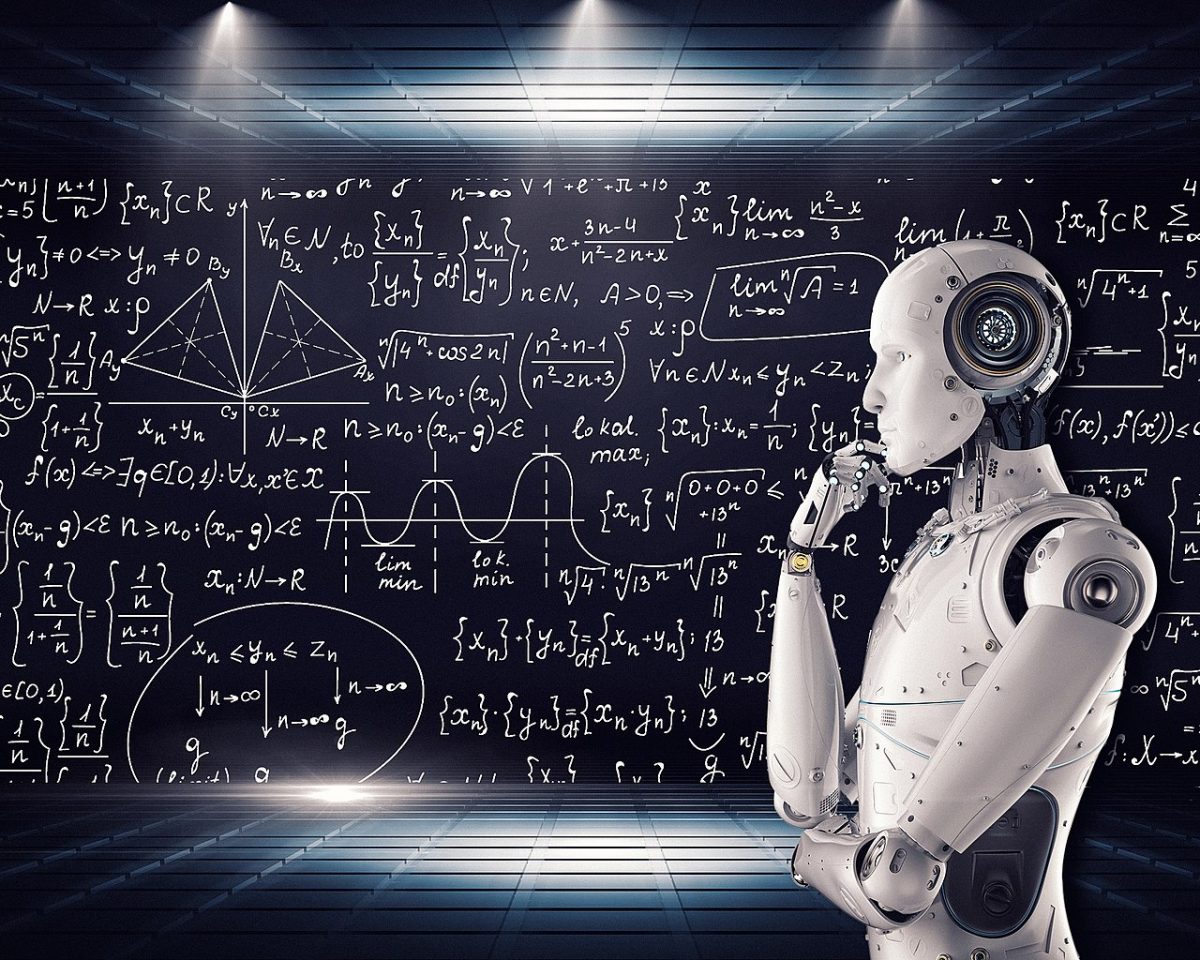
When asked to share alternatives to capitalism, ChatGPT offered many options, none of which rely on the fantasy that money hoarding at the top can eventually benefit the rest of us.
Artificial intelligence (AI) and how it’s going to change the world is a popular topic of conversation these days. There is concern that it will generate ever-more deceptive imagery that can upend people’s lives or create propaganda that can fuel mass fear. There’s the ultimate fear of human extinction from the increasingly sophisticated evolution of AI. These are valid worries.
Then there’s the seemingly more mundane threat that AI poses to employment. It is expressed in the form of countless stories that have some iteration of the headline: which jobs are at most risk of being lost to AI?
Most analysts predict that AI will replace graphic designers, copywriters, customer service agents, and telemarketers. Some of the most dystopian of these listicles focus on teachers and psychologists being replaced by AI.
The stories are written with the intention of predicting the coming storm so that people can prepare themselves for the future. But the headlines are also intentionally designed as clickbait, likely fueling fear-based consumption of the stories by readers eager to find out if their own jobs are likely to be replaced by AI in the coming years. Indeed, I found several stories, like this one, where my own vocation of journalism was in the crosshairs of AI.
The framing of “Will AI replace your job?” obscures the bigger problem that has been at work for centuries: and that is how our jobs, and therefore our educations, careers, and livelihoods, are at the whims of a capitalist system intent on minimizing costs and maximizing profits.
Indeed, Mathias Doepfner, the CEO of the German media group that owns Politico, who warned that AI could replace journalism jobs, used Darwinian logic in saying, “Artificial intelligence has the potential to make independent journalism better than it ever was—or simply replace it,” and therefore, “Only those [publishing houses] who create the best original content will survive.”
And while critics of AI counter that it could never replace humans because of our innate creativity and curiosity, the point that often gets missed is that humans are the ones engaging in the great AI replacement of jobs—a small handful of humans. They hail from the rarified group of elites who sit in corporate board rooms and deliver presentations to shareholders about how they plan to maximize dividends by replacing humans with AI.
The question we should be asking isn’t whether AI can replace humans. It should be: why are some humans so intent on replacing the jobs that the rest of us hold, with AI? Even further, why do we live in a world where we lack so much control over our destinies in the first place?
AI, like other innovations that have automated jobs, is simply a tool that can make life easier. I can use a machine to wash my clothes and another one to wash my dishes instead of wasting my time with handwashing. Graphic designers already use software to digitally paint images instead of painting them by hand. If AI is a tool that can make certain jobs easier and free up our time for relaxation and leisure while we reap the same or greater compensation then so be it. But it ought not to be inevitable that corporate employers will cut our salaries or entirely replace our jobs with AI. That is a choice being made in a system that relies on profit motives rather than human well-being.
What we consider a vocation, big business treats as a cog in a giant wheel called “the labor market.” Dire predictions of AI “disruptions” to this market cast the entire trend as almost a natural phenomenon, whose trajectory is simply out of human hands.
But the reason that AI is booming is because it translates into a giant windfall for corporations. One economic prediction concludes that “the market for artificial intelligence (AI) is expected to show strong growth in the coming decade. Its value of nearly [$100 billion] is expected to grow twentyfold by 2030, up to nearly [$2 trillion].”
AI is big business, perhaps the biggest of them all. The dystopia it promises is a natural endpoint—of unregulated capitalism. If the “man behind the curtain” is eager to replace us, why can we not rip the curtain down and replace him?
So, I asked ChatGPT, the popular AI chatbot that is basically a smarter Google, the following question: “Does a capitalist economic model center human [well being]?” The first sentence of a lengthy response was, “The capitalist economic model, in its purest form, does not explicitly center human well-being as its primary objective.”
Independent Media Institute for more