
by BRITTANY WONG
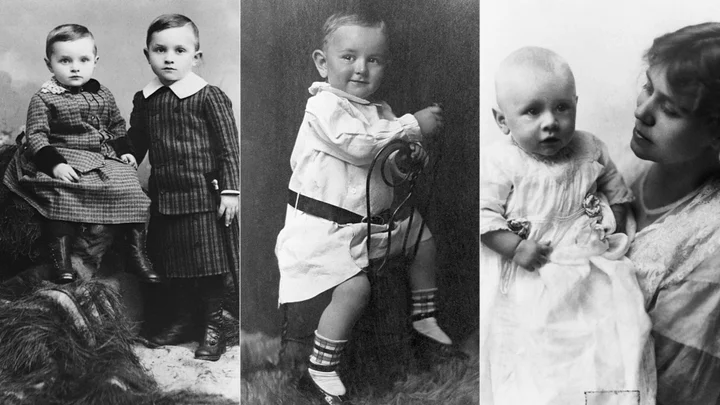
Many parents have a strong reaction against gender-neutral clothes, but American kids dressed like “sexless cherubs” before capitalism and more rigid gender norms took over.
Earlier this month, the owner of a conservative apparel company posted a video of himself walking around the children’s clothes section of Target, criticizing the company’s choice to put rainbows on boy’s clothing.
By allowing rainbows to mingle with sharks and trucks on screen-printed tees, the disgruntled dad said he believes Target is attempting to “destroy masculinity.” Parents ? fathers especially ? need to “stand up against this ‘wokeness,’” he said in the clip below.
The Instagram video was reposted on Twitter, where most of the replies mocked him or were along the lines of, “Hey man, you don’t have to buy it.”
But others looked at the video and saw a teachable moment. The decision by big box retailers like Target to carry gender-neutral clothing actually has historic precedent: Our great, great grandparents in the 19th century favored a gender-neutral style of dressing young children, too.
As menswear writer Derek Guy noted in his retweet of the Target video, “This is how Franklin D. Roosevelt dressed as a child.”
“Children at one point did not wear heavily gendered clothing and yet masculinity still existed,” Guy said in a follow-up tweet.
this is how franklin d roosevelt dressed as a child https://t.co/cfQ1kB5HEg pic.twitter.com/1rrTj2OU4e— derek guy (@dieworkwear) April 3, 2023
Jessica McCrory Calarco, an associate professor of sociology at the University of Wisconsin-Madison, weighed in on the little-known history, too.
“As I teach my students, kids’ clothing only became gendered when capitalists realized they could double their money by selling separate clothes for girls and boys,” she tweeted. “Before that, kids wore gender-neutral dresses, which better accommodated growth spurts and toilet training.”
The outfits were favored for practicality; white fabric was cheaper than dyed fabric and could easily be bleached when kids inevitably dirtied their clothes, the professor said.
Today you can find archival photos of everyone from and to hyper-macho writers like Ernest Hemingway wearing the everyday white gowns as tykes.
Victorian parents weren’t necessarily looking to dress their children in gender-neutral garb; instead, they wanted their children to just look like “a baby” ? or “a sexless cherub” as dress historian Jo Paoletti writes in her fascinating book “Pink and Blue: Telling the Boys from the Girls in America.”
Huffington Post for more