
“Sing Your Song”: Remembering Harry Belafonte, who used his stardom to help MLK & civil rights movement
DEMOCRACY NOW
We remember the remarkable life of Harry Belafonte, the pioneering actor, singer and civil rights activist, who died at his home on Tuesday in New York at the age of 96. The son of Jamaican immigrants, Belafonte rose to stardom in the 1950s and became the first artist to sell a million records with his album Calypso. He was also the first African American actor to win an Emmy. Along with his growing fame, Belafonte became deeply involved in the civil rights movement. One of Dr. Martin Luther King Jr.’s closest confidants, he helped to organize the March on Washington in 1963 and frequently raised money to bail activists out of jail and fund their activities throughout the South. Belafonte was also a longtime critic of U.S. foreign policy, calling for an end to the embargo against Cuba, supporting the anti-apartheid movement and opposing policies of war and global oppression. He spoke out against the U.S. invasion of Iraq and once called George W. Bush the “greatest terrorist in the world.” Harry Belafonte appeared on Democracy Now! numerous times over the years. In 2011, we spoke to him upon the premiere of Sing Your Song, a documentary about his life, and we begin our special by featuring an extended excerpt from our interview. “Going into the South of the United States, listening to the voices of rural Black America, listening to the voices of those who sang out against the Ku Klux Klan and out against segregation, and women, who were the most oppressed of all, rising to the occasion to protest against their conditions, became the arena where my first songs were to emerge,” Belafonte recalled.
AMY GOODMAN: This is Democracy Now!, democracynow.org, The War and Peace Report. I’m Amy Goodman.
Today we spend the hour remembering the remarkable life of Harry Belafonte. The pioneering actor, singer, civil rights activist died at his home on Tuesday in New York at the age of 96 from congestive heart failure. The son of Jamaican immigrants, Belafonte grew up in Harlem and Jamaica. In the 1950s, he spearheaded the calypso craze, became the first artist in recording history with a million-selling album. He was also the first African American actor to win an Emmy.
Along with his rise to worldwide stardom, Belafonte became deeply involved in the civil rights movement. One of Dr. Martin Luther King’s closest confidants, he sent money to bail King out of the Birmingham City Jail and raised thousands of dollars to release other imprisoned protesters. He financed the Freedom Rides, supported voter registration drives and helped to organize the March on Washington in 1963.
Harry Belafonte remained deeply involved in political struggles at home and abroad. A longtime critic of U.S. foreign policy, he called for an end to the embargo against Cuba, opposed policies of war and global oppression. After years of supporting the anti-apartheid movement, Belafonte hosted former South African President Nelson Mandela on his triumphant visit to the United States after his release from prison in South Africa. Harry Belafonte also spoke out against the U.S. invasion of Iraq and once called President George W. Bush the, quote, “greatest terrorist in the world.”
Harry Belafonte appeared on Democracy Now! numerous times. In 2011, I spoke to him at the Sundance Film Festival, where a documentary about his life, titled Sing Your Song, premiered. The film was co-produced by Harry Belafonte’s daughter Gina. This is a part of the film’s trailer.
ED SULLIVAN: Here’s one of the greatest artists of the world, Harry Belafonte!
HARRY BELAFONTE: [singing] Day-o, day-o
Daylight come and we want go home
Day, is a day, is a day, is a day…
HARRY BELAFONTE: One day, Paul Robeson came to see me and simply said, “Get them to sing your song, and they’ll want to know who you are.”
HARRY BELAFONTE: [singing] Coconut woman is calling out
Every day you will hear her shout…
JULIAN BOND: Even in that grainy, black-and-white early TV, his personality came out.
GEORGE SCHLATTER: When Harry Belafonte went on the show with Petula Clark, they touched.
WHOOPI GOLDBERG: People were like, “Oh my god!”
HARRY BELAFONTE: Whatever you’re capable of doing as artists to help propagandize the civil rights revolution.
SIDNEY POITIER: Out of that came the true artistry of Harry Belafonte.
HARRY BELAFONTE: There’s a lot of people out here who are really pissed off.
DIAHANN CARROLL: Harry gave us a piece of his fire. It gave us all strength.
HARRY BELAFONTE: We are angry. We’re upset.
CORETTA SCOTT KING: Harry motivated Martin, because here’s a man who didn’t have to get involved and who did.
HARRY BELAFONTE: We look around for some comfort, and we don’t find any.
BO TAYLOR: I remember once when you said, “From the time I get up and the time I go to sleep, I seek out the injustices done to humankind.”
HARRY BELAFONTE: What do we want?
PROTESTERS: Peace!
HARRY BELAFONTE: When do we want it?
PROTESTERS: Now!
QUINCY JONES: He was always like that. He was always, “Let’s do something.”
JULIAN BOND: Harry did this over and over and over and over again.
Democracy Now for more
Harry Belafonte – Unashamedly Revolutionary
by RICHARD S. DUNN
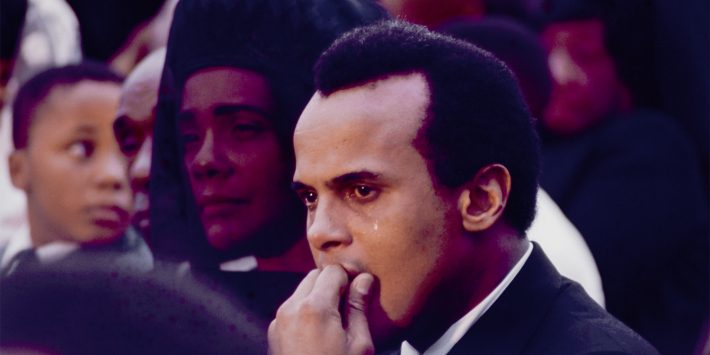
The late Harry Belafonte was a great artist and also a committed revolutionary.
The consummate artiste, revolutionary and humanitarian the late Harry Belafonte, passed away at the age of 96 on April 25, 2023 at his home in Harlem, New York. According to our cultural and philosophical teachings of Maat and Kawaida, Belafonte did not become an ancestor just because he passed away, but moreso; because he lived a life of struggle and commitment in actively uplifting his community. Harry Belafonte did exactly that and more; he lived an exemplary life worth emulating by those in entertainment, politics, sports, and just ordinary everyday life.
From the outset, Belafonte made a conscious decision to actively engage himself in the struggle for social justice; following in the footsteps of one he dearly loved, admired, and was inspired by, the late Paul Robeson. Robeson said: “The artist must elect to fight for freedom or slavery. I have made my choice. I had no alternative.” Robeson had admonished that those of us in the arts should use our position to uplift our people.
Harry Belafonte – The Artist as Revolutionary
The corporate media have been bombarding us with endless clips and comments regarding his singing and hit songs, using terms like “icon” and his accomplished “firsts.” The term “icon” is distracting and mischievously misleading and trivializes progressive political thought and activism. It is a media construct to diminish the importance and potentially ideological impact, socially and politically, that Belafonte has had on the nation and globally. Once again, the enemy is shaping the narrative with the intent to colonize thinking and blunt the edge of the class and racial struggle for justice. His exceptional and extraordinary artistry and achievements should not be ignored or glossed over. However, as complimentary as that term is expected to be, Harry Belafonte was much more than an” icon.” Belafonte’s greatness and most significant achievement was his progressive social consciousness and contribution to human social progress and development, especially for people of African descent.
Harry Belafonte was unapologetically anti-colonial, anti-white supremacy and was a committed social-justice activist. It is imperative to understand that Belafonte was unapologetic about his social origin and upbringing; it is what shaped and forged his social outlook. He never forgot or abandoned his class origin and worked tirelessly to change the social conditions of the working
class. Belafonte confirmed this by saying: “It is hard to be born into the experience in the world of poverty and not develop some instinct for survival, and resistance to those things that oppress you.”
A Life of Principle and Commitment
Black Agenda Report for more
Harry Belafonte, Legendary Entertainer and Activist, Dead at 96
by JASON HELLER
VIDEO/Youtube
As an actor and singer, Belafonte broke major barriers for Black performers in the Fifties before becoming a prominent figure in the fight for civil rights
…
Belafonte walked it like he talked it. For instance, in a tale he recounts in his 2011 memoir My Song, he and Poitier drove from New York to Mississippi in 1964 with $50,000 in cash to bail out jailed volunteers who were arrested trying to register Black voters — and the duo dodged Ku Klux Klan bullets in the process. Less dramatically but no less profoundly, he and fellow pop star Petula Clark bucked would-be censors in 1968 when they appeared on an NBC special together — and Clark touched Belafonte’s arm while they sang, a gesture of interracial intimacy that the show’s producer found offensive and wanted removed. The duo refused, and the uncut segment aired.
Rolling Stone for more
Noam Chomsky & Harry Belafonte in Conversation on Trump, Sanders, the KKK, Rebellious Hearts & More
DEMOCRACY NOW
VIDEO/Democracy Now/Youtube
Calypso is the third studio album by recording artist Harry Belafonte, released by RCA Victor (LPM-1248) in 1956. The album became his second consecutive number-one album on the Billboard Top Pop Albums chart, where it peaked for 31 weeks. Calypso was the first Long Play record album to sell over one million copies.
In 2018, Calypso was selected for preservation in the National Recording Registry by the Library of Congress as being “culturally, historically, or artistically significant.”[2]
Album information
The first track “Day-O (Banana Boat Song)” largely contributed to the success of the album and has long been Belafonte’s signature song, the single reaching number five on Billboard‘s Pop chart. “Star-O”, the sixth track on the album (and B side of the “Day-O” single), is essentially a short reprise of “Day-O”, with slightly different lyrics.
It is sung from the point of view of dock workers working the night shift loading bananas onto ships. Daylight has come, the shift is over, and they want their work to be counted up so that they can return to their homes (this is the meaning of the lyric “Come, Mr. Tally Man, tally me banana / Daylight come and me wan’ go home.”)
Wikipedia for more