
by RHONDA FENG
New drugs are developed with vast amounts of taxpayer money. But instead of universal access to these publicly funded scientific achievements, we get prohibitively expensive medicine and sky-high profits for pharmaceutical companies.
Big Pharma likes to hype the monopoly-based patent system as “the most effective tool to reward and incentivize innovation.” But the industry’s boosterism overlooks an important fact, which has been laid bare during the COVID-19 pandemic: lifesaving medications often are developed with the help of taxpayer money. Drugmakers then obtain lucrative patents and charge abusively high prices to the very people whose tax dollars helped develop the drug.
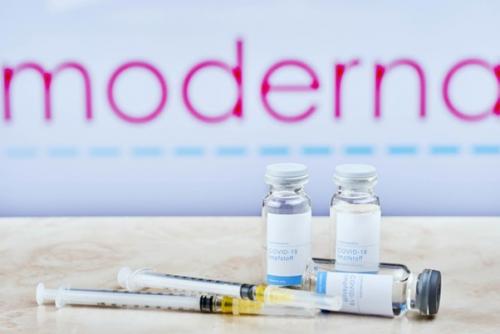
Consider the National Institutes of Health (NIH), which has played a singular role in developing new treatments and vaccines against coronaviruses. Reports show that the NIH has invested nearly $700 million in coronavirus research and development since the 2002 outbreak of severe acute respiratory syndrome (SARS). The US government funneled millions of dollars to Moderna alone as early as 2013 to develop its mRNA technology. When the new coronavirus emerged in Wuhan, the NIH worked with the company to design and test the mRNA-1273 vaccine. Other COVID vaccines have similarly benefited from substantial public funding by federal agencies and foreign governments: AstraZeneca (with Oxford University), Johnson & Johnson, Merck (with the International AIDS Vaccine Initative), and Pfizer (with BioNTech).
Research from the watchdog organization Public Citizen (full disclosure: I work for the group) shows that well before the COVID-19, the US Department of Health and Human Services, the Department of Defense, and the governments of Canada and Germany contributed hundreds of millions of dollars and scientific expertise to develop new vaccine technologies and manufacturing facilities. Big Pharma, meanwhile, stood on the sidelines.
Left to their own devices, pharmaceutical companies are incentivized to invest in research and development only for treatments that command high prices — not necessarily those that meet public health needs. Under the current monopoly model, private sector research tends to neglect less lucrative health needs, such as vaccines and treatments for infectious diseases. No matter how you slice it, a truly public health-oriented approach would kneecap the pharmaceutical industry’s profit margins.
The millions of lives lost to the COVID-19 pandemic suggests the need for a new approach to vaccine and drug development, for this much is clear: we cannot depend on monopolies to deliver the medicines we need.
Science’s Gravediggers
Just how we got to the point where pharmaceutical corporations can get away with setting criminally high prices for drugs in the first place is the focus of a new book by Alexander Zaitchik. Owning the Sun: A People’s History of Monopoly Medicine from Aspirin to Covid-19 Vaccines[1] is both an intellectual history and exposé of Big Pharma’s monopoly model.
As Zaitchik writes, “Between 2000 and 2018, the thirty-five largest drug companies reported cumulative gross profits of almost $9 trillion,” exceeding the value of the world’s gold reserves. It didn’t always have to be this way. The current “Strangelovean comedy of corporate vaccine nationalism” would have surprised the likes of Jonas Salk and other medical luminaries who thought that “non-rivalrous” goods like medicine should be exempt from monopoly control.
The book takes its title from a remark by Salk. Most people who have heard of the polio vaccine will likely know it for this flashy Jeopardy! fact: it was developed in 1955 and then given away for free. What’s less known is that as Salk was working on the polio vaccine, he accepted a consulting gig with the Detroit-based drug company Parke-Davis for the development of adjuvants, a vaccine component that boosts potency. Still, as Zaitchik relates, the experience didn’t exactly make him a cheerleader for the private sector. Instead, it imbued him with a “lifelong skepticism about the industry’s reliability and trustworthiness.”
Latin American Information Agency for more