
by HEIDI LEDFORD
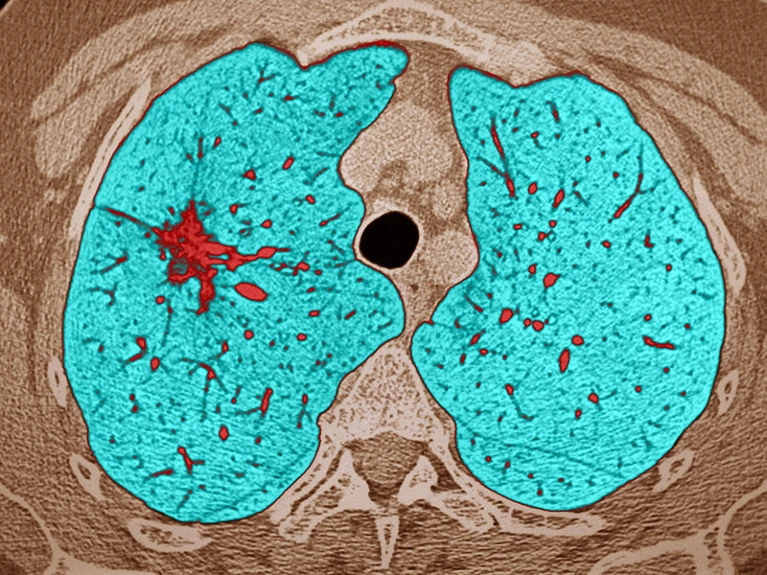

Studies in mice suggest that tumour growth is triggered by inflammation caused by tiny particles, rather than genetic mutations.
Air pollution could cause lung cancer not by mutating DNA, but by creating an inflamed environment that encourages proliferation of cells with existing cancer-driving mutations, according to a sweeping study of human health data and experiments in laboratory mice.
The results, published in Nature on 5 April1, provide a mechanism that could apply to other cancers caused by environmental exposure — and might one day lead to ways to prevent them. “The idea is that exposures to carcinogens could promote cancer without actually doing anything to the DNA,” says Serena Nik-Zainal, a medical geneticist at the University of Cambridge, UK. “Not every carcinogen is a mutagen.”
Cancer-causing pollution
Air pollution causes millions of deaths worldwide each year, including more than 250,000 from a type of lung cancer called adenocarcinoma. But it has been difficult to investigate how air pollution triggers cancer, in part because its effects are less pronounced than those of better-studied carcinogens such as tobacco smoke or ultraviolet light, says Nik-Zainal.
To unpick the mechanism, cancer researcher Charles Swanton at the Francis Crick Institute in London and his colleagues mined environmental and epidemiological data from the United Kingdom, Canada, South Korea and Taiwan. To diminish the contribution of tobacco smoke to the data, the team focused on lung cancers that carried mutations in a gene called EGFR. These mutations are more common in lung cancers in people who have never smoked than in those in smokers.
The team found that lung cancers bearing EGFR mutations were associated with exposure to air pollution in the form of inhalable particles with a diameter of 2.5 micrometres or less — less than one-tenth the width of the average grain of pollen. Such pollution is emitted by internal combustion engines, coal-fired power stations and burning wood.
Nature for more