
by BRYAN D. PALMER
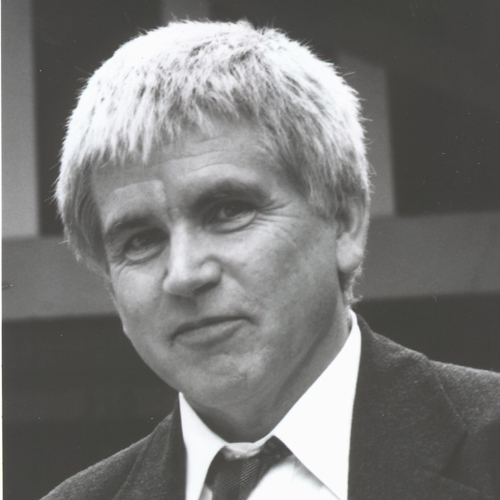
“He was, as they say, an ‘incompressible algorithm,’ one of the most complex people that I’ve ever known. One of the kindest, one of the most tempestuous; one of the wryest, one of the most serious. So I loved him even if I didn’t fully know him. His death is simply a hole in the world.”(1)
Time spent with Mike Davis was always memorable. My first encounter with Mike was in 1981. He was working, and to all appearances squatting, at the London Meard Street offices of Verso/New Left Review. I dropped in unannounced, peddling a small book on E.P. Thompson that Toronto’s New Hogtown Press had just published. Mike was affability itself.
We went out to lunch “on the firm.” Pizza and beers turned into an afternoon of imbibing and telling tall tales. Mike’s were more elevated than mine. We ended up dropping in on Brigid Loughran, whom Mike met in Belfast in the late 1970s and married. The two were then separated, but on good terms.
With an impish look, Mike introduced me as the enfant terrible of Canadian labor history. (I have no idea how he came up with such an outrageous assessment!) There was much talk of “The Troubles,” and Brigid’s active role in the civil rights struggles that dominated politics in the Northern Ireland of the time. At some point Mike reached into a terrarium — the small London flat contained a number of them, which Brigid was temporarily looking after — and lifted a greenishly translucent serpent lovingly out of the container. I gaped in wonder as he began affectionately stroking the snake’s head, its tongue flickering in and out, seemingly in adoring appreciation. Welcome to Mike’s world.
All of Mike Davis’ celebrated writing, justly-deserved fame, and ideologically-constructed notoriety lay ahead of him. I knew him only from his articles in Radical America and in Review, the journal of the State University of New York at Binghamton’s Braudel Center.(2) The latter essay, a 60+ page critical excursion through Michel Aglietta’s regulation school of capitalist crisis in the United States, caught the eye of Perry Anderson. Vouched for by comrades in the International Marxist Group with whom Mike was fraternizing in Belfast and Glasgow, Anderson offered Davis a $1000 advance for a yet-to-be-written book that would become Prisoners of the American Dream: Politics and Economy in the History of the US Working Class (1986). The sweetener was employment in the office of England’s premier New Left publisher.(3)
Early Life
Born in 1946, Mike was raised in the grit of working-class southern California. Fontana, birthplace of the Hell’s Angels, and El Cajon, adjacent to San Diego, were Mike’s home turf. His parents were an unlikely coming together of a unionized, Democratic Party voting, meat-cutting, father of Welsh heritage and a tougher-than-nails Irish Catholic mother who only had political eyes for Republican icon, Calvin Coolidge. “Unlike many of my contemporaries in the 1960s New Left, I never wore red diapers,” Mike noted with some pride.(4)
His mother and father, by all accounts, provided an immediate environment of nurturing love, but this was an isolated oasis hovering uncertainly above a backwater of bigotry. A racist frontier, composed equally of the culture of white cowboys, militarism, and socio-economic chanciness, the environs in which this Davis family domesticity was suspended exuded an evil yearning to erupt in violence that often punctured personal relations. “I actually believe that I have seen the devil or his moral equivalent in El Cajon,” Davis told an interviewer in 2008.(5)
What was a boy brought up in this milieu to do? Early drawn to a contradictory mix of interests that included natural science, the desert environment his father encouraged him to investigate, and the Devil Pups, a Marine Corps’ sponsored Youth Program for America, Davis soon outgrew conventional, if red-necked, wholesomeness. Devouring dragster pulp fiction — Henry Gregor Felson’s Street Rod (1953) being his antidote to the family reading material of choice, the Bible and Reader’s Digest collections in patented faux leather bindings — Mike flirted with the fast track of 1950s juvenile delinquency. Beer guzzling nights of joy riding culminated in a 1964 Valentine’s Day massacre in which the main victim was a powder-blue Chevy Davis ploughed into a wall, street racing with friends. His mother thought his night escapades best curbed by a stint in juvie, or perhaps even some hard time at San Quentin, but his dad brought him a copy of Ray Ginger’s biography of Eugene Debs as Mike recovered in hospital.
What really saved Davis from his nihilistic inclinations, however, was a Black activist in the Congress of Racial Equality (CORE). A cousin’s husband, he introduced Mike to the civil rights movement at a 1962 protest targeting the lily-white Bank of America in downtown San Diego. This was the “burning bush” moment that brought Mike Davis into the fold of the revolutionary left.(6)
SDS Years
Two years later, after a disastrous few weeks enrolled at Reed College in Portland, Oregon — in which he was expelled for violating the school’s ban on men frequenting women’s dorms — Davis hopped a Greyhound bus to New York City, intent on working for the fledgling Students for a Democratic Society (SDS). He crossed paths in 1964-1965 with future luminaries of the New Left, Tom Hayden, Carl Oglesby, and Todd Gitlin, helping to organize a major protest at the Wall Street headquarters of Chase Manhattan Bank, then a material prop of the apartheid regime in South Africa.
By 1965, and the Watts Rebellion, Davis was back in California. He lived off the meagre avails of selling SDS pamphlets, journals, and newsletters, furnishing the movement’s Los Angeles office with typewriters and fixtures courtesy of some market-minded looters.
Davis made a pilgrimage to the house of Jackie Robinson’s mother, eager to help the Black community thwart the construction of a Pasadena freeway bisecting a historic African American district. The matriarch of the neighborhood patted Mike on the knee. “I think it would be better for you to go organize some white kids against racism,” she advised, adding, “This community can take care of itself.”(7)
Against the Current for more