
by INDIGO OLIVIER
The engineering degree to defense industry pipeline.
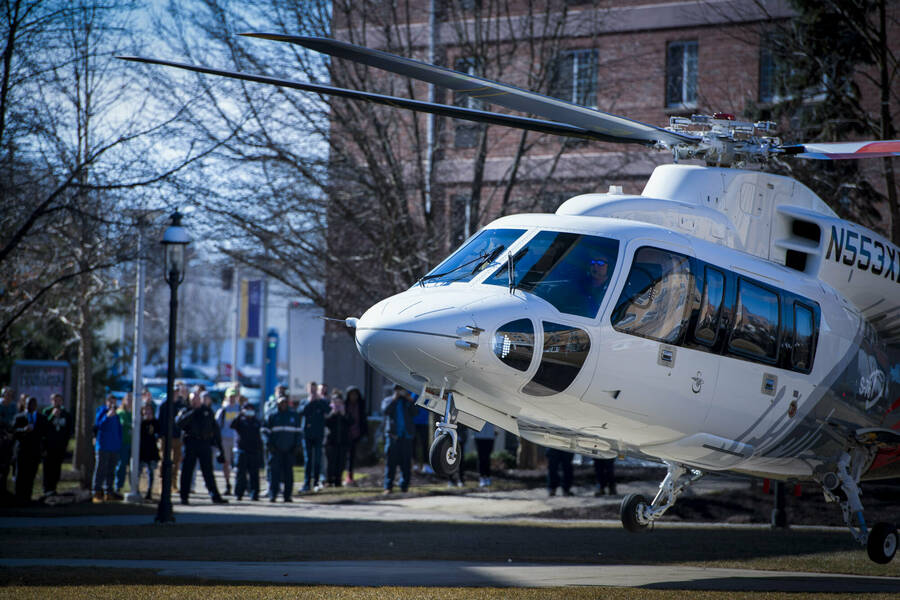
To a casual observer, the Black Hawk and Sikorsky S-76 helicopters may have seemed incongruous landing next to the student union on the University of Connecticut’s pastoral green campus, but this particular Thursday in September 2018 was Lockheed Martin Day, and the aircraft were the main attraction.
A
small group of students stood nearby, signs in hand, protesting
Lockheed’s presence and informing others about a recent massacre.
Weeks earlier, 40 children had been killed when a Saudi-led coalition air strike dropped a 500-pound
bomb on a school bus in northern Yemen. A CNN investigation found that
Lockheed?—?the world’s largest weapons manufacturer?—?had sold the precision-guided munition to Saudi Arabia a year prior in a $110 billion arms deal brokered under former President Donald Trump.
Back
in Storrs, Conn., Lockheed, which has a longstanding partnership with
UConn, appeared on campus to recruit with TED-style talks, flight
simulations, technology demos and on-the-spot interviews. A few lucky
students took a helicopter flight around campus.
UConn
is among at least a dozen universities that participate in Lockheed
Martin Day, part of a sweeping national effort to establish defense
industry recruitment pipelines in college STEM (science, technology,
engineering, and mathematics) programs. Dozens of campuses nationwide
now have corporate partnerships with Lockheed and other
weapons manufacturers.
Lockheed is the country’s single largest government contractor, producing Black Hawks, F-35 fighter jets, Javelin anti-tank systems and the Hellfire missiles found on Predator drones. With more than 114,000 employees, the company depends on a pool of highly skilled and highly specialized workers, complete with the ability to obtain proper security clearances when needed. In its most recent annual report, Lockheed tells investors, ?“We increasingly compete with commercial technology companies outside of the aerospace and defense industry for qualified technical, cyber and scientific positions as the number of qualified domestic engineers is decreasing and the number of cyber professionals is not keeping up with demand.”
Lockheed has hired more than 21,000 new employees since 2020 to replace retiring workers and keep up with turnover. Student pipelines are integral to the company’s talent acquisition strategy.
In These Times for more