
by SVEN BECKERT & ULBE BOSMA
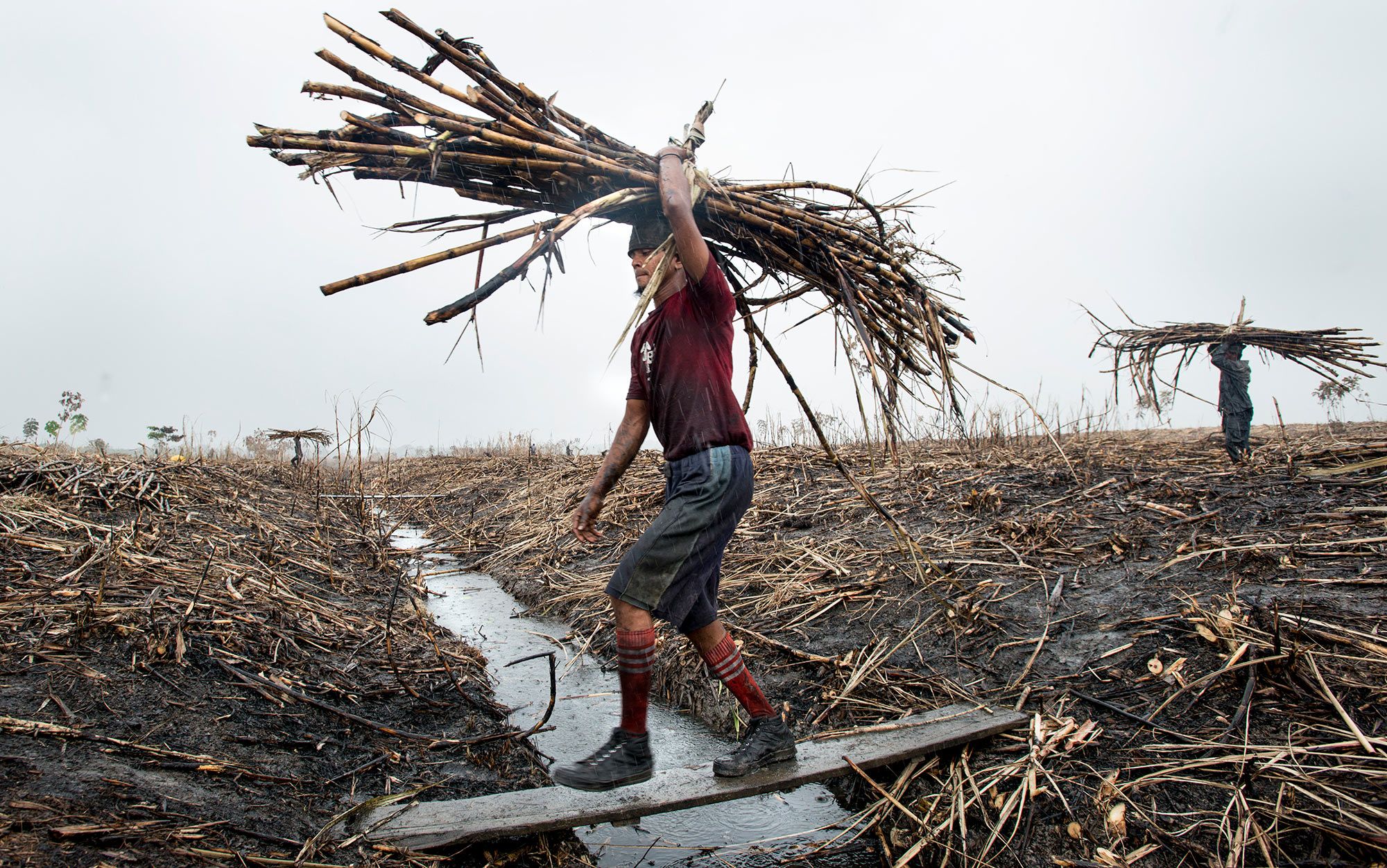
Centuries of capitalism saw the global countryside ruthlessly converted into cheap commodities. But at what cost?
Sometimes, what is most common is most remarkable. For those of us living in a city or suburb, a typical day starts with rising from (cotton) sheets, hopping under the shower for a quick wash with (palm oil-based) soaps, dressing in (cotton) shirts and pants, drinking a hot beverage (coffee or tea) and then eating a (sugary) cereal or jam, perhaps followed by a (soy-fed) processed meat sandwich, wrapped in (fossil-fuel-based) plastic.
What describes an unremarkable day in the lives of hundreds of millions of the world’s urbanites, a day you have experienced year in and year out without much thought, is actually a miracle produced not least by the stunning expansion of commodity frontiers over the past 600 years. Almost all the products that made your morning come from places far from your home. The cotton, most likely, was grown in China, and the palm oil in Indonesia or Malaysia; the coffee was perhaps harvested in Guatemala, the tea in India, the sugar in Australia, and the soy in Brazil, while the oil might have been pumped out of the sand in Saudi Arabia.
The accelerated output of commodities is not just the result of science-inspired intensification of production, but also of the tremendous spread of commodity frontiers into new continents, countries and regions. While we are usually unaware of these flows – even in the statistical representation of our contemporary industry-and-services-dominated economy, they play a marginal role – their impact is nonetheless dramatic, as a cursory look at the global countryside shows.
Aeon for more