
by MATHEW LYONS
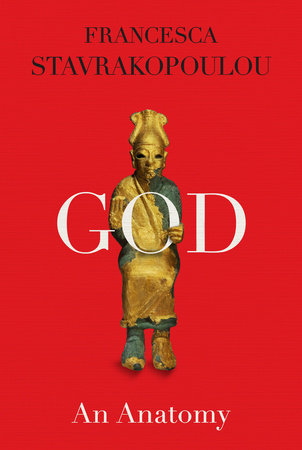
A new book examines how the western idea of God developed, and how the values and flaws attributed to him have changed over time.
God: An Anatomy (Pan Macmillan) by Francesca Stavrakopoulou.
We don’t know his real name. In early inscriptions it appears as Yhw, Yhwh, or simply Yh; but we don’t know how it was spoken. He has come to be known as Yahweh. Perhaps it doesn’t matter; by the third century BCE his name had been declared unutterable. We know him best as God.
God, as he is now understood by monotheistic religions, wasn’t always a singular deity. When Sargon II of Assyria conquered Israel in the eighth century BCE, he described seizing statues of “the gods in whom they trusted”. Who were these other gods – and what was Yahweh to them? Thanks to second-millennium BCE texts from the Syrian city-state Ugarit, we know that Yahweh was once a minor storm god of a wild, mountainous region south of the Negev desert. He was part of a large pantheon of Levantine gods headed by the patriarch El and his consort Athirat.
El, not Yahweh, was most likely the first god of the people of Israel. But early in the first millennium BCE, Yahweh displaced him. This Yahweh is the god whom Francesca Stavrakopoulou – professor of the Hebrew Bible and ancient religion at the university of Exeter – anatomises. He is not the perfect, abstract, immaterial being of modern conception; his is a visceral presence with an all too corporeal reality and many of the flaws that flesh is heir to.
He is very much made in the image of man. In texts, he is described as having radiant and red-hued skin, a ruddy complexion being an ancient marker of divine power, virility and strength. His beard is long but carefully groomed, and his hair is curled, black and lustrous. The older, white-haired god with whom we are more familiar is the creation of the prophet Daniel, writing in the second century BCE. At first, Yahweh was not entirely man-like, however. “God, who brought [Israel] out of Egypt, has horns like a wild ox!” the prophet Balaam exclaims in the Book of Numbers, the fourth book of the Hebrew Bible. In some early temples he was represented by golden statues of a divine bull.
Stavrakopoulou’s thesis is that even during the six centuries over which the books of the Old Testament were written, the immense physicality of this wilder divinity was being erased, not least under the sway of Platonism. “Reverence rather requires . . . an allegorical meaning,” Clement of Alexandria wrote around the turn of the second century CE, expressing a scholarly distaste for the experiential and somatic that remains highly influential. Translators, too, have long sanitised the text, privileging the abstract and metaphysical over the corporeal. But this more primal, vital Yahweh can be reconstructed from scattered passages in the Bible which still retain warm traces of his divine materiality.
New Humanist for more