
by ALEXANDRA WITZE
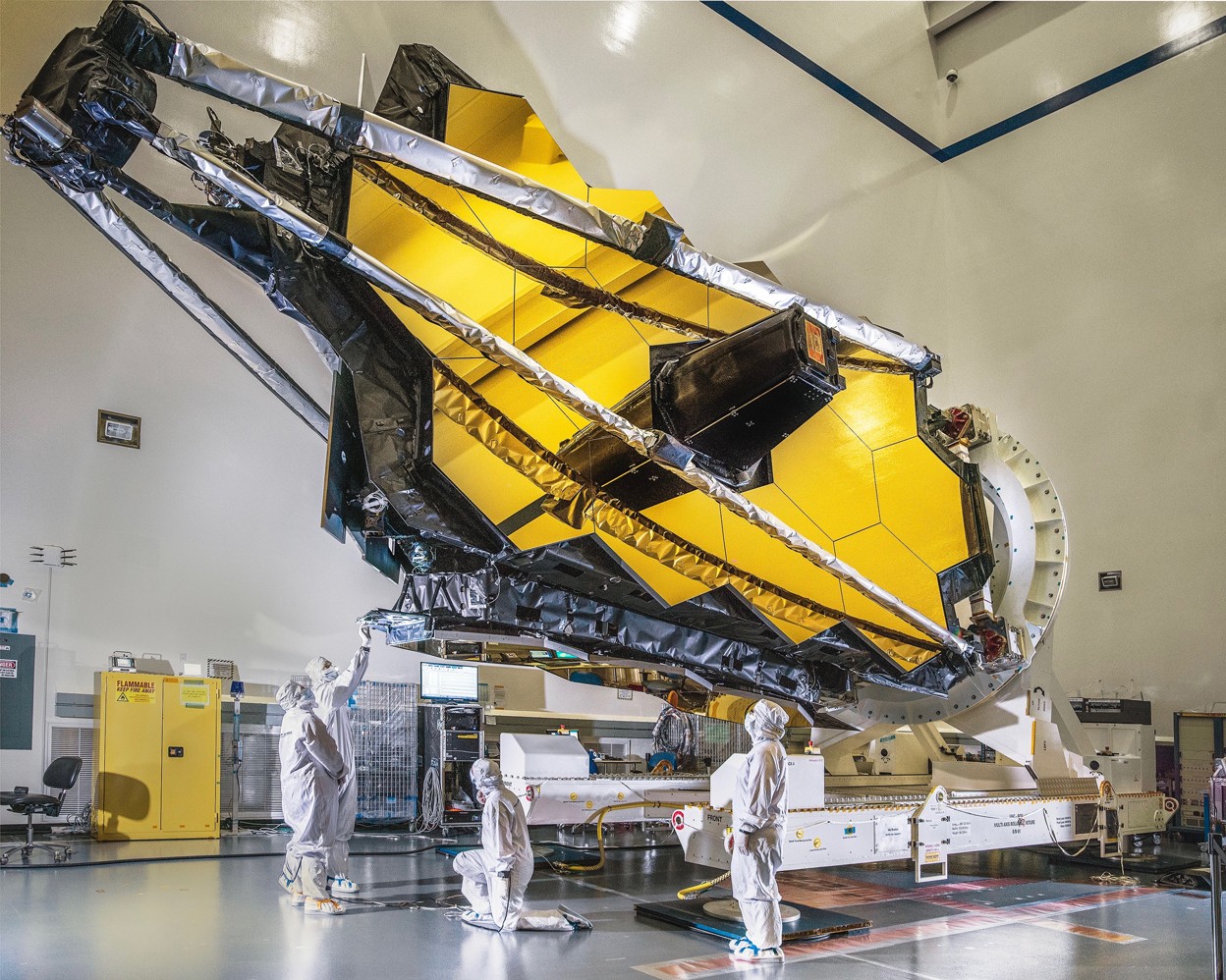
Three decades after it was conceived, Hubble’s successor is set for launch. Here’s why astronomers around the world can’t wait.
Lisa Dang wasn’t even born when astronomers started planning the most ambitious and complex space observatory ever built. Now, three decades later, NASA’s James Webb Space Telescope (JWST) is finally about to launch, and Dang has scored some of its first observing time — in a research area that didn’t even exist when it was being designed.
Dang, an astrophysicist and graduate student at McGill University in Montreal, Canada, will be using the telescope, known as Webb for short, to stare at a planet beyond the Solar System. Called K2-141b, it is a world so hot that its surface is partly molten rock. She is one of dozens of astronomers who learnt in March that they had won observing time on the telescope. The long-awaited Webb — a partnership involving NASA, the European Space Agency (ESA) and the Canadian Space Agency (CSA) — is slated to lift off from a launch pad in Kourou, French Guiana, no earlier than 22 December.
If everything goes to plan, Webb will remake astronomy by peering at cosmic phenomena such as the most distant galaxies ever seen, the atmospheres of far-off planets and the hearts of star-forming regions swaddled in dust. Roughly 100 times more powerful than its predecessor, the Hubble Space Telescope, which has transformed our understanding of the cosmos over the past 31 years, Webb will reveal previously hidden aspects of the Universe.
Nature for more