
by KENAN MALIK
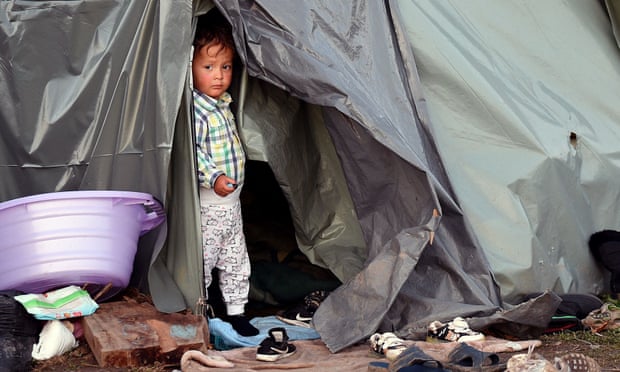
European Union policies have turned migrants into a resource to be exploited
A company of men in dark uniforms and balaclavas, all carrying clubs. They are battering a group of people, repeatedly clubbing them on their arms, legs and backs. They push them into a river that marks the boundary of the European Union. “Go,” they yell. “Go.”
It’s not an incident on the border between Belarus and Poland, the latest migrant flashpoint on the EU border, and one now dominating the news. It happened 1,000 miles to the south, between Croatia and Bosnia-Herzegovina. And it’s been happening for months, but with much less publicity or scrutiny than that afforded the events in Belarus.
The uniforms worn by the men in black on the Croatia-Bosnia border carried no insignias. An investigation by a consortium of European newspapers, broadcasters and NGOs has exposed them as members of special Croatian and Greek police units. Their job? To use violence to force undocumented migrants out of the EU and into non-EU states.
The operations are deemed “pushbacks”, a euphemism for illegal, violent expulsion. They happen all along the EU’s south-east border. Not just on land but at sea, too. Men from elite units in the Greek coastguard, again all dressed in black, wearing balaclavas and with no identity markings, regularly seize migrants, put them on orange life rafts, provided by the EU, push them out to sea towards Turkey and leave them to their fate.
To put in context the current events on the Belarus-Poland border, it is important to understand not just the nature of the Belarusian government but also the wider scope of EU migration policy. Belarus is a brutal, unforgiving regime, its president, Alexander Lukashenko, a butcher whose security forces have beaten all protesters into submission and tortured and imprisoned any opposition figures. Lukashenko’s use of migrants to put pressure on the EU has left some 2,000 undocumented people trapped on the border with Poland.
However odious Lukashenko’s actions, the humanitarian disaster on the border is not the result simply of one nation’s actions. Polish forces, too, have trapped the migrants. Warsaw has imposed a state of emergency, denying migrants food, water or medical aid and refusing journalists access. New laws allow police to ignore asylum requests. Officially, eight people have died in sub-zero temperatures; the true figure is likely to be much higher.
In her state of the union speech in September, the EU president, Ursula von der Leyen, condemned the regime in Minsk for having “instrumentalised human beings”, a claim echoed last week by the US and European delegates to the UN.
It’s true that Lukashenko is using migrants as pawns in a cynical diplomatic manoeuvre. But “instrumentalising human beings” is exactly what EU migration policy has been practising, too, for the past three decades. “Fortress Europe” has been created by turning people into instruments of policy, viewing migrants not as living, breathing human beings, but as flotsam and jetsam to be swept away from Europe’s beaches and borders.
The Guardian for more