
Unquenched desire
by B. R. GOWANI
This song’s heart wrenching lyrics were written by the revolutionary poet Sahir Ludhianvi and is from the 1956 Indian film Chandrakanta. The great Mohammed Rafi sang it to the music of Datta Naik i.e., N. Datta.
Original lyrics in Hindi/Urdu
maiN ne chAnd aur sitAroN ki tamannA ki thi
maiN ne chAnd aur sitAroN ki tamannA ki thi
mujh ko rAtoN ki siyAhi ke sivA kuchh na milA
maiN vo naghmA huuN jise pyAr ki mehfil na mili
vo musAfir huuN jise koi bhi manzil na mili
zakhm pAe haiN bahAroN ki tamannA ki thi
maiN ne chANd aur sitAroN ki tamannA ki thi
kisi gesu kisi ANchal kA sahArA bhi nahiN
rAste meN koi dhuNdlA sA sitAra bhi nahiN
meri nazroN ne nazAroN ki tamannA ki thi
maiN ne chANd aur sitAroN ki tamannA ki thi
dil meiN nAkAm umidoN ke basere pAe *
roshni lene ko niklA to aNdhere pAe
raNg aur noor ke dhAroN ki tamannA ki thi
maiN ne chANd aur sitAroN ki tamannA ki thi
meri rAhoN se judA ho gaeeN rAheN un ki
Aj badli nazar Ati hai nigAheN un ki
jin se is dil ne sahAroN ki tamannA ki thi
maiN ne chANd aur sitAroN ki tamannA ki thi
pyaar mANgA to sisakte hue armAn mile
chain chAhA to umaDte hue tufAn mile
Dubte dil ne kinAroN kI tamannA kI thI
maiN ne chANd aur sitAroN kI tamannA kI thI
Translation
my desire was the moon and the stars
received nothing but the dark of the night
I am the song that didn’t find any audience of love
I am the traveler who didn’t find any destination
I have received wounds instead of the spring I desired
my desire was the moon and the stars
I found no refuge in any tresses nor any arms
I found not even a blurry star on my path
my eyes had desired a beautiful enounter
my desire was the moon and the stars
I found failed hopes nestled in my heart
I wanted to attain light but only found darkness
I had desired the stream of colorful luminosity
my desire was the moon and the stars
my path has diverged from the path of my love
I find today her glance towards me is altered
the one from whom my heart had desired shelter
my desire was the moon and the stars
I had asked for love, instead gained sighs of longing
I wanted tranquility, but I got surging storms
my sinking heart had desired the shore
my desire was the moon and the stars
*This verse was not part of the song and that’ why it is mising in the above video.
B. R. Gowani can be reached at brgowani@hotmail.com
The whole story of human evolution – from ancient apes via Lucy to us
by JOHN GOWLETT
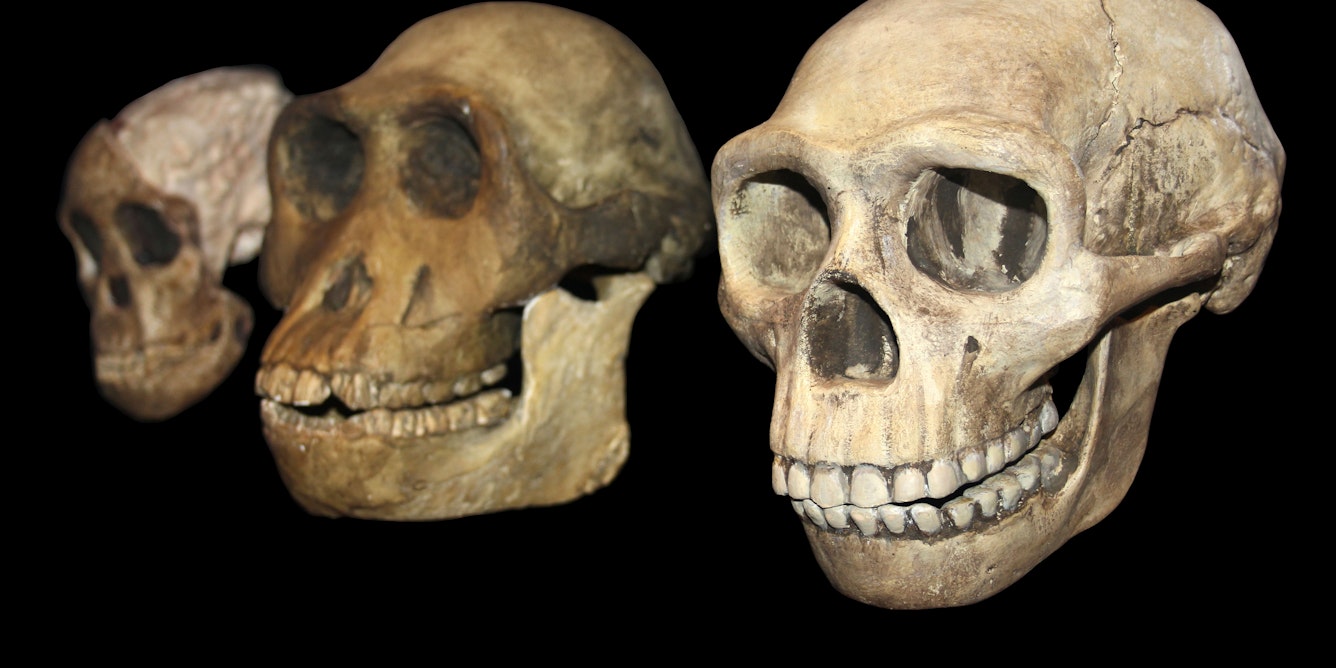
In pursuit of knowledge, the evolution of humanity ranks with the origins of life and the universe. And yet, except when an exciting find hits the headlines, palaeoanthropology and its related fields have gained far less scientific support and funding – particularly for scientists and institutions based in the African countries where so many landmark discoveries have occurred.
One of the first was made a century ago in Taung, South Africa, by mineworkers who came across the cranium of a 2.8 million-year-old child with human-like teeth. Its fossilised anatomy offered evidence of early human upright walking – and 50 years later, in the Afar region of northern Ethiopia that would become a hotspot for ancient human discovery, this understanding took another leap backwards in time with the discovery of Lucy.
The part-skeleton of this small-bodied, relatively small-brained female captured the public’s imagination. Lucy the “paleo-rock star” took our major fossil evidence for bipedal walking, human-like creatures (collectively known as hominins) beyond 3 million years for the first time. The race to explain how humans became what we are now was well and truly on.
Since then, the picture has changed repeatedly and dramatically, shaped by waves of new fossil discovery, technology and scientific techniques – often accompanied by arguments about the veracity of claims made for each new piece of the puzzle.
Even the term “human” is arguable. Many scholars reserve it for modern humans like us, even though we have Neanderthal genes and they shared at least 90% of our hominin history from its beginnings around 8 million years ago. The essence of hominin evolution ever since has been gradual change, with occasional rapid phases. The record of evolution in our own genus, Homo, is already full enough to show we cannot separate ourselves with hard lines.
Nonetheless, there is enough consensus to thread the story of human evolution all the way from early apes to modern humanity. Most of this story centres on Africa, of course, where countries such as Kenya, South Africa and Ethiopia are rightly proud of their heritage as “cradles of humankind” – providing many of their schoolchildren with a much fuller answer then those in the west to this deceptively simple question: how did we get here?
Early apes to ‘hominisation’ (around 35m to 8m years ago)
The story of human evolution usually starts at the point our distant ancestors began to separate from the apes, whose own ancestors are traceable from at least 35 million years ago and are well attested as fossils. Around 10 million years ago, the Miocene world was warm, moist and forested. Apes lived far and wide from Europe to China, though we have found them especially in Africa, where sediments of ancient volcanoes preserve their remains.

This world was soon to be disrupted by cooling temperatures and, in places, great aridity – best seen around the Mediterranean, where continental movements closed off the Straits of Gibraltar and the whole sea evaporated several times, leaving immense salt deposits under the floor of the modern sea. Widespread drying was reported from around 7 to 6 million years ago, leading to a stronger expression of seasons in much of the world, and changes in plant and animal communities.
The Conversation for more
This AI combo could unlock human-level intelligence
by NICOLA JONES
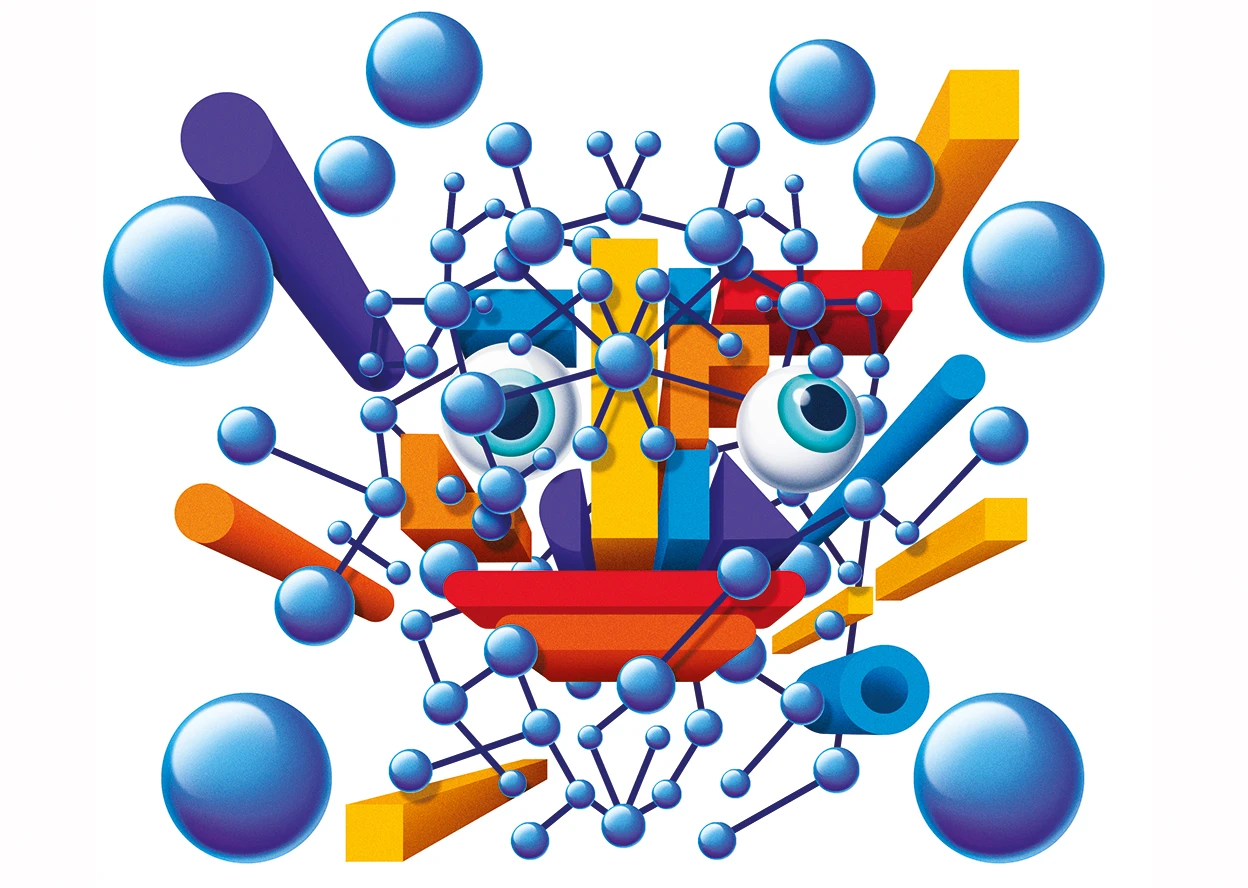
Blending ‘old-fashioned’ logic systems with the neural networks that power large language models is one of the hottest trends in artificial intelligence.
Will computers ever match or surpass human-level intelligence — and, if so, how? When the Association for the Advancement of Artificial Intelligence (AAAI), based in Washington DC, asked its members earlier this year whether neural networks — the current star of artificial-intelligence systems — alone will be enough to hit this goal, the vast majority said no. Instead, most said, a heavy dose of an older kind of AI will be needed to get these systems up to par: symbolic AI.
Sometimes called ‘good old-fashioned AI’, symbolic AI is based on formal rules and an encoding of the logical relationships between concepts1. Mathematics is symbolic, for example, as are ‘if–then’ statements and computer coding languages such as Python, along with flow charts or Venn diagrams that map how, say, cats, mammals and animals are conceptually related. Decades ago, symbolic systems were an early front-runner in the AI effort. However, in the early 2010s, they were vastly outpaced by more-flexible neural networks. These machine-learning models excel at learning from vast amounts of data, and underlie large language models (LLMs), as well as chatbots such as ChatGPT.
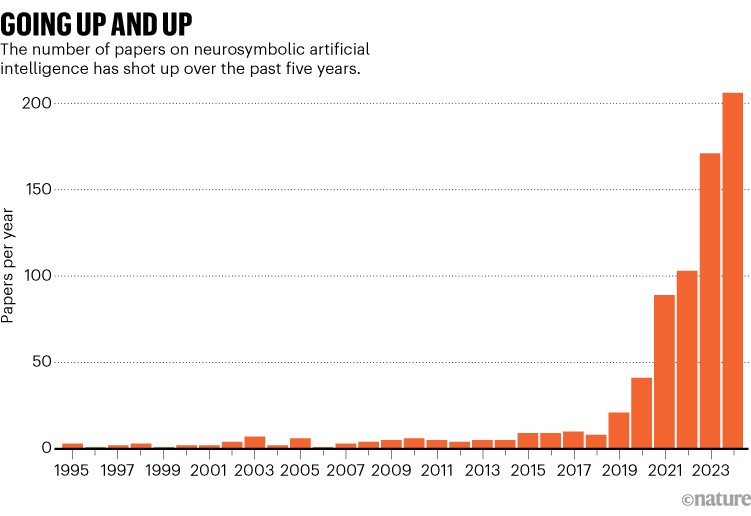
Now, however, the computer-science community is pushing hard for a better and bolder melding of the old and the new. ‘Neurosymbolic AI’ has become the hottest buzzword in town. Brandon Colelough, a computer scientist at the University of Maryland in College Park, has charted the meteoric rise of the concept in academic papers (see ‘Going up and up’). These reveal a spike of interest in neurosymbolic AI that started in around 2021 and shows no sign of slowing down2.
Plenty of researchers are heralding the trend as an escape from what they see as an unhealthy monopoly of neural networks in AI research, and expect the shift to deliver smarter and more reliable AI.
A better melding of these two strategies could lead to artificial general intelligence (AGI): AI that can reason and generalize its knowledge from one situation to another as well as humans do. It might also be useful for high-risk applications, such as military or medical decision-making, says Colelough. Because symbolic AI is transparent and understandable to humans, he says, it doesn’t suffer from the ‘black box’ syndrome that can make neural networks hard to trust.
There are already good examples of neurosymbolic AI, including Google DeepMind’s AlphaGeometry, a system reported last year3 that can reliably solve maths Olympiad problems — questions aimed at talented secondary-school students. But working out how best to combine neural networks and symbolic AI into an all-purpose system is a formidable challenge.
“You’re really architecting this kind of two-headed beast,” says computer scientist William Regli, also at the University of Maryland.
War of words
In 2019, computer scientist Richard Sutton posted a short essay entitled ‘The bitter lesson’ on his blog (see go.nature.com/4paxykf). In it, he argued that, since the 1950s, people have repeatedly assumed that the best way to make intelligent computers is to feed them with all the insights that humans have arrived at about the rules of the world, in fields from physics to social behaviour. The bitter pill to swallow, wrote Sutton, is that time and time again, symbolic methods have been outdone by systems that use a ton of raw data and scaled-up computational power to leverage ‘search and learning’. Early chess-playing computers, for example, that were trained on human-devised strategies were outperformed by those that were simply fed lots of game data.
Nature for more
Why Israel is ‘disintegrating’: Ilan Pappé on the end of Zionism
In conversation with Mehdi Hasan and an audience of paid Zeteo subscribers on Zoom, acclaimed Israeli-British historian Ilan Pappé explains why Zionism is collapsing. In an intriguing conversation, the two touched on a wide range of topics, including:
- Pappé’s vision for a decolonized state for both Palestinians and Israelis, as discussed in his new book, ‘Israel on the Brink: Eight Revolutions That Could Lead to Decolonization and Coexistence’.
- Diet Zionism (“You cannot be a progressive colonizer, and you cannot be a socialist genocider.”)
- Whether he believes popular Palestinian leader Marwan Barghouti will be released from Israeli prison
- Israel as a settler-colonial project (“If the Jews are indigenous to Palestine, then so are all the Christians and the Muslims in the world.”)
- Plus, what Palestinians really want, models for non-violent decolonization, the fallout from alpha-male politics, fighting Nakba denial, and more.
In this Zoom Q&A, Pappé and Mehdi took questions from Zeteo’s paid subscribers.
Youtube for more
Will Caribbean join US attempt to intimidate Venezuela or build its own sovereignty?
by VIJAY PRASHAD

US President Donald Trump has authorised the USS Gerald R. Ford to enter the Caribbean. It now floats north of Puerto Rico, joining the USS Iwo Jima and other US navy assets to threaten Venezuela with an attack. Tensions are high in the Caribbean, with various theories floating about regarding the possibility of what seems to be an inevitable assault by the US and regarding the social catastrophe that such an attack will occasion. CARICOM, the regional body of the Caribbean countries, released a statement affirming its view that the region must be a “zone of peace” and that disputes must be resolved peacefully. Ten former heads of government from Caribbean states published a letter demanding that “our region must never become a pawn in the rivalries of others”.
Former Trinidad and Tobago Prime Minister Stuart Young said on 21 August, “CARICOM and our region is a recognised zone of peace, and it is critical that this be maintained”. Trinidad and Tobago, he said, has “respected and upheld the principles of non-intervention and non-interference in the internal affairs of other countries and for good reason”. On the surface, it appears as if no one in the Caribbean wants the United States to attack Venezuela.
However, the current Prime Minister of Trinidad and Tobago, Kamla Persad-Bissessar (known by her initials as KPB), has openly said that she supports the US actions in the Caribbean. This includes the illegal murder of eighty-three people in twenty-one strikes since 2 September 2025. In fact, when CARICOM released its declaration on the region being a zone of peace, Trinidad and Tobago withdrew from the statement. Why has the Prime Minister of Trinidad and Tobago gone against the entire CARICOM leadership and supported the Trump administration’s military adventure in the Caribbean.
Backyard
Since the Monroe Doctrine (1823), the United States has treated all Latin America and the Caribbean as its “backyard”. The United States has intervened in at least thirty of the thirty-three countries in Latin America and the Caribbean (90 percent of the countries, in other words) —from the US attack on Argentina’s Malvinas Islands (1831-32) to the current threats against Venezuela.
Counterview for more
What world was Jesus born into? A historian describes the turbulent times of the real nativity
by JOAN TAYLOR
Every year, millions of people sing the beautiful carol Silent Night, with its line “all is calm, all is bright”.
We all know the Christmas story is one in which peace and joy are proclaimed, and this permeates our festivities, family gatherings and present-giving. Countless Christmas cards depict the Holy Family – starlit, in a quaint stable, nestled comfortably in a sleepy little village.
However, when I began to research my book on the childhood of Jesus, Boy Jesus: Growing up Judaean in Turbulent Times, that carol started to sound jarringly wrong in terms of his family’s actual circumstances at the time he was born.
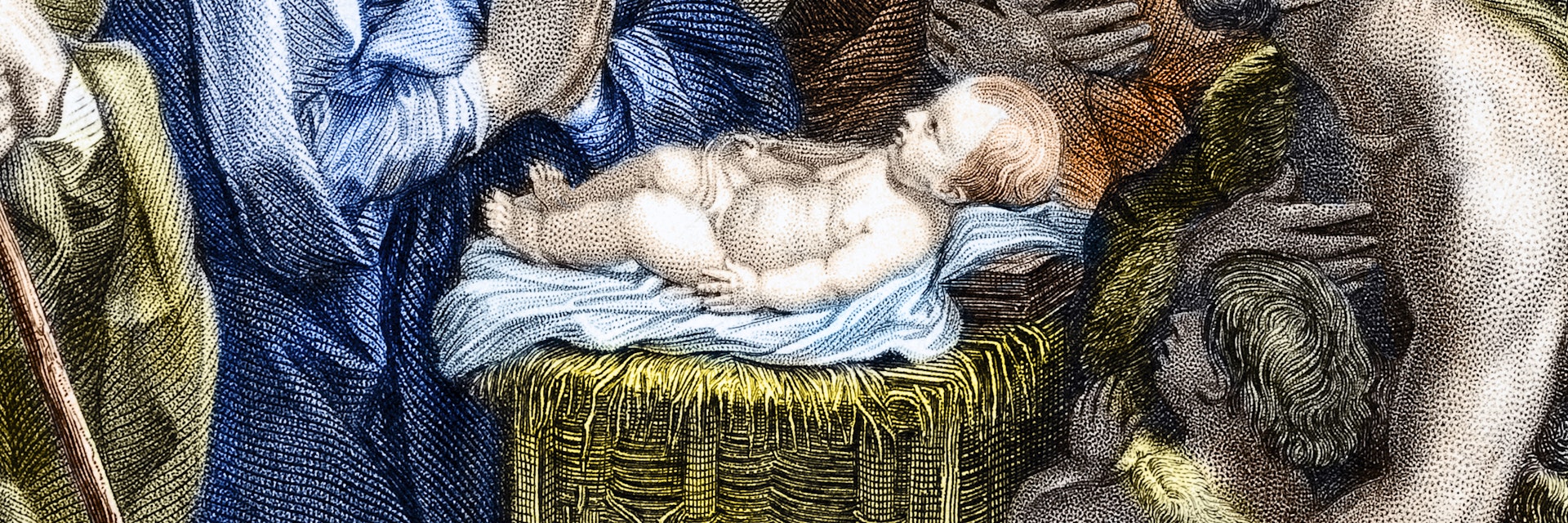
The Gospel stories themselves tell of dislocation and danger. For example, a “manger” was, in fact, a foul-smelling feeding trough for donkeys. A newborn baby laid in one is a profound sign given to the shepherds, who were guarding their flocks at night from dangerous wild animals (Luke 2:12).
When these stories are unpacked for their core elements and placed in a wider historical context, the dangers become even more glaring.
Take King Herod, for example. He enters the scene in the nativity stories without any introduction at all, and readers are supposed to know he was bad news. But Herod was appointed by the Romans as their trusted client ruler of the province of Judaea. He stayed long in his post because he was – in Roman terms – doing a reasonable job.
Jesus’ family claimed to be of the lineage of Judaean kings, descended from David and expected to bring forth a future ruler. The Gospel of Matthew begins with Jesus’ entire genealogy, it was that important to his identity.
But a few years before Jesus’ birth, Herod had violated the tomb of David and looted it. How did that affect the family and the stories they would tell Jesus? How did they feel about the Romans?
A time of fear and revolt
As for Herod’s attitude to Bethlehem, remembered as David’s home, things get yet more dangerous and complex.
When Herod was first appointed, he was evicted by a rival ruler supported by the Parthians (Rome’s enemy) who was loved by many local people. Herod was attacked by those people just near Bethlehem.
He and his forces fought back and massacred the attackers. When Rome vanquished the rival and brought Herod back, he built a memorial to his victorious massacre on a nearby site he called Herodium, overlooking Bethlehem. How did that make the local people feel?


And far from being a sleepy village, Bethlehem was so significant as a town that a major aqueduct construction brought water to its centre. Fearing Herod, Jesus’ family fled from their home there, but they were on the wrong side of Rome from the start.
They were not alone in their fears or their attitude to the colonisers. The events that unfolded, as told by the first-century historian Josephus, show a nation in open revolt against Rome shortly after Jesus was born.
When Herod died, thousands of people took over the Jerusalem temple and demanded liberation. Herod’s son Archelaus massacred them. A number of Judaean revolutionary would-be kings and rulers seized control of parts of the country, including Galilee.
It was at this time, in the Gospel of Matthew, that Joseph brought his family back from refuge in Egypt – to this independent Galilee and a village there, Nazareth.
But independence in Galilee didn’t last long. Roman forces, under the general Varus, marched down from Syria with allied forces, destroyed the nearby city of Sepphoris, torched countless villages and crucified huge numbers of Judaean rebels, eventually putting down the revolts.
Archelaus – once he was installed officially as ruler – followed this up with a continuing reign of terror.
A nativity story for today
As a historian, I’d like to see a film that shows Jesus and his family embedded in this chaotic, unstable and traumatic social world, in a nation under Roman rule.
Instead, viewers have now been offered The Carpenter’s Son, a film starring Nicholas Cage. It’s partly inspired by an apocryphal (not biblical) text named the Paidika Iesou – the Childhood of Jesus – later called The Infancy Gospel of Thomas.
The Conversation for more
What right does Japan have to pronounce about Taiwan?
by KIM PETERSEN

The recently ensconced Japanese prime minister Sanae Takaichi began her early leadership with a major diplomatic gaffe when she said a Chinese attack on Taiwan could constitute “a survival-threatening situation” for Japan requiring the use of force.
Beijing is apoplectic. Fu Cong, Beijing’s ambassador to the UN, accused Takaichi of committing “a grave violation of international law.”
Chinese Foreign Minister Wang Yi said, “It is shocking that Japan’s current leaders have publicly sent the wrong signal of attempting military intervention in the Taiwan issue, said things they shouldn’t have said, and crossed a red line that should not have been touched.”
Takaichi seems oblivious of Article 9 of Japan’s constitution which renounces war and forbids Japan from using force to settle international disputes.
Moreover, two of the principles agreed to in the 1972 Japan-China Joint Communiqué read:
2. The Government of Japan recognizes the Government of the People’s Republic of China as the sole legal Government of China.
3. The Government of the People’s Republic of China reiterates that Taiwan is an inalienable part of the territory of the People’s Republic of China. The Government of Japan fully understands and respects this stand of the Government of the People’s Republic of China, and it firmly maintains its stand under Article 8 of the Potsdam Proclamation.
Not only is Takaichi oblivious of the country’s constitution and the joint communiqué, she is also seemingly oblivious of Japanese history.
A modernized and expansionist Japan went to war and defeated the Qing dynasty. One requirement of the Treaty of Shimonoseki, 1895, was that China cede Taiwan to Japan.
Japan’s further expansionism and militarism led to its defeat after WWII. Thus, Japan would have to relinquish ill-gotten territories. The Cairo Declaration of 1943 states:
[A]ll the territories Japan has stolen from the Chinese, such as Manchuria, Formosa, and The Pescadores, shall be restored to the Republic of China.
This is affirmed by the Potsdam Proclamation of 1945:
The terms of the Cairo Declaration shall be carried out and Japanese sovereignty shall be limited to the islands of Honshu, Hokkaido, Kyushu, Shikoku and such minor islands as we determine.
The major historical documents clearly point to Chinese sovereignty over Taiwan.
Despite China having asked for clarification and a retraction of Takaichi’s erroneous remarks, no such clarification or retraction has been forthcoming.
Why would Takaichi even make such ignorant remarks? What did she hope to gain? Assuredly not an economic rupture of the economically challenged Japan from China.
A Thai news website headlined “Japan hit hard as China imposes tourism sanctions amid diplomatic tensions.”
China’s travel sanctions following diplomatic tensions with Japan have triggered mass flight cancellations, severe tourism losses and a projected ¥2.2tn annual economic impact.
Japan has expressed remorse for its WWII atrocities, but no official government apology has ever been issued. Meanwhile, Japanese politicians, including Takaichi (although she skipped such a visit during the 2025 autumn festival) have continued to visit the Yasukuni Shrine, said to house the kami of Japanese dead including class-A war criminals eliciting anger among countries violated by Japan during WWII.
Dissident Voice for more
Voyager 1 approaches one light day from Earth
by DAVID SZONDY
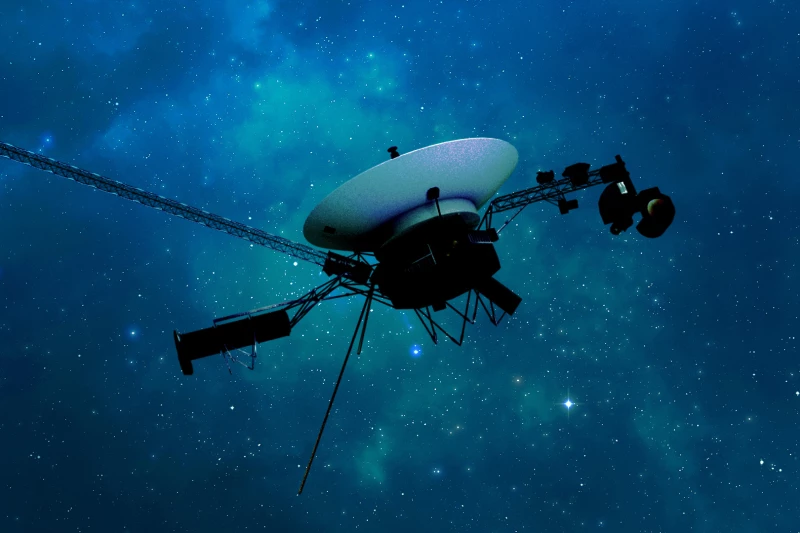
As it heads out of the solar system never to return, the deep space probe Voyager 1 is headed for yet another cosmic milestone. In late 2026, it will become the first spacecraft to travel so far that a radio signal from Earth takes 24 hours, or one light day, to reach it.
According to Einstein, the speed of light is as fast as it’s possible for anything to go. That may seem arbitrarily restrictive, but at 186,000 miles per second (299,388 km/s), that leaves a lot of leeway unless you’re dealing with things at computer speeds where a delay can be aggravating.
Another thing that can be aggravating is that though light is fast, the universe is, as The Hitchhiker’s Guide to the Galaxy says, really big. This means that if you have to cover a long enough distance, the speed of light starts to become noticeable in a way that we don’t see on Earth.
Perhaps the first time we saw this publicly was during the Apollo Moon landings over 50 years ago. If you watch old video recordings of the astronauts on the lunar surface talking to Mission Control back on Earth, you’ll notice that there’s a delay of about 2.6 seconds between when someone makes a comment and the other party replies. That’s because with the Moon being about 226,000 miles (363,000 km) from the Earth, it takes a radio signal 1.3 seconds to travel the distance.

If you go to Mars, this gap becomes up to four minutes. For Jupiter, it’s up to 52 minutes, and for Pluto (which I still stubbornly say is a planet!) that comes to up to 6.8 hours. Small wonder that deep space missions require robotic spacecraft that have a high degree of autonomy. If they had to wait for direct instructions from Earth before making a move, a few Mars rovers would have ended their careers as a pile of scrap at the bottom of a ravine.
None of this compares to Voyager 1, the veteran probe launched in 1977 to make a flyby of Jupiter and Saturn before heading out on a one-way trajectory into interstellar space. Despite being almost a half-century old and flying through the incredibly cold, radiation-saturated depths of space at the edge of the solar system, it still continues to function and NASA is determined that it will continue to do so until its nuclear power source finally gives out in the next year or so.
New Atlas for more
Your brain changes at 9, 32, 66, and 83
by LAURA BAISAS
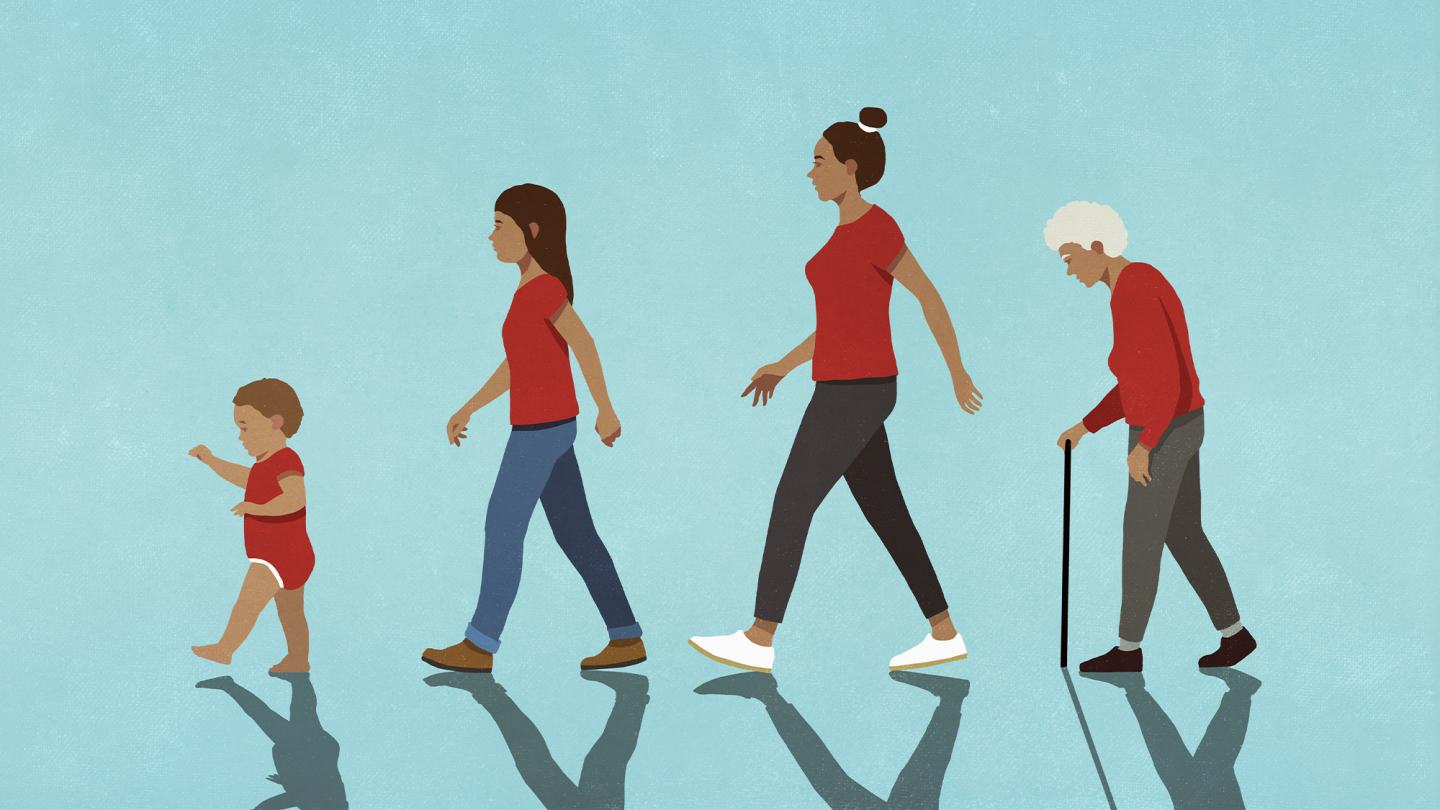
Brain scans of 3,802 people show how the brain’s structure changes at four major turning points.
A team of neuroscientists at the University of Cambridge in the United Kingdom identified five broad phases of brain structure over the course of an average human life. These eras occur as the human brain rewires to support the different ways of thinking while we grow, mature, and eventually decline. The five major turning points are detailed in a study published today in the journal Nature Communications.
In the study, they compared the brains of 3,802 people between ages zero and 90, using datasets of MRI diffusion scans. These types of MRIs map neural connections by following how water molecules move through brain tissue. They detected five broad phases of brain structure in the average human life that are split up by four pivotal turning points between birth and death when our brains reconfigure.
The major turning points occur at ages:
- Nine (Childhood brain architecture)
- 32 (Adulthood brain architecture)
- 66 (Early aging)
- 83 (Late aging)
“We know the brain’s wiring is crucial to our development, but we lack a big picture of how it changes across our lives and why,” study co-author and neuroscientist Dr. Alexa Mousley said in a statement. “This study is the first to identify major phases of brain wiring across a human lifespan. These eras provide important context for what our brains might be best at, or more vulnerable to, at different stages of our lives. It could help us understand why some brains develop differently at key points in life, whether it be learning difficulties in childhood, or dementia in our later years.”
Age nine–From baby to kid
From infancy through early childhood, the brain is defined by network consolidation. All of the connectors between neurons called synapses that were overproduced in a baby’s brain whittle down. The more active synapses survive, shaping the brain’s early architecture.
Across the whole brain, these connections rewire in the same pattern from birth until about nine years old. Meanwhile, the brain’s grey and white matter grow rapidly in volume.
The childhood brain runs from birth up until a turning point at the age of nine. Here, the brain is experiencing a change in cognitive capacity, but also an increased risk of mental health disorders.
Age 32–Adult brain takes shape
In the early 30s, the brain’s neural wiring shifts into adult mode. White matter continues to grow in volume, so the brain’s communications networks are increasingly refined based on MRI scans showing how water molecules movies. These changes keep the brain at an enhanced level of cognitive performance that peak in the early 30s and is the brain’s “strongest topological turning point” of the entire lifespan, according to the team.
“Around the age of 32, we see the most directional changes in wiring and largest overall shift in trajectory, compared to all the other turning points,” said Mousley. “While puberty offers a clear start, the end of adolescence is much harder to pin down scientifically. Based purely on neural architecture, we found that adolescent-like changes in brain structure end around the early thirties.”
Adulthood is the longest era and three decades. The brain’s architecture also stabilizes compared to previous phases, without any major turning points for the next 30 years. According to the team, this corresponds with a “plateau in intelligence and personality.”

Dr. Alexa Mousley, University of Cambridge
Age 66–Early aging begins
This mid-60s turning point marks the start of an “early aging” phase of brain architecture. It’s a more mild period and is not defined by any major structural shifts. However, the team still uncovered meaningful changes to the pattern of brain networks on average at around age 66.
“The data suggest that a gradual reorganisation of brain networks culminates in the mid-sixties,” said Mousley. “This is probably related to aging, with further reduced connectivity as white matter starts to degenerate. This is an age when people face increased risk for a variety of health conditions that can affect the brain, such as hypertension.”
Popular Science for more