
by MICHELLE STARR
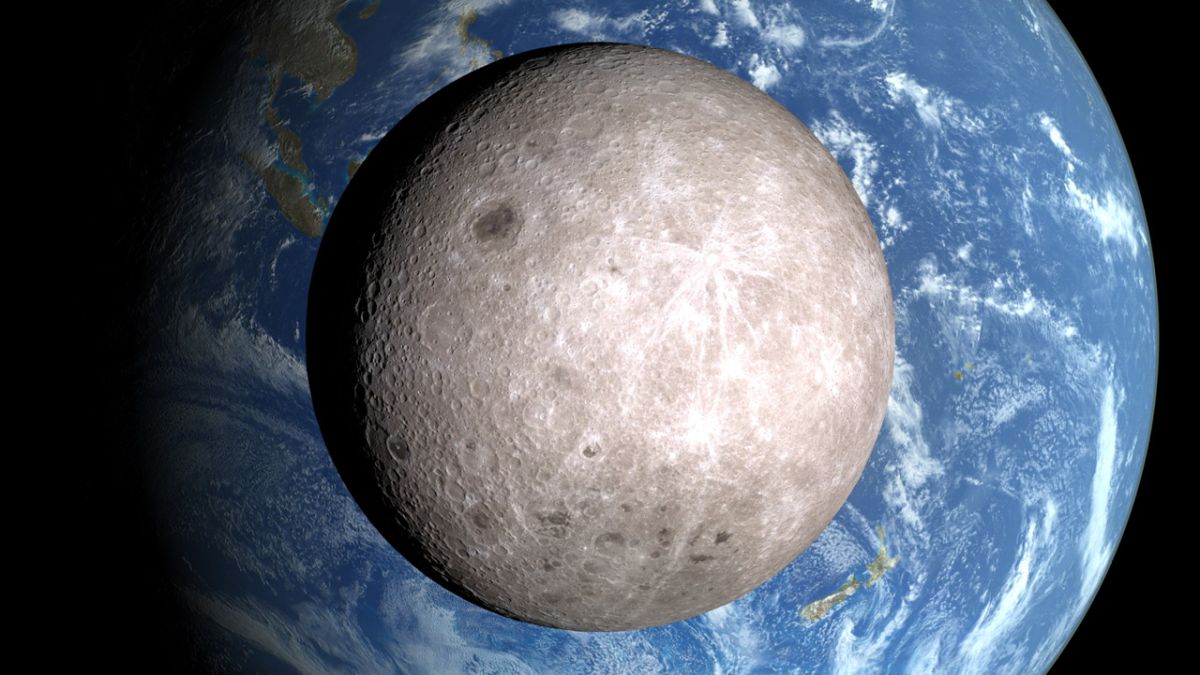
Dust from the far side of the Moon has yielded an unexpected microscopic treasure we’ve never seen before.
A close examination of lunar material collected during the China National Space Administration’s Chang’e-6 mission revealed specks of dust from a kind of water-bearing meteorite so fragile it seldom survives the trip through Earth’s atmosphere.
It’s the first confirmed debris of a type of meteorite known as Ivuna-type carbonaceous chondrite – or CI chondrite – ever to be found on the Moon, demonstrating that fragile, water-bearing asteroids can leave microscopic traces embedded in the lunar regolith.
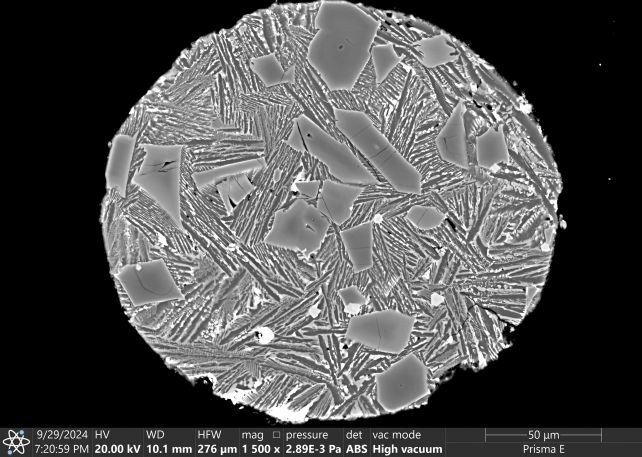
CI chondrites are the most water- and volatile-rich of meteorites, with compositions similar to space rocks like Ryugu and Bennu. They are very porous and ‘wet’, with up to 20 percent of their weight bound up in water as hydrated minerals.
Because of this, they’re also unusually soft and crumbly compared to other space rocks, which means they’re particularly susceptible to destruction on atmospheric entry and impact. This means that fewer than one percent of meteorites found on Earth are CI chondrites. They are extremely rare.
They’re not expected to survive on the Moon, either; although the Moon doesn’t have an atmosphere in which meteorites can burn and explode, the velocity with which objects collide with the lunar surface is so high that material is expected to either vaporize, melt, or be flung back into space.
Led by geochemists Jintuan Wang and Zhiming Chen of the Chinese Academy of Sciences, a team of researchers sifted through more than 5,000 fragments of Chang’e-6 material in the hope of finding impact material, even if it had been altered.
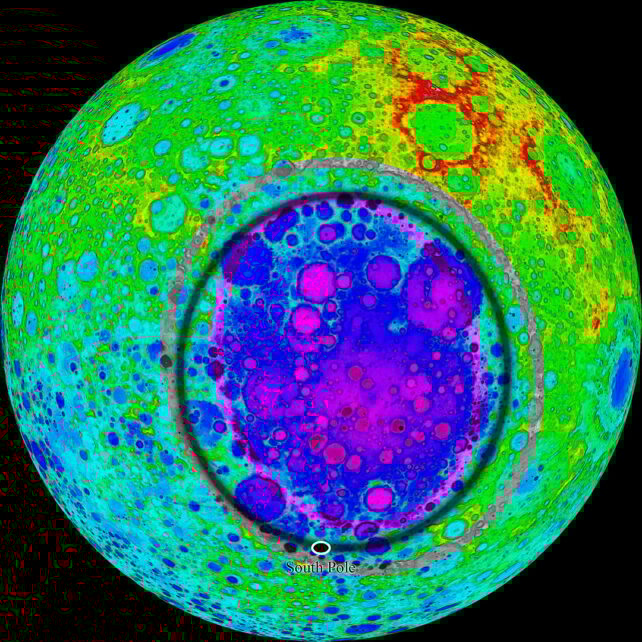
The sample was collected from a crater-within-a-crater – the Apollo Basin inside the vast South Pole-Aitken Basin, which covers nearly a quarter of the lunar surface. That made it a prime site for ancient impact debris.
The researchers focused on olivine, a magnesium-iron silicate mineral commonly found in volcanic rock, impact melts, and meteorites. They isolated several olivine-bearing fragments – or clasts – mounting and polishing them to perform scanning electron microscopy, electron probe microanalysis, and secondary ion mass spectrometry.
Science Alert for more