
by JUAN COLE
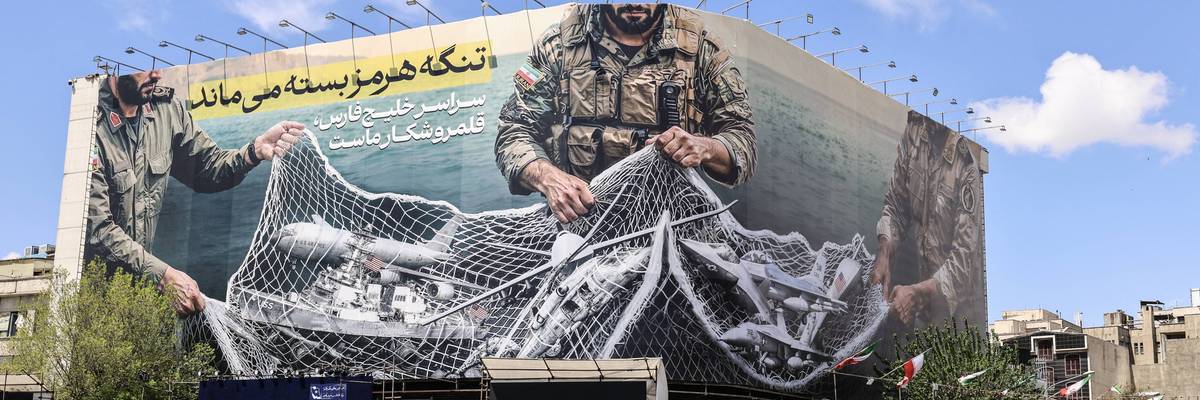
The Iranian government went 12 rounds with a genocidal Trump—and its people suffered a lot of punches—but the nation is still standing. That counts as a win and a massive failure for the United States..
Trump announced a two-week ceasefire on Tuesday, April 7, the 39th day of the Israeli-US war on Iran. He depended on Pakistani mediators and a 10-point peace plan put forward by Iran itself.
And so, Iran won the 2026 war.
It did not win as in, scoring a knockout. It won in the sense that if I went 12 rounds with Deontay Wilder and was still standing up at the end of it, it would count as a win.
The Israeli-US attempt to decapitate the government failed. Ayatollah Ali Khamenei was assassinated along with family members, but the 88-member clerical Assembly of Experts simply elected his son, Mojtaba Khamenei, to succeed him. The civilian minister of defense was killed, which is probably a war crime. President Masoud Pezeshkian appointed IRGC General Majid Ebnelreza as acting minister of defense. The pragmatic civilian Secretary of the National Security Council, Ali Larijani was assassinated, likely another war crime. He was succeeded by hard liner Mohammad Bagher Zolghadr, a former IRGC general. In essence, Trump and Netanyahu made an internal coup against Iran’s centrist pragmatists in government, ensuring that they were replaced by far right hard liners.
Going into the war, the Iranian government had just committed a massacre of thousands of protesters and was without a friend in the world. Trump and Netanyahu committed breathtaking war crimes on Iran and acted and spoke so monstrously that many countries ended up at least rhetorically supporting Iran, or at least opposing the war on it. Israel comes out of the war a pariah. The US is too rich, big and powerful to be a pariah but its standing has certainly plummeted and it can expect much less cooperation going forward.
Iran likely inflicted a billion dollars worth of damage on the 13 US military bases in the Middle East, most of which are largely destroyed. It used cheap little drones to take out radar installations in Kuwait and elsewhere worth hundreds of millions of dollars, blinding the US to its missile barrages and allowing some deadly strikes, as on Dimona in Israel. Iran demonstrated that having a US military base does not protect the host country but rather exposes it to greater danger. Most US military personnel appear to have had to flee the bases, relocating to local hotels. Iranian intelligence in the Gulf is good enough so that some of those hotels were attacked by drones. Some personnel arrived back in Washington D.C. with only the clothes on their back and Pete Hegseth doesn’t seem to have helped them much.
Whether Gulf states will want US bases in the medium to long term, after this, is now an open question. And are any US personnel at all left in Iraq? Iraqi Shiites supported Iran in the war.
Israeli military censorship makes it difficult to assess the damage to that country. The Haifa refinery was hit, as were military and intelligence research institutes. Netanyahu was clearly over-confident in Israeli interceptors. Many Israelis have had to move house to sleep in shelters. Moreover, Israel is running out of interceptors faster than Iran is running out of ballistic missiles, so that if the war continued, at some point Israel would be a sitting duck. If Israel actually does agree to abide by Trump’s two-week ceasefire, that is the reason–Israel is days from being completely vulnerable to Iran’s strikes. Already, Arrow interceptors are so low that Israel has had to let some missiles through if they seemed to be headed for relatively unpopulated areas. In that sense, Israel lost on points.
I have argued that the war failed not only because the government still stands but because its annual income from petroleum and new Strait of Hormuz tolls could be several times what it was earning from petroleum sales to China before the war. Petroleum prices are falling from highs because of the two-week ceasefire, which may or not signal the end of the war. But so much supply has been destroyed or delayed in the Gulf that prices could remain high in the coming year. Likely a third of the Gulf’s refining capacity has been damaged.
Common Dreams for more