
by TRITA PARSI
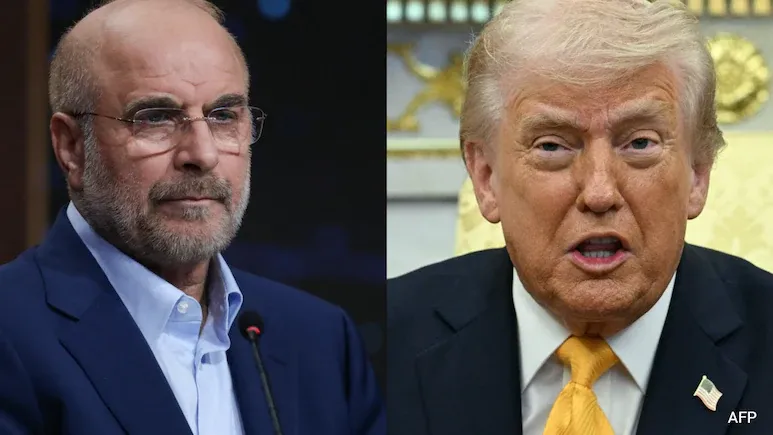
Yesterday began with Donald Trump issuing genocidal threats against Iran on social media and ended—just ten hours later—with the announcement of a 14-day ceasefire, on Iran’s terms. Even by the volatile standards of Trump’s presidency, the whiplash is extraordinary. What, then, have the two sides actually agreed to—and what might it mean?
In a subsequent post, Trump asserted that Iran had agreed to keep the Strait of Hormuz open during the two-week pause in hostilities. Negotiations, he added, will proceed over that period on the basis of Iran’s 10-point plan, which he described as a “workable” foundation for talks.
Those 10 points are:
1. The US must fundamentally commit to guaranteeing non-aggression.
2. Continuation of Iran’s control over the Strait of Hormuz.
3. Acceptance that Iran can enrich uranium for its nuclear program
4. Removal of all primary sanctions on Iran.
5. Removal of all secondary sanctions against foreign entities that do business with Iranian institutions.
6. End of all United Nations Security Council resolutions targeting Iran.
7. End of all International Atomic Energy Agency resolutions on Iran’s nuclear program.
8. Compensation payment to Iran for war damage.
9. Withdrawal of US combat forces from the region.
10. Cease-fire on all fronts, including Israel’s conflict with Hezbollah in Lebanon.
The United States has not, of course, signed on to all ten points. But the mere fact that Iran’s framework will anchor the negotiations amounts to a significant diplomatic victory for Tehran. More striking still, according to the Associated Press, Iran will retain control of the Strait during the ceasefire and continue—alongside Oman—to collect transit fees from passing vessels. In effect, Washington appears to have conceded that reopening the waterway comes with tacit recognition of Iran’s authority over it.
The geopolitical consequences could be profound. As Mohammad Eslami and Zeynab Malakouti note in Responsible Statecraft, Tehran is likely to leverage this position to rebuild economic ties with Asian and European partners—countries that once traded extensively with Iran but were driven out of its market over the past 15 years by U.S. sanctions.
Iran’s calculus is not driven solely by solidarity with Palestinians and Lebanese. It is also strategic. Continued Israeli bombardment risks reigniting direct confrontation between Israel and Iran—a cycle that has already flared twice since October 7. From Tehran’s perspective, a durable halt to its conflict with Israel is inseparable from ending Israel’s wars in Gaza and Lebanon. This is not an aspirational add-on; it is a prerequisite.
Trita Parsi for more