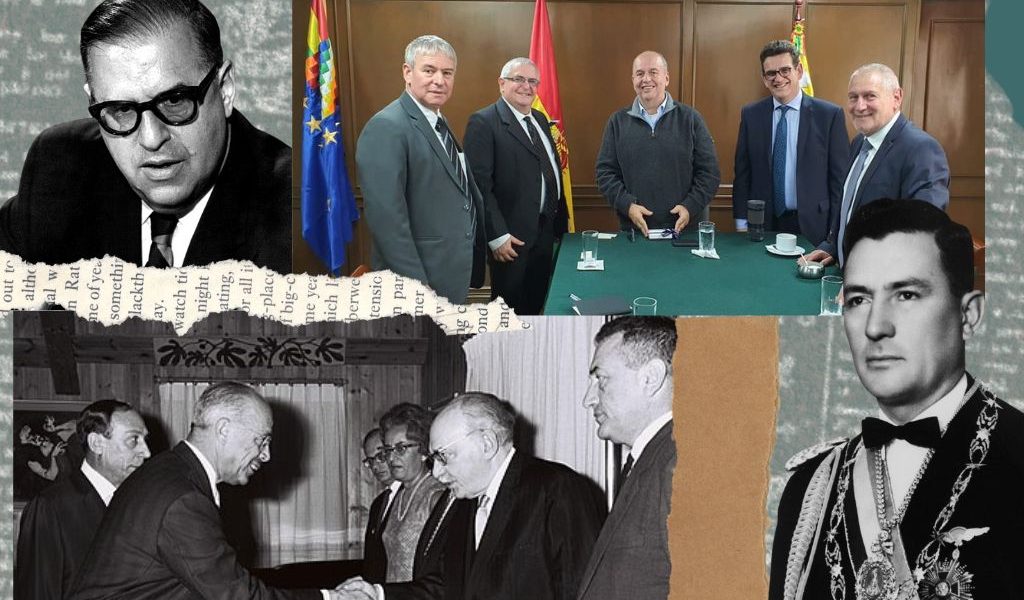
Clockwise from top left: Abba Eban, Arturo Murillo’s tweeted image, René Barrientos Ortuno and Ambassador Odivip Suarez Morales (left) shaking hands with Israeli President Zalman Shazar on 29 June 1967. IMAGE/ Wikipedia and X.
The last thing the Bolivian people need is for the previous “good relations” to be restored, with Israel once again becoming involved in the country’s internal repression.
On October 20, Israel’s foreign minister Gideon Sa’ar announced on X
that he had spoken with Bolivia’s president-elect Rodrigo Paz,
congratulating him on his “impressive victory” in the elections. Sa’ar
highlighted “the history of relations between Israel and the Jewish
people with Bolivia” and added, “Now, after two decades of strained
relations, it is time to restore our friendship and put the ties back on
track.”
In his post, Sa’ar joined previous foreign ministers who had been responsible for glossing over the darker chapters of Israel’s relations with Bolivia, particularly during the years marked by a series of military coups and dictatorships from November 1964 to 1982.
Like a game of musical chairs,
members of the juntas and heads of the security apparatus rotated among
themselves, but Israel maintained friendly relations and conducted
security business with all of them. Some were even trained in Israel or
by Israelis in Bolivia before assuming their positions in the new junta.
For example, on November 24, 1978, a military coup brought Raul Lopez
Leyton to the head of the interior ministry – he had parachuting wings
from Israel.
Documents in archives in Israel, the
United States (from the CIA and the State Department), and Bolivia
indicate that the military regimes purchased aircraft from Israel and
regularly acquired communications equipment, mortars and shells, Uzi
submachine guns, and ammunition.
According to the documents, neither
Israel nor its representatives were concerned that Nazis and neo-Nazis
were active within the security forces and militias, that the regimes
murdered, tortured, and disappeared opposition leaders and workers, or
that they “broke strikes” in mines using machine guns, mortars, tanks,
planes, and helicopters against striking workers.
Bolivia was a poor country, and its
defence procurement budget from Israel was limited compared with its
neighbours Argentina and Chile. However, its importance to Israel was
significant, as Bolivia remained one of its loyal allies at the UN and
in other international forums, and even maintained an embassy in
Jerusalem during some years.
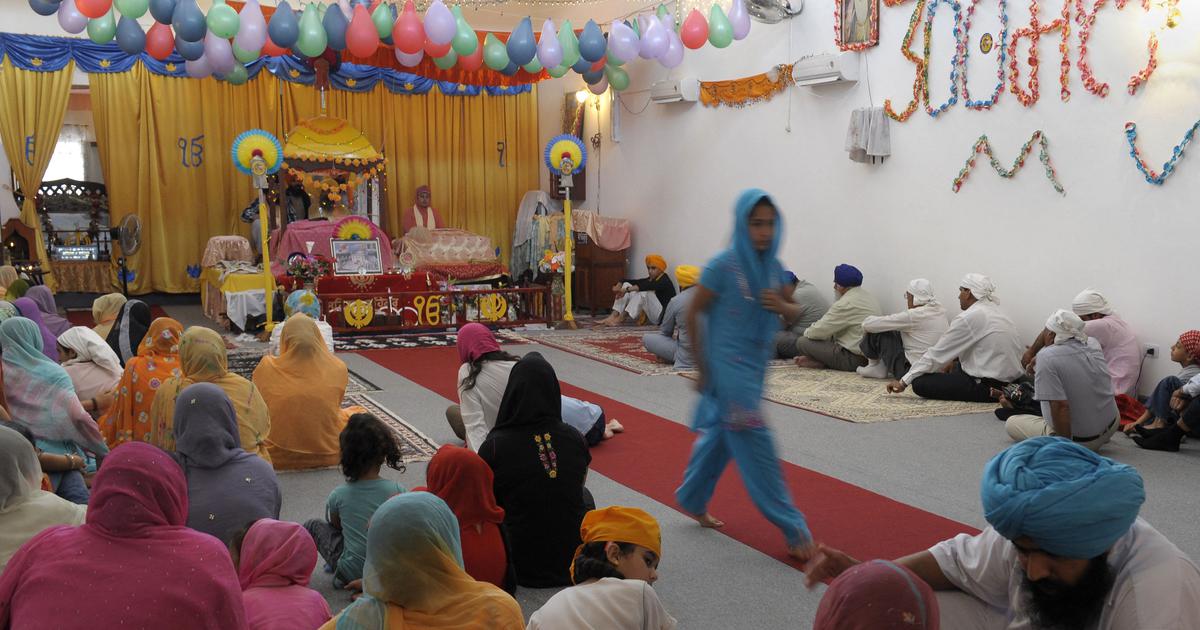
Members of the Sikh community pray at a gurdwara in Rosario de la Frontera, in the Argentine province of Salta, some 1300 km northwest of Buenos Aires, in 2008. IMAGE/Juan Mabromata/AFP
Lured by glowing promises of work and land, hundreds of Sikhs reached Argentina in the 1910s, only to confront discrimination, destitution and broken promises.
In the early 1900s, Argentina was among the wealthiest countries in
the western hemisphere. Its economy was booming and, fuelled by foreign
investment, its vast, fertile lands had made it a major exporter of
livestock and agricultural produce. New industries sprang up, creating a
demand for labour that European migrants alone could not meet.
Noticing
how Indian workers were employed across the Caribbean, the authorities
in Buenos Aires approached their representative in India to explore the
possibility of encouraging migration from the subcontinent.
In a letter dated February 13, 1911, the Argentine consul in Calcutta
wrote to Foreign Secretary Henry McMahon, requesting that Argentina be
added to the list of countries Indians were permitted to emigrate to.
Promoting
his country as a promising destination, the consul wrote, “It is
because, with the aid of a kindly climate, and a fertile soil, the seed
sown in our fields by the labourer gives a return of a thousand to one,
and because domestic happiness and prosperity flourish under the aegis
of an honest, wise and progressive government, which requires from its
immigrants nothing except honesty and diligence.”
With the letter, the consul enclosed a pamphlet outlining the “laws and decrees” applicable to immigrants and investors.
The response in Calcutta was one of surprise. An internal memo noted that under the Indian Emigration Act of 1908 – the very law cited by the diplomat – a colonial committee was needed to assess a destination’s annual labour demand and the facilities it offered.
“But
the Committee considered the case of British colonies only,” the memo
observed, adding that “it might be questioned by some whether the
settlement of Indians in a foreign country is equally desirable.” To
deal with this unusual case, the memo said, approval from the Secretary
of State in London would also be necessary.
The memo went further:
“It may be added that the Government of India do not regard with favour
any proposals for the extension of emigration to foreign countries. The
objection is not so much on the score of obtaining good laws as of
getting them well administered in the interests of the Indian
immigrant.” Suriname, where “coolies” were said to be treated well, was
listed as the only “foreign” country suitable for Indian migration.
Calcutta
informed the consul that the matter would have to be taken up between
the British and Argentine governments, though this was hardly the end of
the issue.
Dashed dreams
Despite
official discouragement, word spread in Punjab of the abundant
opportunities supposedly awaiting agricultural and industrial labourers
in Argentina. Much like in the 21st century, families sold land and
pooled resources to send young men on the long journey to South America.
It’s Independence Day in Tanzania but instead of the usual festive crowds, the streets are lined with police and army units. The government has deployed a heavy security presence across major cities to deter planned protests, after activist groups called for nationwide demonstrations over economic pressures and governance concerns. It further says the planned protests would be unlawful and amount to an attempted coup. We spoke to political analyst, Sebatho Nyamsenda about the mood of in the country on #AfricaWorldHour
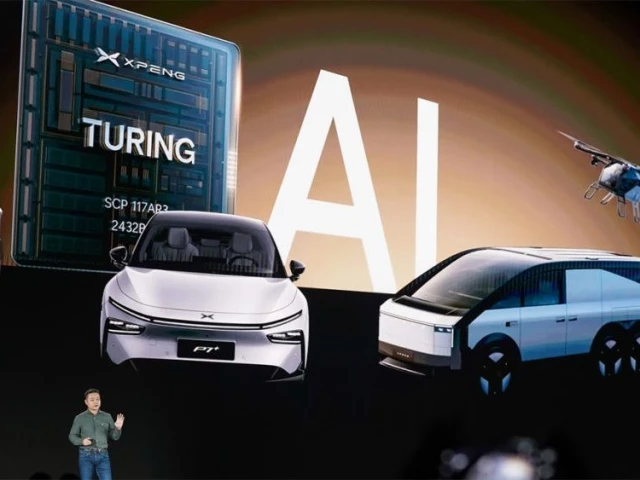
Shanghai Auto Show opens with bold message as China leads global electric vehicle race. IMAGE/Shanghai Auto Show/The Express Tribune
You may make progress in an island but development beyond that level is difficult if surroundings are backward
As Pakistan remains embroiled in internal
power struggles, its external friends and foes wonder where the country
is politically and economically headed. The circumstances post 26th
Amendment offer enough evidence to forecast the political direction
Pakistan has taken. The economic distress is writ large too.
The decision of Qatar’s Al Thani Group to withdraw its $2.09 billion
investment from Pakistan’s Port Qasim Power Project underscores
Pakistan’s growing reputation for broken contracts and unpaid
obligations. No surprise foreign direct investment plummeted to a mere
$26 million by September this year — compared to India which boasts more
than $81 billion in the same period. The Qatari group’s pullout
— preceded by the exit of global firms like Shell, TotalEnergies,
Pfizer, Sanofi, Telenor, Uber, IGI and Microsoft inter alia and partial
or full closure of even domestic prime producers such as Gul Ahmed
Textiles — epitomises a fractured system that is asphyxiating under the
acute indifference and incompetence of a power-centric elite that
loathes real reform.
The China Pakistan Economic Corridor (CPEC) — often touted by
Minister Ahsan Iqbal as a game-changer, a phrase our Chinese friends
never favoured — suffers from the same malaise: lofty, irrational talk,
little walk. Over a decade into CPEC, a number of Chinese academics,
intellectuals and officials, who had dreamed of an economically viable,
self-sustaining Pakistan with the help of CPEC, today sound
disillusioned — wondering if Pakistan’s rulers are concerned at all
about the economic viability and development of the country.
Some points from conversations with Chinese friends are worth pondering:
• China came in to improve infrastructure and help the people of Pakistan and not to please a particular political priority.
• CPEC was intrinsically designed to focus on areas that needed development, regardless of who was proposing what.
• Ten years on, big investment ($25.4 billion) has not helped the
approaches to governance — decision-making and implementation — nor has
the security improved.
• Holding high-profile events with the PM and COAS at closely guarded
venues swarming with intelligence and security officials are optically
bad for foreign investors, who always look for comfortable zones to
invest their money.
• Pakistan’s policymakers keep telling us: “We are doing our best to
protect you.” Little do they realise that the issue at stake is not
about protecting individual Chinese nationals but about protecting the
long-term Pakistan-China relationship.
• In security conversations, Pakistanis often lecture us on
geopolitics as the reason of insecurity. Do they take us for fools? We
know what is happening around but such challenges and risks need to be
managed — the way China gradually defied and eventually blunted the
entire Western opposition to it. The talk needs to be followed up with
calculated walk.
• When even your own people are not investing, why would then
outsiders risk their money, particularly when the energy sector
continues to reel from the crippling circular debt?
• They also succinctly point to the minister for planning Ahsan
Iqbal’s long speeches as an example. If a minister in this era doesn’t
value the time and takes his audience for students then something
serious is certainly missing. This age dictates precision, focus and
execution and not lofty, lengthy rhetoric.
• China developed because it took underdeveloped regions along but
Pakistan’s peripheral regions — Khyber-Pakhtunkhwa, Gilgit-Baltistan and
Balochistan — remain excluded, conflict-scarred and badly managed. How
can the country progress if these regions are step-motherly treated?
This reminds me of the ancient Chinese philosophy of development: you
may make progress in an island but development beyond that level is
difficult if the surroundings are backward and turbulent. They keep
emphasising a cross-party consensus for national development and not
just CPEC.
Mayor-elect Zohran Mamdani
24-08 32nd Street
Suite 1002A
Astoria, NY 11102
Dear Mayor-elect Mamdani,
It should not
come as a surprise to alert citizens that your decisive victory in the
Mayoral race has prompted your opponents – the privileged super-rich and
their indentured servants in City Hall – to label you as an
“extremist,” “radical,” or, in Trump’s view, a “communist.” How
ludicrous! Your affordability agenda is hardly immoderate. Many
Democratic politicians have taken these positions over time.
Free
bus fares exist in some municipalities in the U.S., including Kansas
City, Missouri, Tucson, Arizona, and Alexandria, Virginia. Proposing
half a dozen city-run grocery stores in New York City’s “food deserts”
(meaning a geographic area with limited access to affordable, healthy
food options) is hardly radical. You could even have them structure
these stores as consumer cooperatives (owned by consumers). Food co-ops
have existed in numerous communities in the U.S. for years. Your rent
stabilization proposal is not uncommon – many large cities have rent
controls to protect powerless tenants from avaricious landlords,
especially from today’s very large corporate landlords with their
fine-print contract peonage. Also, there are cities in the U.S. offering
partially publicly subsidized child care. New Mexico just launched a
statewide universal child?care program.
The social democratic
countries in Europe and other countries, including Canada, have long had
much broader social safety nets that go far beyond what you have
proposed.
What the oligarchy and large corporations really do not
like about you is that you are projecting a consistent and wide-ranging
voice for the people, the workers, the poor, and the powerless in the
corridors of political power of City Hall. They have had long-game
statism, or a corporate state, at the local, state, and federal levels,
with little opposition by the two-party duopoly.
Regarding your
self-description as a democratic socialist, that doesn’t pass the laugh
test. You are not arguing for nationalization of banks and insurance
companies, utilities, not even, to our knowledge have you called for a
“public bank,” which has existed so effectively in North Dakota (now a
Republican stronghold) founded in 1919.
You call for increasing
taxes on the undertaxed super wealthy and large corporations. So do over
80% of the American people. Pretty normal.
Indeed, President Donald Trump has become a corporate socialist par excellence. As The New York Times reported
on November 25, 2025, (“$10 Billion and Counting: Trump Administration
Snaps Up Stakes in Private Firms”) the Trump administration has de facto
partly nationalized an array of private companies for ulterior
political motives under the contrived banner of national security. The
companies include Intel, U.S. Steel, Westinghouse, MP Materials, Vulcan
Elements, and MP Materials. This invites bribery by other means, i.e., a
Trump donation in exchange for an administration sweetheart investment.
The fabled Central Intelligence Agency now features a venture capital
firm, In-Q-Tel, ostensibly to fund commercial technologies to fortify
the U.S. intelligence community and the Department of Defense. But under
Trump, partisan political motives likely will inform the CIA’s
investment portfolio.
As for taking a stand on pending legislation ending the unconscionable daily
electronic rebate of tens of millions of dollars in stock transaction
taxes (a progressive tiny sales tax of one tenth of one percent on stock
sales), you have been AWOL despite urgings by your numerous colleagues
in the state legislature to sign on to a bill that would end the rebate
and specifically allocate the many billions of dollars annually to mass
transit, education, health care and environmental protection.
So far, your silence has put you to the RIGHT of former Mayor MICHAEL BLOOMBERG. During his presidential run in 2020, he said:
“Harness
the power of the financial system to address America’s most pressing
challenges. Introduce a tax of 0.1% on all financial transactions to
raise revenue needed to address wealth inequality, and support other
measures – such as speed limits on trading – to curb predatory behavior
and reduce the risk of destabilizing “flash crashes.”
At the beginning of the year, Norway looked set to elect the most
right-wing government in its history. The right-populist Progress Party
was surging in the polls while the centre-left government was in
disarray, with the Centre Party withdrawing from the Labour-led
coalition after a row over further integration into European energy
markets. Yet in the parliamentary elections of 8 September, the
incumbent Labour Party staged a recovery – clinging onto power with a
slightly increased vote share of 28 per cent. Jonas Gahr Støre now leads
a second government, this time principally supported by the Red Party,
Socialist Left and Greens, which won a combined 16 per cent, rather than
its erstwhile coalition partner, which collapsed to 6 per cent. On the
right, power shifted to the more radical Progress Party, led by Sylvi
Listhaug, nearly doubled its share to 24 per cent, overtaking Erna
Solberg’s Conservatives, which dropped to 15 per cent. According to its
own post-election evaluation, the Conservatives – who ruled from 2013 to
2021 – were punished in part for not having a sufficiently distinct
platform to the Progress Party, with whom they faced the widely
unpopular prospect of governing in coalition.
Both Labour and Conservatives ran on the same set of issues: welfare,
the cost of living, national security. In the televised debates, the
urban-rural divide was high on the agenda – a perennial subject in a
country with the lowest population density in mainland Europe. The
Conservatives campaigned for increased privatisation of healthcare to
cut waiting lists, and tax cuts, even for the rich; Labour’s headline
pledges were a hospital waiting list cap, cutting the cost of nursery
fees and a fixed-price electricity scheme. On national security,
meanwhile, the parties were united in preaching loyalty to NATO,
full-throated support for Ukraine and a large-scale increase in military
spending. Indeed, Labour – whose finance minister is former NATO chief
Jens Stoltenberg – has made NATO membership a red line for any coalition
with the left parties, and Støre’s government last year pledged to
double the defence budget, touting the proposal as a ‘historic boost’.
Militarism was the ‘cause above all causes’ in the election according to Aftenposten,
Norway’s paper of record. Bordering Russia in the Arctic, the spectre
of the Cold War looms large in a country that once refused permanent
foreign bases or the stationing of nuclear weapons on its soil to avoid
antagonising the USSR. Tensions with Russia rose after a significant
increase in American troops from 2018 and bomber planes were stationed
in 2021. Norway is now set to be a maritime stronghold for NATO in the
strategically vital gap between Greenland, Iceland and the UK, as well
as the broader North, Norwegian and Barents Sea area.
US President Donald Trump (left) and Venezuela’s President Nicolas Maduro IMAGE/Al Jazeera
Perpetually at war
Every time the US empire, or “the imperialists of the planet,” as Nicaragua’s co-President Rosario Murillo put it, is on a war-mission to spread “democracy” or to fight “communism” or “terrorism” or “Islamic terrorism” or “narcoterrorism” or whatever label it decides to put on its enemy, the question raised by many critics is:
when will the US learn a lesson that wars are not achieving anything but are instead harmful to the US itself?
The critics may be right but the problem is that the US leaders don’t want to learn any lesson.
Why?
Because none of the wars have been detrimental to their person or their well-being because almost all wars are fought hundreds or thousands of miles away on “enemy” land. There have been a few incidents where the US has been counter-attacked as the burning of White House and other buildings by the British troops in 1814, the 1941 Japanese attack on Pearl Harbor, and Taliban attack on World Trade Centers in 2001.
Just comparatively, minor incidents.
Imagine if the US was attacked the way Vietnam, Guatemala, Haiti, Chile, Afghanistan, Philippines, Cuba, Cambodia, Iraq, and so many other countries have been attacked by the US. The US leaders thinking on starting wars would have been completely different, But that is not the case, and so the constant wars by the US, continue.
Of course, US suffers financial losses in these wars, and also incurs some loss of lives. The financial losses are covered through borrowing which its leaders don’t worry about because they’ll be gone after 4-8 years. (The total US debt January 8, 2026 stands at 38.6 trillion dollars, highly doubtful will ever be paid.) US didn’t care about loss of life of its soldiers either until, the Vietnam War, where 58,220 US citizens lost their lives. Over three million Vietnamese were killed. The US government kept lying:
Anti-war protests and media coverage in second half of 1960s and first half of 1970s of planes arriving in US carrying coffins of US soldiers forced the ruling elite to take care of the problem, by asking TV channels not to show the coffins.
Today, advanced warring technology has solved the high casualty problem, thus allowing the war-show to continue uninterrupted and filling the coffers of the death merchants.
Empire’s Juggernaut <1> out of control
On January 3, 2026, US forces bombed Caracas, Venezuela’s capital, and kidnapped President Nicolas Maduro and wife Cilia Flores. An absolutely criminal and illegitimate act. (Several articles on Maduro’s abduction here.)
Anita Naidu reminds us not to forget the white supremacy involved in these warring acts:
Here, white supremacy is the global system that ranks nations, people and sovereignties according to proximity to Western power and allocates legitimacy accordingly.
In 2002, Maduro’s predecessor President Hugo Chavez was kidnapped by the US government of George W. Bush who supported right-wing elites in Venezuela. It was a short-lived 47-hour coup because Chavez supporters and his military succeeded in crushing the coup d’etat.
“Years ago, someone told me: ‘They’re going to end up accusing you of being a drug trafficker – you personally – you, Chávez. Not just that the government supports it, or permits it – no, no, no. They’re going to try to apply the Noriega [2] formula to you.’ They’re looking for a way to associate Chávez directly with drug trafficking. And then, anything goes against a ‘drug trafficker president’, right?”
Trump has also threatened Columbia, Cuba, Greenland, Iran, and Mexico with establishing its dominance over them.
“Because that’s what I feel is psychologically needed for success. I think that ownership gives you a thing that you can’t do, whether you’re talking about a lease or a treaty. Ownership gives you things and elements that you can’t get from just signing a document.”
Trump’s predecessors who came to the Americas in what is now the US did the same thing with the Native Americans — ordered them to sign papers and hand over the territory or get killed so they would get the territory, anyway.
On January 5, 2026, White House advisor Stephen Miller clearly laid out Trump & CO’s philosophy on how they would rule Latin America:
“The United States is using its military to secure our interests unapologetically in our hemisphere. We’re a superpower and under President Trump we are going to conduct ourselves as a superpower. It is absurd that we would allow a nation in our backyard [the Latin America] to become the supplier of resources to our adversaries [China and others] but not to us.”
In 1993, the US Ambassador to the United Nations, Madeline Albright yelled at Colin Powell, the Chairman of the Joint Chiefs of Staff:
“What’s the point of having this superb military you’re always talking about if we can’t use it?”
The US did go to war against Yugoslavia in 1999 when Albright was Secretary of State. That war came to be known as “Madeleine’s War” and “Albright at War.”
In an interview to the New York Times on January 8, 2026, Trump answered a question on whether there were any restrains on his “global powers”:
“Yeah, there is one thing. My own morality. My own mind. It’s the only thing that can stop me.”
“I don’t need international law. I’m not looking to hurt people.”
About morality and mind: Trump suffers from WMD — not weapons of mass destruction but Whopping Morality Deficiency. Trump’s mind is constantly thinking how to increase his, family’s, and cronies’ wealth through stealing or forcefully acquiring goods, services, and resources of other countries. He wants to exert his power over the entire globe and acts like previous US leaders, as the Global Emperor. Only such a leader could dismiss “international law” so casually, and could let Israel ignore UN resolutions regarding genocide of Palestinians.
Not looking to hurt people? Really? The cities in US are experiencing ICE atrocities. People getting killed, deported, or sent to El Salvador’s notorious prison.
Nigeria was bombed on false pretext. US attacks on Venezuelan boats as a prelude to force Maduro to go into exile, killed 123 people. During Maduro’s abduction 80 people were killed. One could go on but suffice to say that Trump’s actions are tremendously hurting and uprooting lives every second.
Historically, US leaders have ignored international laws when it has suited them. As did German Chancellor Adolf Hitler on September 1, 1939, when he attacked Poland. Hitler’s justification:
“The Polish state has refused the peaceful settlement of relations which I desired, and appealed to arms… In order to put an end to this lunacy I have no other choice than to meet force with force from now on… Destroying Poland is our priority… The winner is never asked if what he said was the truth or a lie. As far as starting and fighting a war is concerned, there is no law – victory is the decisive factor. Be brutal and be without mercy.”
In above words, one can easily identify similar excuses given by US presidents for their deadly illegal wars.
When will China wake up?
With full financial and military support, US let Israel commit genocide in Palestinian territory of Gaza ignoring United Nations Resolutions, the World Court, and hundreds of protests by millions of people world wide. China remained quiet, except for polite diplomatic condemnation and call for ceasefire.
Israel bombed Iran several times killing many people, including several scientists. Later Israel joined the US in attacking Iran’s nuclear facilities. but China reacted mildly.
The US kidnapped Venezuela’s President Nicolas Maduro. Ditto.
The question is when will China wake up and realize that every US military action, is making it bold and enhancing its power. And, every Chinese inaction is making it weaker. If the Trump juggernaut keeps on like this, who knows where it will end.
As one of the most economically and technologically powerful country, people around the globe expect China to form some kind of security coalition with countries threatened by the US. One wonders will China only wake up when the US shows up at Taiwan’s doorstep.
Trump’s thundering doesn’t raise as much fear, world wide, as Xi Jinping’s silence does.
Will the US empire’s juggernaut stop?
It depends on our Dear Leader’s mood. If he restricts himself to the Western Hemisphere, that is North and South Americas, without any challenge from Russia or China, Trump could maintain the US hegemony for a long time till guerilla movements with some leader like Che Guevara or Fidel Castro seriously challenge it. But if Trump overstretches himself like Adolf Hitler did, by attacking the Soviet Union, than the end may not be very pleasing. And there are strong chances that Trump will cross the red line due to his arrogance and over confidence.
What then will happen to our Dear Leader? Well, Elon Musk, his buddy, will fly him to Mars before people chase after him.
Is peace possible?
Global peace is somewhat possible if a Warsaw Pact kind of alliance is formed that could deter US and NATO from roguish overt and covert wars. Post 1991, after dismantling of USSR and Warsaw Pact, NATO not only stayed intact but increased membership, including some Warsaw Pact countries and former Soviet Republics, and now reaches almost the border of Russia. (See the maps here.) In 1991, US became the only superpower, because the other superpower, Soviet Union, was dismantled. With more than 750 bases encircling the world in 81 countries, including the Middle East, US doesn’t have to go to war all the time; it just threatens small countries and gets what it wants.
Notes:
<1> English word Juggernaut (meaning: overwhelming or unstoppable force) comes from the name of a Hindu Lord of the Universe Jagannath. (One of Indian Prime Minister Modi’s BJP party members got carried away declaring: Lord Jagannath is a devotee of Modi!)
<2> In 1989, US government of George H. W. Bush Sr. invaded Panama and captured it’s leader Manual Noriega on drug charges. The actual reason was his refusal to support US war against the small Central American country of Nicaragua. Noriega had been involved in drug business for a very long time but was on good terms with the US, so was safe from them. In an Orwellian manner, the US news media, almost always supports the US government lies.
B. R. Gowani an be reached at brgowani@hotmail.com
Artist Misha Japanwala preserves what we are told to be ashamed of
IMAGES STAFF
She calls her work a love letter to Karachi and the people who have given her the courage to be as shameless as she can be.
Pakistani artist and designer Misha Japanwala described herself not as a sculptor, but as a documentor — creating an archive of both life and loss — in a recent interview with CBS News.
“My practice is documenting people and their bodies,” she said, as she walked CBS News’ Elaine Quijano through her exhibited works at the Hannah Traore Gallery in New York City.
Born and raised in Karachi, Japanwala made it to the Forbes
30 Under 30 Asia list in 2021. Her signature breastplates and
human-form sculptures draw from Pakistan’s social issues, serving as
social commentary as much as they reflect her own evolving aesthetic.
Her moulds have been worn by a number of artists, including Oscar-winning actor Lupita Nyong’o, and rapper Cardi B, both in her music video for ‘Rumours’ and photographs that announced her pregnancy in June. She was also featured in a special issue of V Magazine guest-edited by model Gigi Hadid.
She moved to the United States to pursue fashion, but found herself
captivated “not with clothes, but the bodies that wear them”. Today, she
works from her home studio in New Jersey, inviting subjects to have
their bodies moulded.
Reflecting on her journey, she told the channel with a sparkle in her
eyes, “Instead of feeling like I had to conform my body to fit a
certain garment, I was creating a garment out of my body itself.”