Zohran Mamdani, Jessica Tisch and the NYPD’s mass surveillance program

by SANDY ENGLISH

New York Mayor-elect Zohran Mamdani and New York City Police Commissioner Jessica Tisch overlook the New York City Police Memorial, Wednesday, Nov. 19, 2025. IMAGE/AP Photo/Richard Drew

After officers of the New York Police Department (NYPD) arrested protesters who blocked ICE Gestapo forces from leaving a garage in New York City’s Chinatown late last month, Zohran Mamdani, the Democratic Socialists of America (DSA) mayor-elect, took to social media (with a week’s delay) to comment on the incident. He advised immigrant workers of their rights—the need for a judicial warrant for ICE to enter private dwellings (that ICE routinely violates), the right to film ICE, etc.

But before the video clip is two-thirds done, Mamdani tells viewers not to “impede their investigation, resist arrest or run” and follows up with political pablum directed to his supporters, that he will as mayor “protect, support and celebrate our immigrant brothers and sisters.”

The essential political content of the video is, however, that the NYPD will arrest anyone who interferes with ICE operations. The intended audience of the video is the NYPD brass and the Trump administration. The video seeks to reassure them that a Mamdani government will uphold ICE operations in the city. It is worth noting that since Mamdani met with Trump in November, he has not posted a single item on social media criticizing Trump.

The pact between Trump and Mamdani has a concrete—and chilling—meaning: Mamdani will allow the work of the repressive apparatus of the state in the city, in this case primarily the NYPD, to continue unimpeded.

This is the significance of his reappointment of NYPD Commissioner Jessica Tisch, the pioneer of one of the most sinister mechanisms of repression aimed at the working class, the NYPD’s mass surveillance tools.

Tisch is not only a scion of an ultra-wealthy family that has played a prominent though largely behind-the-scenes role in New York City politics for the last 50 years. She has also devoted her career to designing and implementing a pervasive spying infrastructure known as the Domain Awareness System (DAS).

According to the watchdog group Surveillance Technology Oversight Project (STOP), thanks to DAS, “formed through a public-private partnership with Microsoft, what was once the subject of dystopian imagination is now an everyday reality for New Yorkers. DAS uses cameras, license plate readers, and radiological sensors to create a real-time surveillance map of New York City. This system partners with privately-owned CCTV cameras throughout New York City and instantly compares data with multiple non-NYPD intelligence databases. DAS video files are stored for at least one month, and metadata and license plate data are stored for at least five years—possibly indefinitely.”

STOP has also noted that data from credit cards and their place and time of use on the OMNY system (the MTA’s fare payment system) in New York subways and buses could be harvested by the NYPD. The state agency that manages the subway system, the Metropolitan Transit Authority (MTA), allows the NYPD to collect this data without a warrant.

WSWS for more
Apropos “Western Civilisation”

by PRABHAT PATNAIK

Hiroshima, Japan November 1945. IMAGE/LTJG Charles E. Ahl Jr/World Socialist Web Site

According to a report in the Times of India (November 23), the United States has asked European countries to restrict immigration in order to preserve “Western Civilization”. Many in the Third World would find the term “Western Civilization” laughable, especially if it is used in the sense of denoting something precious and worth preserving. The atrocities committed by Western imperialist countries against people all over the world over the last several centuries have been so horrendous that using the term “civilization” to cover such behaviour appears grotesque. From British colonialism’s unleashing  famines in India that killed millions in its rapacious bid to raise revenue from hapless peasants, to Belgium’s king Leopold’s unspeakable brutality against the people of what used to be called the Congo, to German extermination camps in Namibia that wiped out whole tribes, it is a tale of horrible cruelty inflicted on innocent people for no reason other than sheer greed. It is not surprising in this context that Gandhiji, when asked by a journalist what he thought of “Western Civilization”, had wryly quipped: “that would be a very good idea”.

But let us ignore all this cruelty and focus only on the material advance achieved by the West. This material advance itself has been achieved on the basis of an exploitative relationship that the Western imperialist countries had developed vis-à-vis the Third World, a relationship that left the latter in such a state that its inhabitants today are desperate to escape it. Western prosperity is not a separate and independent state achieved through Western diligence alone; it has been achieved through a process of decimation of the economies of countries from which the immigrants are fleeing. What is even more striking is that Western imperialism not only wants to stop the inflow of immigrants; it wants to prevent, even through armed intervention, any change in the societal structure in the immigrants’ home countries that could usher in development that stops this inflow of immigrants.

My argument might of course would be dismissed as hyperbole. After all, Western economies have been characterized by the introduction of remarkable innovations that have dramatically raised labour productivity which in turn has made possible an increase in real wages and the real incomes of Western populations. It is this innovativeness that distinguishes the West and that is lacking in the Third World; it constitutes the differentia specifica between the two parts of the world, the root cause of their divergent economic performances owing to which migrants are seeking to move from one part to another.

Two things about innovations however must be noted. First, innovations are typically introduced when the market for the commodity that would come out of the innovation is expected to expand, which is why innovations do not get introduced during Depressions. Second, innovations do not on their own raise real wages; they do so only when there is a tightness in the labour market that arises for independent reasons. For a very long period in history, the expectation about market expansion for Western products was generated by the seizure of Third World markets. The Industrial Revolution in Britain which started the era of industrial capitalism could not have been sustained if colonial markets had not been available where local craft production could be replaced by the new machine-made goods. The other side of Western innovativeness therefore was deindustrialization of colonial economies that created massive labour reserves there.

Even in countries where innovations were introduced, labour reserves were also created because of technological progress, but these reserves got reduced owing to large scale migration of labour to the temperate regions of settlement abroad such as Canada, the United States, Australia, New Zealand, and South Africa, where they massacred and displaced the local tribes from the land they had occupied and cultivated this land.  Within the innovating countries therefore tightness was introduced into the labour market through such large scale emigration, because of which real wages could increase alongside innovations that raised labour-productivity.

People’s Democracy for more

Like South Africa, the BRICS suffer from Trump appeasement syndrome

by PATRICK BOND

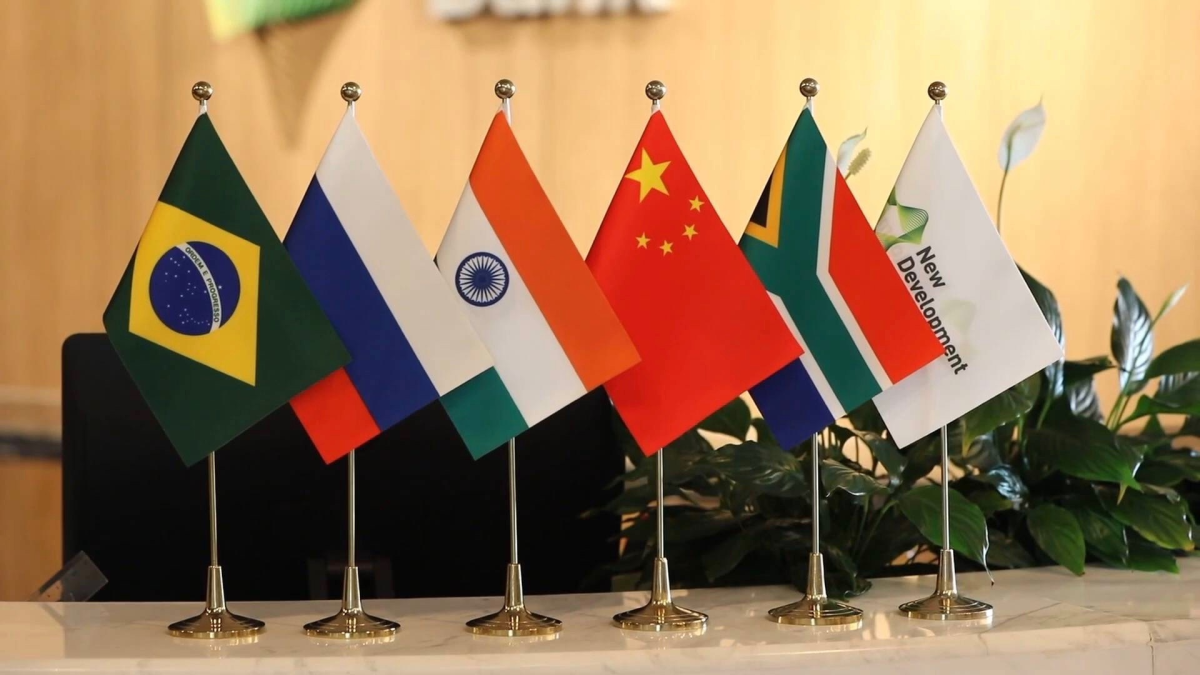
The U.S. now assumes leadership of the G20 until the Miami summit ends on December 15, 2026 – but not without having lost some crucial soft power. In the wake of Donald Trump’s farcical attacks on the host of last week’s G20 summit in Johannesburg, might the Brazil-Russia-India-China-South Africa (plus Egypt-Ethiopia-Indonesia-Iran-United Arab Emirates) BRICS bloc – maybe alongside some annoyed Europeans – finally stand up straight, and boycott the Florida meeting? 

After all, a process of shifting power relations – symbolic and real – is supposedly underway. At the University of South Africa in Pretoria on November 20, two days before G20 leaders met, Columbia University economist Jeffrey Sachs gave a viral speech in which he castigated Trump – as the equivalent of a four-year old throwing tantrums – and proclaimed that U.S. power

“is fading. It’s fading in part because of the BRICS. Because the BRICS are saying we don’t need to be under the thumb of a US empire. That’s what President Lula said when he was hosting the BRICS this summer. And Trump put on a tariff on Brazil because he didn’t like a court proceeding against the preceding president who had tried to make a coup. And so he put on a penalty tariff and President Lula said, ‘We don’t need an emperor and we’re not going to succumb to this kind of pressure.’ So the BRICS, of which you are an esteemed member … have 46% of the world population. Thank you. And 41% of the world GDP. And they can look at the G7 and say, ‘Who are you?’ And that’s what they’re doing. So this is the new phase of geopolitics.”

Sachs’ rhetoric is certainly pleasing, but in a manner reminiscent of a too-brief sugar high. Looking more closely over the past six months, the (aspiring) multi-polar world has provided many examples of the opposite process, suggesting the BRICS’ threat to U.S. imperialism is in fact, fading. Read on if you are worried that Sachs vastly hypes the BRICS, by not digging deeply enough, dialectically, into the devils in the details. Read on if you are worried that the BRICS’ ruling elites can and do behave in neoliberal subimperialist – not anti-imperialist – ways.  

We collapsed the ambitious agenda we had about revitalizing the Global South” 

In the most obvious two examples of Trump appeasement syndrome evident in late November, first, there was no punishment whatsoever – e.g. climate taxes (such as a ‘carbon border adjustment mechanism’ on U.S. exports) – announced against his withdrawal from United Nations climate talks, which were hosted from November 10-22 by Brazilian President Lula da Silva in Belém. 

Z Network for more

Israeli history repeats itself in Bolivia

by EITAY MACK

Clockwise from top left: Abba Eban, Arturo Murillo’s tweeted image, René Barrientos Ortuno and Ambassador Odivip Suarez Morales (left) shaking hands with Israeli President Zalman Shazar on 29 June 1967. IMAGE/ Wikipedia and X.

The last thing the Bolivian people need is for the previous “good relations” to be restored, with Israel once again becoming involved in the country’s internal repression.

On October 20, Israel’s foreign minister Gideon Sa’ar announced on X that he had spoken with Bolivia’s president-elect Rodrigo Paz, congratulating him on his “impressive victory” in the elections. Sa’ar highlighted “the history of relations between Israel and the Jewish people with Bolivia” and added, “Now, after two decades of strained relations, it is time to restore our friendship and put the ties back on track.”

In his post, Sa’ar joined previous foreign ministers who had been responsible for glossing over the darker chapters of Israel’s relations with Bolivia, particularly during the years marked by a series of military coups and dictatorships from November 1964 to 1982.

Like a game of musical chairs, members of the juntas and heads of the security apparatus rotated among themselves, but Israel maintained friendly relations and conducted security business with all of them. Some were even trained in Israel or by Israelis in Bolivia before assuming their positions in the new junta. For example, on November 24, 1978, a military coup brought Raul Lopez Leyton to the head of the interior ministry – he had parachuting wings from Israel.

Documents in archives in Israel, the United States (from the CIA and the State Department), and Bolivia indicate that the military regimes purchased aircraft from Israel and regularly acquired communications equipment, mortars and shells, Uzi submachine guns, and ammunition.

According to the documents, neither Israel nor its representatives were concerned that Nazis and neo-Nazis were active within the security forces and militias, that the regimes murdered, tortured, and disappeared opposition leaders and workers, or that they “broke strikes” in mines using machine guns, mortars, tanks, planes, and helicopters against striking workers.

Bolivia was a poor country, and its defence procurement budget from Israel was limited compared with its neighbours Argentina and Chile. However, its importance to Israel was significant, as Bolivia remained one of its loyal allies at the UN and in other international forums, and even maintained an embassy in Jerusalem during some years.

The Wire for more

When Sikhs chased a new world in Argentina – and found a nightmare instead

by AJAY KAMALAKARAN

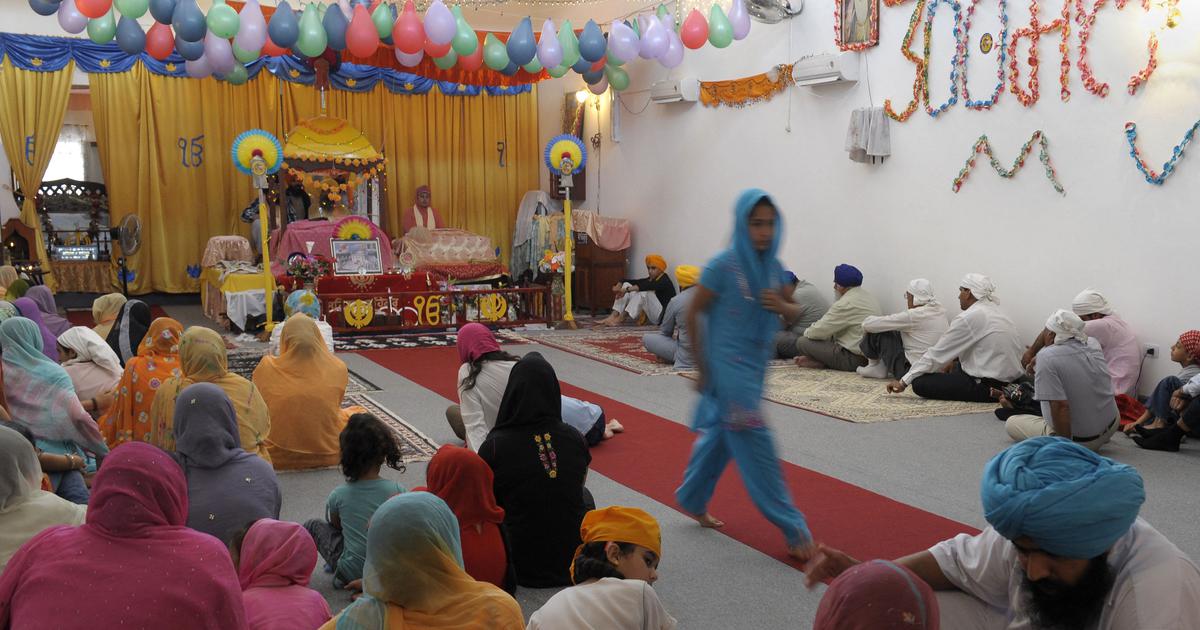
Members of the Sikh community pray at a gurdwara in Rosario de la Frontera, in the Argentine province of Salta, some 1300 km northwest of Buenos Aires, in 2008. IMAGE/Juan Mabromata/AFP

Lured by glowing promises of work and land, hundreds of Sikhs reached Argentina in the 1910s, only to confront discrimination, destitution and broken promises.

In the early 1900s, Argentina was among the wealthiest countries in the western hemisphere. Its economy was booming and, fuelled by foreign investment, its vast, fertile lands had made it a major exporter of livestock and agricultural produce. New industries sprang up, creating a demand for labour that European migrants alone could not meet.

Noticing how Indian workers were employed across the Caribbean, the authorities in Buenos Aires approached their representative in India to explore the possibility of encouraging migration from the subcontinent.

In a letter dated February 13, 1911, the Argentine consul in Calcutta wrote to Foreign Secretary Henry McMahon, requesting that Argentina be added to the list of countries Indians were permitted to emigrate to.

Promoting his country as a promising destination, the consul wrote, “It is because, with the aid of a kindly climate, and a fertile soil, the seed sown in our fields by the labourer gives a return of a thousand to one, and because domestic happiness and prosperity flourish under the aegis of an honest, wise and progressive government, which requires from its immigrants nothing except honesty and diligence.”

With the letter, the consul enclosed a pamphlet outlining the “laws and decrees” applicable to immigrants and investors.

The response in Calcutta was one of surprise. An internal memo noted that under the Indian Emigration Act of 1908 – the very law cited by the diplomat – a colonial committee was needed to assess a destination’s annual labour demand and the facilities it offered.

“But the Committee considered the case of British colonies only,” the memo observed, adding that “it might be questioned by some whether the settlement of Indians in a foreign country is equally desirable.” To deal with this unusual case, the memo said, approval from the Secretary of State in London would also be necessary.

The memo went further: “It may be added that the Government of India do not regard with favour any proposals for the extension of emigration to foreign countries. The objection is not so much on the score of obtaining good laws as of getting them well administered in the interests of the Indian immigrant.” Suriname, where “coolies” were said to be treated well, was listed as the only “foreign” country suitable for Indian migration.

Calcutta informed the consul that the matter would have to be taken up between the British and Argentine governments, though this was hardly the end of the issue.

Dashed dreams

Despite official discouragement, word spread in Punjab of the abundant opportunities supposedly awaiting agricultural and industrial labourers in Argentina. Much like in the 21st century, families sold land and pooled resources to send young men on the long journey to South America.

Scroll for more

Independence Day in Tanzania sees the streets lined with police and army units

CHANNEL AFRICA

It’s Independence Day in Tanzania but instead of the usual festive crowds, the streets are lined with police and army units. The government has deployed a heavy security presence across major cities to deter planned protests, after activist groups called for nationwide demonstrations over economic pressures and governance concerns. It further says the planned protests would be unlawful and amount to an attempted coup. We spoke to political analyst, Sebatho Nyamsenda about the mood of in the country on #AfricaWorldHour

Youtube for more

CPEC gone sour?

by IMTIAZ GUL

Shanghai Auto Show opens with bold message as China leads global electric vehicle race. IMAGE/Shanghai Auto Show/The Express Tribune

You may make progress in an island but development beyond that level is difficult if surroundings are backward

As Pakistan remains embroiled in internal power struggles, its external friends and foes wonder where the country is politically and economically headed. The circumstances post 26th Amendment offer enough evidence to forecast the political direction Pakistan has taken. The economic distress is writ large too.

The decision of Qatar’s Al Thani Group to withdraw its $2.09 billion investment from Pakistan’s Port Qasim Power Project underscores Pakistan’s growing reputation for broken contracts and unpaid obligations. No surprise foreign direct investment plummeted to a mere $26 million by September this year — compared to India which boasts more than $81 billion in the same period. The Qatari group’s pullout — preceded by the exit of global firms like Shell, TotalEnergies, Pfizer, Sanofi, Telenor, Uber, IGI and Microsoft inter alia and partial or full closure of even domestic prime producers such as Gul Ahmed Textiles — epitomises a fractured system that is asphyxiating under the acute indifference and incompetence of a power-centric elite that loathes real reform.

The China Pakistan Economic Corridor (CPEC) — often touted by Minister Ahsan Iqbal as a game-changer, a phrase our Chinese friends never favoured — suffers from the same malaise: lofty, irrational talk, little walk. Over a decade into CPEC, a number of Chinese academics, intellectuals and officials, who had dreamed of an economically viable, self-sustaining Pakistan with the help of CPEC, today sound disillusioned — wondering if Pakistan’s rulers are concerned at all about the economic viability and development of the country.

Some points from conversations with Chinese friends are worth pondering:

• China came in to improve infrastructure and help the people of Pakistan and not to please a particular political priority.

• CPEC was intrinsically designed to focus on areas that needed development, regardless of who was proposing what.

• Ten years on, big investment ($25.4 billion) has not helped the approaches to governance — decision-making and implementation — nor has the security improved.

• Holding high-profile events with the PM and COAS at closely guarded venues swarming with intelligence and security officials are optically bad for foreign investors, who always look for comfortable zones to invest their money.

• Pakistan’s policymakers keep telling us: “We are doing our best to protect you.” Little do they realise that the issue at stake is not about protecting individual Chinese nationals but about protecting the long-term Pakistan-China relationship.

• In security conversations, Pakistanis often lecture us on geopolitics as the reason of insecurity. Do they take us for fools? We know what is happening around but such challenges and risks need to be managed — the way China gradually defied and eventually blunted the entire Western opposition to it. The talk needs to be followed up with calculated walk.

• When even your own people are not investing, why would then outsiders risk their money, particularly when the energy sector continues to reel from the crippling circular debt?

• They also succinctly point to the minister for planning Ahsan Iqbal’s long speeches as an example. If a minister in this era doesn’t value the time and takes his audience for students then something serious is certainly missing. This age dictates precision, focus and execution and not lofty, lengthy rhetoric.

• China developed because it took underdeveloped regions along but Pakistan’s peripheral regions — Khyber-Pakhtunkhwa, Gilgit-Baltistan and Balochistan — remain excluded, conflict-scarred and badly managed. How can the country progress if these regions are step-motherly treated?

This reminds me of the ancient Chinese philosophy of development: you may make progress in an island but development beyond that level is difficult if the surroundings are backward and turbulent. They keep emphasising a cross-party consensus for national development and not just CPEC.

Epress Tribune for more

Open letter to Zohran Mamdani – political moderate

from RALPH NADER & BRUCE FEIN

December 5, 2025

Mayor-elect Zohran Mamdani
24-08 32nd Street
Suite 1002A
Astoria, NY 11102

Dear Mayor-elect Mamdani,

It should not come as a surprise to alert citizens that your decisive victory in the Mayoral race has prompted your opponents – the privileged super-rich and their indentured servants in City Hall – to label you as an “extremist,” “radical,” or, in Trump’s view, a “communist.” How ludicrous! Your affordability agenda is hardly immoderate. Many Democratic politicians have taken these positions over time.

Free bus fares exist in some municipalities in the U.S., including Kansas City, Missouri, Tucson, Arizona, and Alexandria, Virginia. Proposing half a dozen city-run grocery stores in New York City’s “food deserts” (meaning a geographic area with limited access to affordable, healthy food options) is hardly radical. You could even have them structure these stores as consumer cooperatives (owned by consumers). Food co-ops have existed in numerous communities in the U.S. for years. Your rent stabilization proposal is not uncommon – many large cities have rent controls to protect powerless tenants from avaricious landlords, especially from today’s very large corporate landlords with their fine-print contract peonage. Also, there are cities in the U.S. offering partially publicly subsidized child care. New Mexico just launched a statewide universal child?care program.

The social democratic countries in Europe and other countries, including Canada, have long had much broader social safety nets that go far beyond what you have proposed.

What the oligarchy and large corporations really do not like about you is that you are projecting a consistent and wide-ranging voice for the people, the workers, the poor, and the powerless in the corridors of political power of City Hall. They have had long-game statism, or a corporate state, at the local, state, and federal levels, with little opposition by the two-party duopoly.

Regarding your self-description as a democratic socialist, that doesn’t pass the laugh test. You are not arguing for nationalization of banks and insurance companies, utilities, not even, to our knowledge have you called for a “public bank,” which has existed so effectively in North Dakota (now a Republican stronghold) founded in 1919.

You call for increasing taxes on the undertaxed super wealthy and large corporations. So do over 80% of the American people. Pretty normal.

Indeed, President Donald Trump has become a corporate socialist par excellence. As The New York Times reported on November 25, 2025, (“$10 Billion and Counting: Trump Administration Snaps Up Stakes in Private Firms”) the Trump administration has de facto partly nationalized an array of private companies for ulterior political motives under the contrived banner of national security. The companies include Intel, U.S. Steel, Westinghouse, MP Materials, Vulcan Elements, and MP Materials. This invites bribery by other means, i.e., a Trump donation in exchange for an administration sweetheart investment. The fabled Central Intelligence Agency now features a venture capital firm, In-Q-Tel, ostensibly to fund commercial technologies to fortify the U.S. intelligence community and the Department of Defense. But under Trump, partisan political motives likely will inform the CIA’s investment portfolio.

As for taking a stand on pending legislation ending the unconscionable daily electronic rebate of tens of millions of dollars in stock transaction taxes (a progressive tiny sales tax of one tenth of one percent on stock sales), you have been AWOL despite urgings by your numerous colleagues in the state legislature to sign on to a bill that would end the rebate and specifically allocate the many billions of dollars annually to mass transit, education, health care and environmental protection.

So far, your silence has put you to the RIGHT of former Mayor MICHAEL BLOOMBERG. During his presidential run in 2020, he said:

“Harness the power of the financial system to address America’s most pressing challenges. Introduce a tax of 0.1% on all financial transactions to raise revenue needed to address wealth inequality, and support other measures – such as speed limits on trading – to curb predatory behavior and reduce the risk of destabilizing “flash crashes.”

Ralph Nader for more

Oil futures

by LUKAS SLOTHUUS

At the beginning of the year, Norway looked set to elect the most right-wing government in its history. The right-populist Progress Party was surging in the polls while the centre-left government was in disarray, with the Centre Party withdrawing from the Labour-led coalition after a row over further integration into European energy markets. Yet in the parliamentary elections of 8 September, the incumbent Labour Party staged a recovery – clinging onto power with a slightly increased vote share of 28 per cent. Jonas Gahr Støre now leads a second government, this time principally supported by the Red Party, Socialist Left and Greens, which won a combined 16 per cent, rather than its erstwhile coalition partner, which collapsed to 6 per cent. On the right, power shifted to the more radical Progress Party, led by Sylvi Listhaug, nearly doubled its share to 24 per cent, overtaking Erna Solberg’s Conservatives, which dropped to 15 per cent. According to its own post-election evaluation, the Conservatives – who ruled from 2013 to 2021 – were punished in part for not having a sufficiently distinct platform to the Progress Party, with whom they faced the widely unpopular prospect of governing in coalition.

Both Labour and Conservatives ran on the same set of issues: welfare, the cost of living, national security. In the televised debates, the urban-rural divide was high on the agenda – a perennial subject in a country with the lowest population density in mainland Europe. The Conservatives campaigned for increased privatisation of healthcare to cut waiting lists, and tax cuts, even for the rich; Labour’s headline pledges were a hospital waiting list cap, cutting the cost of nursery fees and a fixed-price electricity scheme. On national security, meanwhile, the parties were united in preaching loyalty to NATO, full-throated support for Ukraine and a large-scale increase in military spending. Indeed, Labour – whose finance minister is former NATO chief Jens Stoltenberg – has made NATO membership a red line for any coalition with the left parties, and Støre’s government last year pledged to double the defence budget, touting the proposal as a ‘historic boost’.

Militarism was the ‘cause above all causes’ in the election according to Aftenposten, Norway’s paper of record. Bordering Russia in the Arctic, the spectre of the Cold War looms large in a country that once refused permanent foreign bases or the stationing of nuclear weapons on its soil to avoid antagonising the USSR. Tensions with Russia rose after a significant increase in American troops from 2018 and bomber planes were stationed in 2021. Norway is now set to be a maritime stronghold for NATO in the strategically vital gap between Greenland, Iceland and the UK, as well as the broader North, Norwegian and Barents Sea area.

NLR for more