
by P. SAINATH

The new farm laws disable the right to legal recourse of all citizens, not just farmers – to an extent unseen since the 1975-77 Emergency. The farmers at Delhi’s gates are fighting for the rights of us all
“No suit, prosecution or other legal proceedings shall lie against the Central Government or the State Government, or any officer of the Central Government or the State Government or any other person in respect of anything which is in good faith done or intended to be done under this Act or of any rules or orders made thereunder.”
Welcome to Section 13 of The Farmers’ Produce Trade and Commerce (Promotion and Facilitation) Act, 2020 (the one aimed at gutting the Agriculture Produce Marketing Committees, better known as APMCs).
And you thought the new laws were only about farmers? Sure, there are other laws that also exclude prosecution of civil servants for carrying out their legal duties. But this one goes way over the top. The immunity given to all those in respect of anything, acting ‘in good faith,’ whatever they do, is sweeping. Not only can they not be taken to the courts for a crime they may have committed ‘in good faith’ – they’re protected against legal action for crimes they are yet to commit (‘in good faith’ of course).
Just in case you missed the point – that you have no legal recourse in the courts – Section 15 rubs it in:
“No civil court shall have jurisdiction to entertain any suit or proceedings in respect of any matter, the cognizance of which can be taken and disposed of by any authority empowered by or under this Act or the rules made thereunder.”
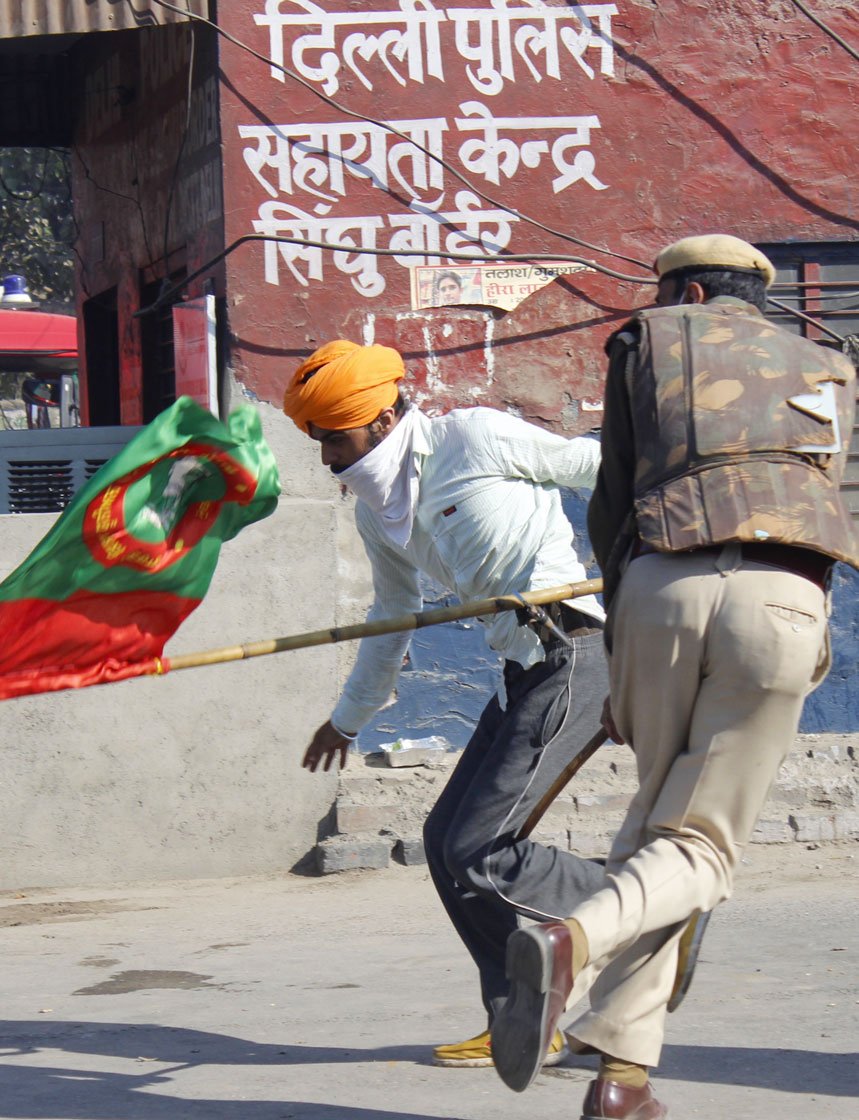
Who is the ‘any other person’ doing things ‘in good faith’ who cannot be legally challenged? Hint: try listening to the names of corporate giants that the protesting farmers are chanting. This is about the ease of business – of very, very Big Business.
“No suit, prosecution or other legal proceedings shall lie….” It’s not just farmers who cannot sue. Nobody else can, either. It applies to public interest litigation too. Nor can non-profit groups, or farm unions, or any citizen (driven by faith good or bad) intervene.
These are surely among the most sweeping exclusions of a citizen’s right to legal recourse in any law outside of the Emergency of 1975-77 (when we simply suspended all fundamental rights).
Every Indian is affected. Translated into English, the legal-lingo of these laws also convert the (low-level) executive into a judiciary. Into, in fact, judge, jury and executioner. It also magnifies the already most unjust imbalance of power between farmers and the giant corporations they will be dealing with.
An alarmed Bar Council of Delhi asks this in a letter to Prime Minister Narendra Modi: “How can any litigation having civil consequences be given for adjudication to structures involving administrative agencies, controlled and run by executive authorities?”
(Among executive authorities, read sub-divisional magistrates and additional district magistrates – all famed for their independence and bursting with good faith and good intent, as every Indian knows). The Bar Council of Delhi goes on to term the transfer of judicial powers to the executive as “dangerous and a blunder.” And notes its impact on the legal profession: “It will substantially damage district courts in particular and uproot the lawyers.”
Still think the laws are only about farmers?
More such transfer of judicial power to the executive lies in the law about contracts – The Farmers (Empowerment and Protection) Agreement on Price Assurance and Farm Services Act. 2020.
Section 18 regurgitates the “in good faith” argument.
Section 19 states: “No civil Court shall have jurisdiction to entertain any suit or proceedings in respect of any dispute which a Sub-Divisional Authority or the Appellate Authority is empowered by or under this Act to decide and no injunction shall be granted by any court or other authority [emphasis added] in respect of any action taken or to be taken in pursuance of any power conferred by or under this Act or any rules made thereunder.”
And to think that Article. 19 of the Indian Constitution is about freedom of speech and expression, peaceful assembly, freedom of movement, the right to form associations or unions….
The essence of Section 19 of this farm law also strikes at Article 32 of the Constitution of India, which guarantees a right to constitutional remedies (legal action). Section 32 is considered part of the basic structure of the Constitution.
Surely the ‘mainstream’ media (a strange term for platforms whose content excludes over 70 per cent of the population) cannot be unaware of these implications of the new farm laws for Indian democracy. But the pursuit of profit drives them far more than any notion of public interest or democratic principles.
People’s Archive of Rural India for more