
by EMMA GREEN
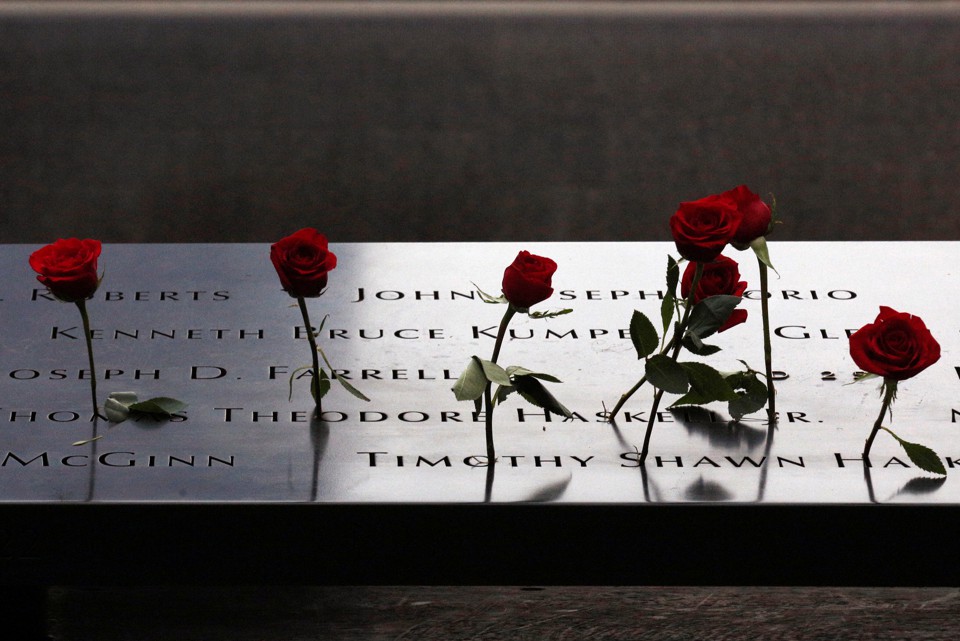 Roses are laid on the 9/11 memorial in New York City
Haroon Moghul’s book How to Be a Muslim tries out a new genre: Writing about Islam that’s not about terrorism or war.
Haroon Moghul is tired of reading books about American Muslims and terrorism. The 30-something writer and educator often gives talks and teaches courses, where “people come up to me … and say, ‘What can I read about Islam that will help me understand who Muslims are?’” he told me. “There are so few books out there that I would recommend. It’s deeply disheartening.”
In How to Be a Muslim, Moghul has tried something new: a memoir about how his “life kind of crashed and burned” around age 32, as he put it. He writes about the pains and hilarities of growing in a South Asian family in bucolic Massachusetts; his lifelong struggle with mental illness and adult diagnosis with bipolar disorder; and his many crushes, including his ex-wife, Hafsa, whom he later divorced. The book is by turns delightful and bizarre; it’s confessional writing about being Muslim, but also about struggles that are likely common across religions.
It’s not exactly apolitical: Moghul’s mental illness is specifically conditioned by the anxiety and pressure of being a “professional Muslim,” as he puts it. But it’s an attempt to claim literary space for American Muslims that’s not about geopolitics. And Moghul has offered up his own life as material.
I spoke with Moghul about politics, confessional writing, and how Muslim communities deal with mental illness. Our conversation has been condensed and edited for clarity.
Green: You were a college student in New York on 9/11. You describe how that moment defined your life as a Muslim in America.
And yet, you wanted to write a book that’s not political. How do you write an apolitical book when your identity has been so thoroughly shaped by politics?
Moghul: I wanted to keep the politics at remove. Terrorism and extremism, the pervasive influence of Islamophobia—they are always there in the background. But I wanted to talk about how that affected me personally. I wanted about the day-to-day existence of a Muslim in America. People’s personal struggles with love, desire, and feelings of guilt; the constant tension every one of us has between what we want to do and what we believe we should do; my own struggles with mental illness, divorce, financial failure, professional failure; losing my job, losing my home: They’re universal struggles that have maybe some Muslim particularities.
There are plenty of books on Islamophobia or America and the Middle East. But there are not a lot of books that actually talk about what this means in a person’s life.
Because I was in New York, and I was president of the Muslim club at New York University, I was forced into that response: I became a professional Muslim. A lot of people in my generation became professional Muslims. The most disheartening part is that we recognize, with the election of Donald Trump and the rise of far-right movements across the West, that this is probably going to be with us for our lifetimes.
The Atlantic for more