
by PATRICIA ALDANA
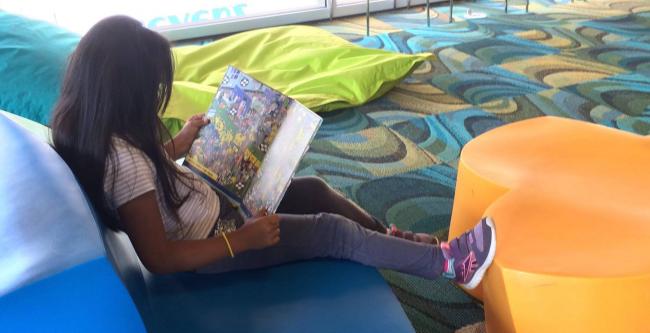 A child reads in a U.S. library as part of the REFORMA Children in Crisis Task Force, which provides bilingual books to refugees from Central America across the U.S. PHOTO/REFORMA/Facebook
The situation facing Central American child refugees remains dire. North American librarians have sought to address some of these challenges through connecting these children to the power of reading.
Sixty million people around the world became refugees in the year 2015, half of whom were children. While the majority were Syrian refugees, who have been highly visible with good reason, U.S. Border Patrol statistics suggest that more than 120,000 unaccompanied children (and an almost equal number of families with children—primarily single mothers) have also become de facto refugees over the past two and a half years. Nearly all of these individuals have made a very dangerous journey from Central America in an attempt to find safety in the United States.
The International Board on Books for Young People (IBBY) is one of several non-governmental organizations that has heeded the call to respond to this grave situation. IBBY is a global NGO, founded in 1952, that conducts international projects in areas impacted by natural disasters and in conflict zones. In 2008, for example, IBBY built two libraries in Gaza, both of which were destroyed in the recent war but have since been rebuilt. When IBBY visited the site in 2013, during the Egyptian Spring, many parents told us that their children attended the library every day after school, and explained the remarkable psychological impact that reading had on their children’s ability to sleep, learn, and find a sense of calm.
IBBY’s “Children in Crisis” program has also taken place in Lebanon, where IBBY has worked with Syrian refugees, using books to help children to work through conflict and develop empathy skills; in Iran, where IBBY has helped Afghan refugee children to prepare for entry into the formal educational system; and in Aghanistan, where IBBY has supported eight “bibliobuses,” run adults trained in reading promotion, storytelling and reading aloud, and in Pakistan, where IBBY has been commissioned to build 500 school libraries.
IBBY also launches projects following natural disasters—for example, ongoing programming in Indonesia and Japan following tsunamis, a bibliotherapy project in Venezuela following landslides, and in Peru, Chile, Ecuador, and Haiti following devastating earthquakes. In-country IBBY member volunteers set up points for children to practice reading aloud on a regular basis. Sometimes this has meant recreating libraries in the rubble, on the backs of motorcycles, or on small trucks. Essential to the success of all these interventions is the presence of a mediator, an adult, who is present consistently, respectful, knowledgeable, and caring.