
by NORMAN (OTIS) RICHMOND aka JALALI
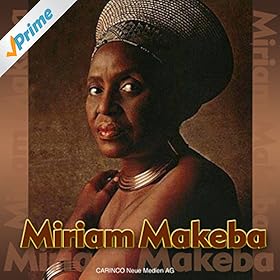 South African singer/social activist Zenzile Miriam Makeba (1932 – 2008) IMAGE/Amazon
Several of my son’s friends organized a small birthday celebration for him a few years ago. They invited me to hang out with them and I thought I’d bring a couple of DVDs for the occasion.
One of my picks was Alicia Keys’ “The Diary of Alicia Keys.” I liked the international favor of the DVD, which shows Keys in many countries. One of the spots she visited was South Africa. One scene flashed on the screen showed Keys and “Mama Africa” Miriam Makeba, together at a piano. I told the gathering, “That’s Miriam Makeba, ‘Mama Africa.’”
Since this time Keys has moved to the right on international affairs. She has ignored the Boycott Divestment and Sanctions movement and performed in Israel. A headline in a 2013 issue of the Times of Israel read: “Alicia Keys bares her soul for Tel Aviv.” Word has it that Beyoncé is headed there soon.
I had been played Makeba’s music on both of my shows, “Diasporic Music” and “Saturday Morning Live” on CKLN-FM and Uhuru Radio. After I came home, my phone started ringing. The news was dreadful: Makeba had died after a concert in Italy. One of the calls came from Ayuko Babu, the executive director of the Pan African Film Festival. Babu, who had spent time with Makeba in Guinea, was clearly upset and I could sense in his voice that Africa and the world had lost a genuine icon.
Makeba was born in Johannesburg March 4, 1932, and joined the ancestors on November 9, 2008). Ironically, Makeba’s passing came almost ten years to the day of one of her five husbands, Kwame Ture (Stokely Carmichael) who passed on November 15, 1998. Makeba’s mother was a Swazi sangoma and her father, who died when she was six, was a Xhosa.
One of the tallest trees in our forest, Harry Belafonte played a major role in Makeba’s rise to fame. She documents how Belafonte “discovered” her in London and bought the cream of the show business crop to check out her opening date at the Village Vanguard in New York.
Says Makeba: “I cannot believe who Big Brother (Harry Belafonte) has sitting with him and his wife: Sidney Poitier, Duke Ellington, Diahann Carroll, Nina Simone and Miles Davis. I have admired these people for years. They are great artists. And now they have come to see me.”
Makeba: My Story discusses her relationship with such mentors as Belafonte; her husbands, musical great Hugh Masekela and Pan-Africanist Kwame Ture; her protectors, African statesman Sekou Toure; and her loyal fans, including President John F. Kennedy.
She was one of the African and Africans born in American entertainers at the 1974 “Rumble in the Jungle” match between Muhammad Ali and George Foreman held in Mobutu’s Zaire (which today is the Democratic Republic of Congo). Her appearance is captured in the film When We Were Kings.
Nelson Mandela persuaded her to return to South Africa in 1990 after decades in exile. In the fall of 1991, she made a guest appearance in an episode of The Cosby Show, entitled “Olivia Comes Out Of The Closet.” ??In 1992 she starred in the film “Sarafina,” about the 1976 Soweto youth uprisings, as the title character’s mother, “Angelina.” She also took part in the 2002 documentary Amandla! A Revolution in Four Part Harmony, where she and others recalled the days of apartheid.
Black Agenda Report for more