
by ADAM CHIMIENTI
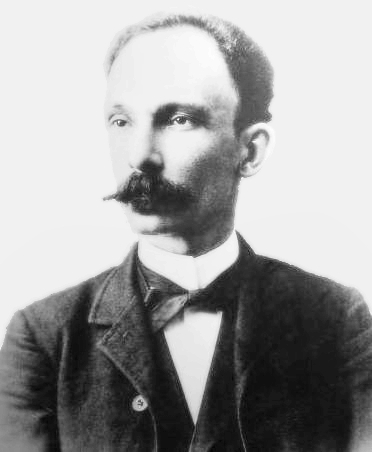 Jose Marti (1853 – 1895), Cuban poet / revolutionary PHOTO/Wikipedia
In recent weeks, we’ve seen signs of an empire that refuses to cease its worst behavior. The drone strikes, preparations for a new military base on Okinawa, the dispatch of more troops on the Korean peninsula, the push for the world’s most expansive free trade agreement, the devastating legacy of the disastrous war in Iraq. The list goes on. This past December, on the 10th to be exact, the world celebrated Human Rights Day 65 years after Universal Declaration of Human Rights was adopted. Yet the amateur historian in me recognized that date for another reason. Fifty years prior, on the 10th of December 1898, the Treaty of Paris was signed and the US global empire had officially begun. While US political leaders engage in the lofty rhetoric of equality, justice, liberty, freedom, the policies they make directly and indirectly prevent most of the human race from ever really living life free from want, from fear, from aggression. The following article is written to commemorate that dark day and to all those countless beings who’ve suffered as a result of the ongoing crimes of US foreign policy.
Exiled and living in New York City in the early 1880s, the great Cuban revolutionary poet José Martí observed the pervasive racial tension in the United States. It was at this point in his life that he predicted, “The white man’s fear of the Negro would impede Cuba’s independence.” The prescience of this statement and its wider application for the whole of Latin America and the world has been borne out with frequent attacks on sovereign nations throughout the 20th and well into the 21st century under the guise of spreading liberty and the American way. Unfortunately this meant a patrimonial disregard for the lives and human rights of the “huddled masses” and “wretched refuse” that the US military and corporations would encounter abroad. US imperialism on a global scale would be quite unlike the empires that came before it and it. The Treaty of Paris, signed on December 10th, 1898 saw the US gain control of various tropical islands throughout the world over the next 115 years, the US has continued to exert its military and economic power to the detriment of humans and ecosystems.
Michael Parenti, the political scientist and historian has written about the various names for the US global project: “informal empire,” “colonialism without colonies,” “neocolonialism,” and “neoimperialism.” Parenti further argues that:
Historically U.S. capitalist interests have been less interested in acquiring more colonies than in acquiring more wealth, preferring to make off with the treasure of other nations without bothering to own and administer the nations themselves. Under neoimperialism, the flag stays home, while the dollar goes everywhere—frequently assisted by the sword.[i]
In this way, the new imperialism was reminiscent of the battle between northern idustrialists and the southern plantocracy in the years leading up to the Civil War. The elite northerners were more intent on universal wage labor as opposed to the costly slave system.
Counterpunch for more