
by MUBARAK ALI
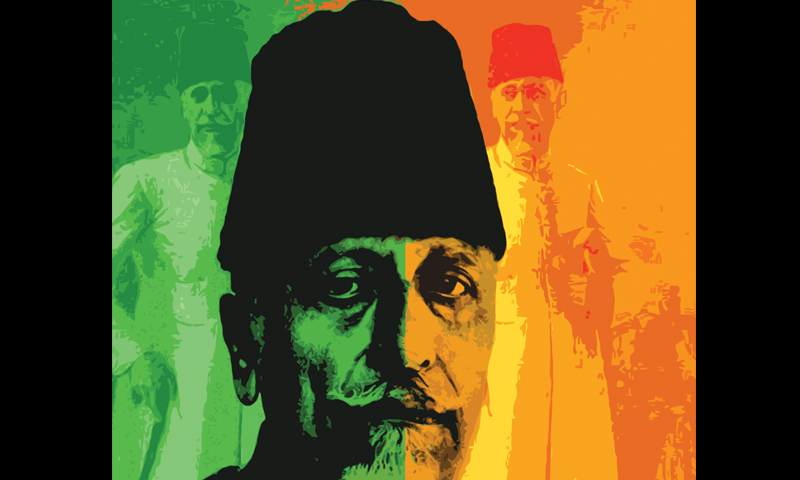 India’s first Minister of Education Maulana Abul Kalam Azad
Maulana Abul Kalam Azad was a great religious scholar, orator and politician who influenced the religious and political trends of his time. By virtue of being a member of a religious family he had a number of disciples who followed him devotedly. As a religious scholar, he believed that the Muslim community of India could be rejuvenated through religion. To accomplish this object, he organised a party of Ulema known as Hizbullah in 1912. He was the first person who involved the Ulema in politics with the aim of using religion as a tool to unite the Muslims of India and to create the political consciousness among them to struggle for their survival. On the basis of this organisation he wanted to train the Ulema in the art of politics and bring them out of their isolation.
…
Azad also made an attempt to glorify the historical role of the Ulema. In his book, Tazkira, he traced the contribution of Indian Ulema to the Muslim community and paid high tributes to Sheikh Ahmad Sirhindi who, according to him, alone resisted and defended Islam against the ‘atheism’ of Mughal emperor Akbar. Azad was the first person who promoted Sirhindi as a hero and criticised Akbar’s religious policy. Unfortunately, Azad is greatly mistaken in saying that Akbar subscribed to atheism. This is historically wrong. Akbar was not an atheist; on the contrary, his intention was to search for truth. For this purpose, he invited scholars of all religions to the House of Worship (Ibadat Khana), which he established at Fatehpur Sikri, and discussed the nature of their respective beliefs with them.
Azad’s interpretation of history created a lot of misunderstandings. As a result, Ahmad Sirhindi became the champion of the two nation theory, while Akbar is condemned as a ‘secular’ and an enemy of Islam. Further, he glorified other Ulema such as Shah Waliullah for their laudable services as reformers of the Muslims of India. His account promoted the image of these Ulema, who later on played an important role in Indian politics.
Dawn for more