
by KEVIN EDMONDS
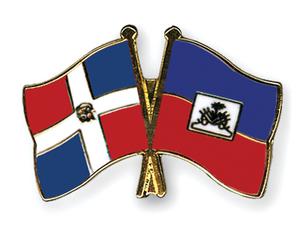 Photos of Caribbean countries of Dominican Republic (left) and Haiti PHOTO – FlashHaiti.com
Despite being neighbors and sharing the island of Hispaniola, the Dominican Republic and Haiti have had a long and troubled history. The tensions between the two nations include a history of violence, not limited to events such as the Haitian annexation of the Dominican Republic from 1822 until 1844, and the 1937 “Parsley Massacre” in which an estimated 20,000 individuals of Haitian descent were murdered by Dominican presidential decree. This fraught history informs the current decision made by the Dominican Republic’s constitutional court to strip the citizenship from an estimated 300,000 individuals of Haitian descent. The ruling is especially troubling because it seeks to overturn the citizenship of generations of individuals; the cut-off for the overturning includes those born as early as 1929.
Until the constitutional revisions of 2010, the Dominican Republic had previously granted citizenship automatically to any individual born within its borders. However, when Haitian-Dominican relations are put into a historical context, the current exclusionary constitutional reforms expose a deeply rooted history. Ernesto Sagás has written in detail about the historical development of “antihaitianismo” in Dominican culture. He argues: “antihaitianismo has had a long and intricate evolution. From its origins as Hispanic racism, to its transformation into anti-Haitian nationalism, to its culmination as Trujillo’s state ideology, antihaitianismo has had one objective: the protection of powerful elite interests through the subjugation of the lower (and darker) sectors of the Dominican population. Antihaitianismo serves elite interests well and has even been accepted by the great majority of the Dominican people as part of their political culture, thereby institutionalizing and giving it the moral legitimacy that it lacks.”
People of Haitian descent working in the Dominican Republic have historically been scapegoats for the problems within Dominican society; dependent on the era, they have been blamed for a variety of economic problems and increases in criminal activity. While Haitians have long migrated to the Dominican Republic in an attempt to flee political repression or in search of economic opportunities, Haitian workers have also been intentionally recruited to work as undocumented labor in agricultural, construction, or more recently, tourist industries. Up until 1986, there was an active government program that regulated the recruitment of Haitian labor –- primarily to serve the demand of the Dominican sugar industry.
Despite the long and ongoing importance of Haitian labor to the Dominican economy, the most infamous attack against Haitian workers occurred in 1937, where an estimated 20,000 Haitians were killed by order of Dominican dictator Raphael Trujillo. Though the real motivation for Trujillo’s attacks were never revealed, many have argued that the move was a response to close the Dominican-Haitian border during turbulent economic times, while others have argued that Trujillo (himself of mixed race) sought to “whiten” the Dominican nation and rid it of its African/Haitian population.