
by D. JASSIM ALYAQOUT (in Arabic)
(Translated by Mouhsine Abdellaoui)
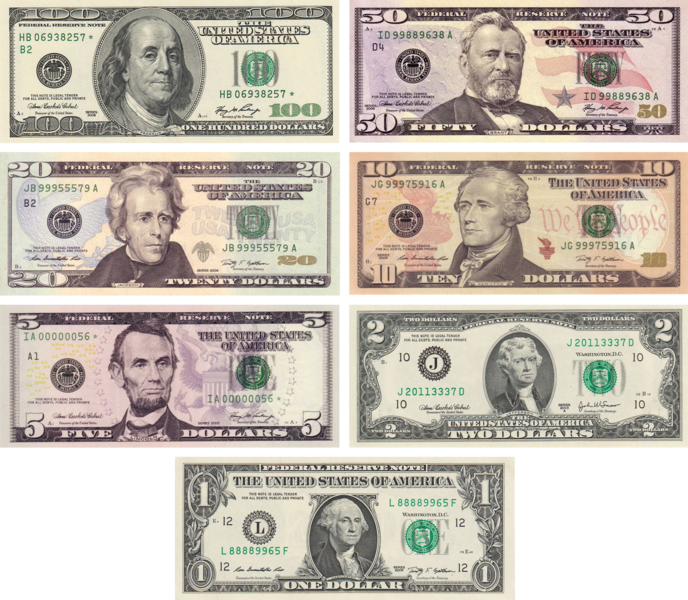 SOURCE/Wikipedia

If the United States is the engine of the global economy and its main controller, and if their currency (the dollar) is what constitutes a cash reserve for other countries, as the oil price is linked to the dollar, as well as those of imports, exports and gold — if all these transactions function using the dollar, what prevents the United States from printing more dollar banknotes and selling them? Or, in other words, buying vital products such as gold, oil and other commodities with these banknotes?
To prove the above, let us recall together what happened in the past when the dollar was equal to a golden pound. Currencies globally are covered by their value in gold to provide them confidence, and the U.S. dollar should be so as well; yet in reality, no one can prove that. The United States of America forbore from replacing the U.S. dollar with its equivalent value of gold for quite some time, even though gold is globally sold in dollars, and the gold price (gold ounces) is determined by the stock market and asessed by the dollar. The U.S. lifted the gold standard on the dollar in 1973; that is when President of France Charles de Gaulle requested that the U.S. dollars available in the French Central Bank be substituted by their equivalent in gold. Since 1973, the real value of the U.S. dollar has decreased about 40 times.
Inflation is what is known as an excessive rise in the general level of prices of goods and services in the economy; with inflation result a number of negative consequences such as loss of purchasing power and low competitiveness. If the United States’ printing dollar banknotes contributes to resolving the crisis and paying back their debts, they will not suffer from any problem; rather, the world will suffer from the dollar’s rise in numbers, which leads an increase in the prices of imported goods in all its forms and thus an increase in prices of food commodities. On this basis, the phenomenon of decrease in the dollar is considered a means intended to enhance the competitiveness of U.S. exports to the detriment of exports of competitor countries over foreign markets, especially European, Japanese and Chinese exports.
From this data, we can deduce that the United States exports its economic crisis to different countries in the world. No country can survive this crisis unless it has a great ability to export and supply funds that cover its needs and overflow. I think that China is a perfect example of that. What proves the ability of China’s enormous potential for this is that, with the increase in prices of all goods because of the declining value of the dollar, we find that it has the ability to export products at cheap prices because it controls their manufacture. We also find agricultural countries producing abundantly and enjoying the ability to provide the food their populations need without taking global food prices into consideration. We thus take the example of the Arab Republic of Egypt, which buys wheat from farmers at prices higher than world prices to encourage its cultivation, which leads farmers to increase the cultivation of wheat so that local production almost covers domestic consumption.
WA for more