
by AJMAL KAMAL
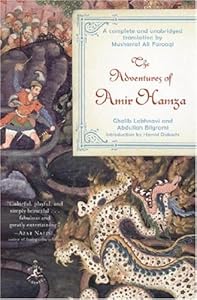 A cover of ‘The Adventures of Amir Hamza’
The historical division of society in South Asia on caste lines is now an acknowledged sociological, political and economic fact. However, caste as a literary or social discourse does not, for several reasons, form a part of the predominantly Muslim culture of Urdu. Nor has there been much academic exploration of the role caste plays in the life of South Asian Muslim communities as against others. As far as the Urdu literary writing is concerned, it has traditionally focused exclusively on the lives and concerns of conquerors, their cohorts and their descendants, who typically prided themselves on their real or perceived foreign origins. Even after modern, socially committed writing began in Urdu around the 1930s, caste as a variable for social exploration was largely ignored in favour of economic class.
The professional interpreters of religion, on the other hand, as well as conservative Muslim social and literary critics, usually deny even the existence of caste divisions among South Asian Muslims. This is done in the face of an abundance of evidence to the contrary. Since the ‘social reformers’ of both the religious and less-religious types came from the upper castes of the Muslim society – Syed, Mughal, Afghan and Shaikh – they seem to have retained all the traditional prejudices and preferences of their castes. They strictly kept as their goal the well-being of the people of their own background in competition with their non-Muslim counterparts, and as such singularly failed to acknowledge, let alone try to address, the inequality in the Muslim society on caste lines. If anything, they actively supported the existing caste hierarchy. There were thus no such movements among Muslims as those initiated by Jyotirao Phule and other reformers in the Hindu society.
In recent times we have been witnessing a revival of interest in the prose writings belonging to the later half of the 19th century or before, but the celebration of the so-called ‘indigenous literary masterpieces’ – especially the “Dastan” fiction – has been distinctly marked by an utterly uncritical acceptance of their form and substance. This revival of interest seems to have strong revivalist tendencies as its active proponents seem to glorify not only the literary quality of these writings but also the worldview and attendant social and moral values upheld by the writers and their contemporary readers or listeners. So far there has hardly been any discernable dissenting voice that dares to read these texts – their style, content, concerns and language – with a modern critical perspective and point to the significant prejudices inherent in them on the basis of religion, gender, class and of course caste.
Kafila for more