
by FRANK GERITS
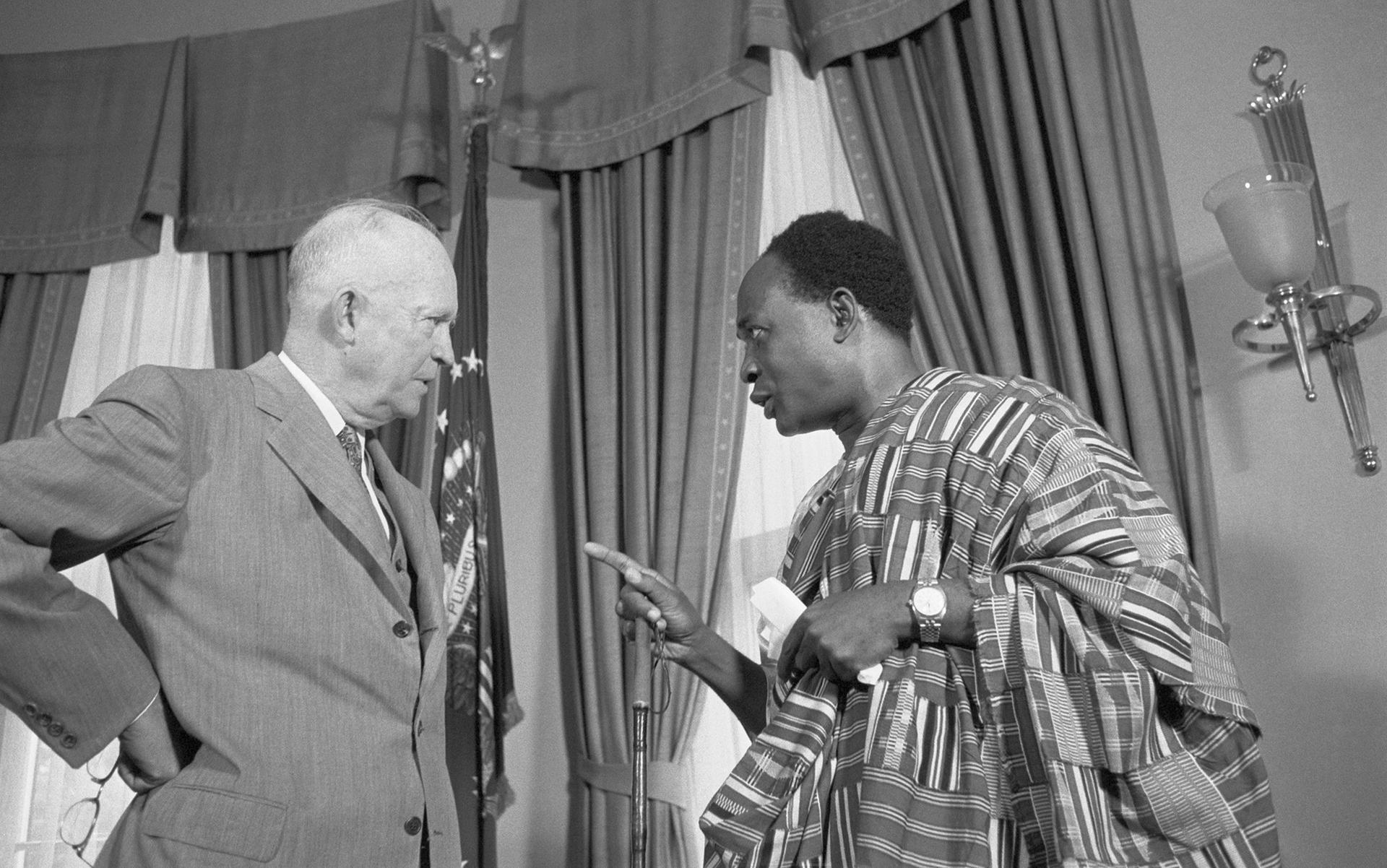
Anticolonial modernity was founded upon the fight for liberation from communists, capitalists and imperialists alike
In the late 1980s, my father and his friend got pulled over by an East German police officer. They had inadvertently taken a wrong turn, leaving the international road that connected West Germany to West Berlin. After some frantic back-and-forth with the officer, they were allowed to turn back.
Things get a bit more harrowing when world leaders take a wrong turn.
In 1962, the Soviet leader Nikita Khrushchev supplied Cuba’s Fidel Castro with long-range missiles capable of carrying a nuclear warhead, and almost triggered an all-out war. The presence of weapons this close to Washington, DC violated the spheres-of-influence logic that had emerged after the Second World War. The Soviet Union and the United States each constituted their own pole around which ideological, military and economic influence coalesced.
Since the Cold War touched every aspect of peoples’ lives – from my own father to Castro – academics, journalists and pundits became obsessed with understanding the international system the Cold War had created. A new academic discipline, called international relations theory, rode the enthusiasm surrounding scientific research in the 1950s and met the need for predictability in the face of nuclear Armageddon. Just two years after the Cuban Missile Crisis, theorists like Kenneth Waltz said that the Cold War was making the international system safer. With only two poles, a balance of power was naturally bound to occur, he argued, because states integrate weaker states within their sphere of influence and divide the cake, creating fewer opportunities for conflict.
These so-called international relations theorists drew on ancient thinkers and history to predict behaviour that goes with a particular type of international system. Based on Thucydides’ account, the Peloponnesian War between Sparta and Athens (431-404 BCE) came to be known as the first bipolar international system. Key political theorists like Alexis de Tocqueville, Karl Marx, Friedrich Nietzsche and Michael Oakeshott had already conceptualised politics as the struggle between two poles, and served as an inspiration for their colleagues who studied international politics. Yet, the precise origins of thinking in terms of bipolarity and world order are murky.
Ancient philosophers like Plato, who talked about political order, were followed by Church fathers like Augustine of Hippo who talked about the City of God, and Enlightenment thinkers like Immanuel Kant who believed two republics would never go to war with each other. Even as Cold War bipolarity became cemented in the minds of policymakers and university professors in the 1960s, there were always dissidents or contrarians from its consensus.
Aeon for more