
by ALVINO KUSUMABRATA
Hearing about my mother’s experiences in May 1998 became a pivotal moment that has shaped my life.
‘Every second, I feel the bitterness’, my mum said. She tried to remember clearly what happened 26 years ago in May 1998. When she recalled something about that event, her forehead wrinkled with distaste. Her facial expressions couldn’t deceive me. Despair, fear and feeling threatened seemed to merge into one. Such sentiments only surfaced when remembering the tragedy.
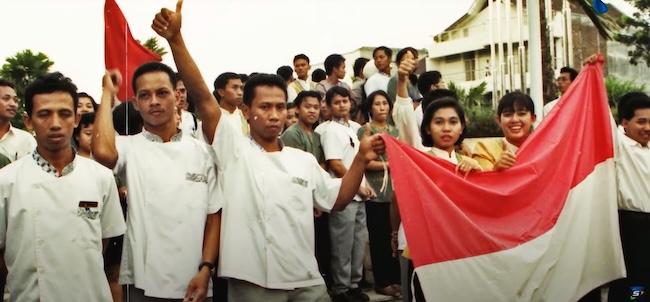
‘It had become a habit for students to rotate protests between universities in May,’ Mum continued, ‘but after the Trisakti Tragedy, all students became unified to rally together’.
One day, my mum – a student at that time – was attending class as usual. ‘My feelings were uneasy, as if something was about to happen’, she confessed. Suddenly, there was a great uproar on the highway, disrupting the ongoing class atmosphere. The classroom became noisy. There was no choice for Mum’s lecturer at that time but to stop the class.
Confused, my mum tried to digest what was happening. She looked out the window to see what was happening on the street. ‘A wave of people united like ant soldiers,’ Mum reminisced. Within a few hours, the most tragic riot since mass-killings in 1965-66 unfolded once again.
People began randomly looting Chinese Indonesian-owned stores. From one looter to another there was a common sentiment binding them: they were anti-Chinese. They didn’t care about morals as long as their hatred towards the Chinese Indonesians remained ablaze. They entered the stores and shamelessly came out carrying full crates of food and drinks. Getting home from the campus became a serious challenge for Mum who had to take cover from flying rocks and tear gas. The mother was beset by fear of being hit by stones. She took short steps, then hid among the buildings and houses. She continued doing that until she reached home. ‘People became demons at that time,’ she said.
Inside Indonesia for more