Filipino Nurses in Canada Vulnerable to Exploitation, Misleading and Abusive Policies

PUBLISHED ON NOVEMBER 1, 2009

Filipino nurses have the longest record of migrating, as well as the longest history of abuse. This abuse is a result of aggressive, profit-driven, exploitative policies of both their point-of-origin and destination countries. One of these is Canada, one of the most popular destinations now for Filipino nurses.

By JHONG DELA CRUZ
Bulatlat.com

ALBERTA, Canada — When the United States shut its door to foreign nurses in 2008, many turned to Canada. Also a First World country with a large number of nurses due to retire soon, Canada is now fast becoming a leading destination for foreign nurses, particularly Filipino nurses.

The Philippines is known as the world’s leading exporter of nurses. The trend began in 1960s when its government minted a labor-export policy to help keep its economy afloat. It resulted in its own healthcare system suffering a “national haemorrhage” as more health professionals leave in droves for “greener pastures.”

But the Filipino nurses who migrated to countries with a shortage of nurse, such as Canada, are also being exposed to exploitation, misleading integration programs and policy changes.

Some 240,000 immigrants are entering Canada every year since 1992, said a study on internationally educated nurse published by the Canadian Nurses Association (CNA) in 2005. It cited the Philippines as one of Canada’s top five sources of immigrants.

Another study on global migration in 2003 reported that Philippine-trained nurses comprised the largest group of internationally educated nurses in primary “receiving” countries such as Canada. Mostly women, they have been entering Canada through its Live-in Caregiver Program (LCP).

BUTA

Obama’s world outreach teetering

By Jim Lobe

WASHINGTON – United States President Barack Obama’s extraordinary efforts since his first days in office to reassure Muslims in the Greater Middle East about US intentions in the region have suffered a series of setbacks that threaten to reverse whatever gains he has made over the past 10 months in restoring Washington’s badly battered image and influence there.

From Pakistan – where Secretary of State Hillary Clinton got an earful of growing anti-US sentiment last week – to the West Bank and East Jerusalem – where Prime Minister Benjamin Netanyahu has successfully defied Washington’s demands that he freeze Jewish settlement activity – events appear to have strayed far from the president’s original game plan.

As for the vast territory that lies between, the badly tarnished election victory by Afghan President Hamid Karzai raises new questions over the viability of a conflict Obama himself called as recently as August, “a war of necessity”. Meanwhile, Iran’s failure so far to accept a US-backed plan to export most of its low-enriched uranium (LEU) for reprocessing looks increasingly likely to foil his hopes for detente on that front.

A series of devastating bombings in recent weeks has also raised the specter of renewed ethnic and sectarian violence in Iraq, while a widely anticipated US rapprochement with Syria – as well as the resolution of the protracted political impasse in Lebanon – appears to have stalled.

Few analysts in Washington blame Obama alone for the lack of substantial progress on these fronts. In a number of cases, unanticipated events, like the rapid deterioration in security in Afghanistan – and forces over which the administration exercises little or no control, such as the hardline governments and domestic politics of Israel and Iran – have sabotaged his hopes.

But disappointment is clearly on the rise among those here and in the region who believed that Obama’s realist foreign policy strategy of “engaging” foes, and his oft-repeated determination to achieve a two-state solution to the Israel-Palestinian conflict “from day one” of his presidency promised rapid improvement in Washington’s standing after eight years of decline under former president George W Bush.

“There is a general concern now, especially in the Arab world, that the administration is not delivering with respect to any issues in the region,” said Chas Freeman, a former ambassador to Saudi Arabia who withdrew his appointment to chair the National Intelligence Council (NIC) this year in the face of a media campaign by neo-conservative critics close to Israel’s Likud Party.
“I think there’s been quite a difference between how Obama as a person is perceived and how the US government as an institution is perceived,” he added. “I think what may be happening is that Obama is sinking into the generally negative view of the US government in the region rather than transcending it as he once did.”

“He started really well, particularly in his speeches in Istanbul [in April] and in Cairo [in June], in changing how the region perceives America and in setting forth a vision of the kinds of relationships he wanted,” said Steven Clemons, director of the American Strategy Project at the New America Foundation.

“But those words have not been followed up by the kind of deep restructuring of policy vis-a-vis Afghanistan, Iran, Syria, and the Palestinians that [former President Richard] Nixon implemented toward China,” he added. “If he had done so, the trend lines we’re seeing in the region might not be as negative as they appear at the moment.”

Of all the problems he faces the region, Afghanistan is the most urgent and time-consuming. Obama has been considering a recommendation from his military commanders to add some 44,000 US troops to the 68,000 already deployed there in order to repel Taliban advances and gain time for Washington and its North Atlantic Treaty Organization (NATO) allies to build national and local governance capacity and the Afghan army so it can hold its own.

The request comes just eight months after the same military institution told Obama that a total of only 75,000 US troops were needed to achieve the same goal. In the intervening period, not only has the Taliban made greater far greater strides – and killed more US and NATO forces – than anticipated, but the discredited election, combined with the Karzai government’s notorious corruption, is virtually certain to make a US-led counter-insurgency campaign that much more difficult.

By calling the conflict against the Taliban a “war of necessity” and subsequently ruling out any drawdown of US forces, most analysts believe that Obama will approve if not all, then at least half of the military’s request.

AT

The Obama presidency one year on – 04 Nov 09

It is almost a year since Barack Obama was elected as the US president. His election – and the end of George Bush’s tenure – was celebrated by many in the United States and around the world.

His message of change had struck a chord at home and abroad but the expectations he raised were high.

Rob Reynolds goes back to Chicago to the scene of that historic moment 12 months ago as Al Jazeera assesses the reality of the Obama presidency after the euphoria.

Mr Chidambaram’s War

A math question: How many soldiers will it take to contain the mounting rage of hundreds of millions of people?

By Arundhati Roy

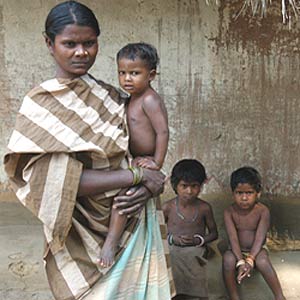
Red terror?: A tribal woman with her children in Dantewada

The low, flat-topped hills of south Orissa have been home to the Dongria Kondh long before there was a country called India or a state called Orissa. The hills watched over the Kondh. The Kondh watched over the hills and worshipped them as living deities. Now these hills have been sold for the bauxite they contain. For the Kondh it’s as though god has been sold. They ask how much god would go for if the god were Ram or Allah or Jesus Christ?

Perhaps the Kondh are supposed to be grateful that their Niyamgiri hill, home to their Niyam Raja, God of Universal Law, has been sold to a company with a name like Vedanta (the branch of Hindu philosophy that teaches the Ultimate Nature of Knowledge). It’s one of the biggest mining corporations in the world and is owned by Anil Aggarwal, the Indian billionaire who lives in London in a mansion that once belonged to the Shah of Iran. Vedanta is only one of the many multinational corporations closing in on Orissa.

If the flat-topped hills are destroyed, the forests that clothe them will be destroyed too. So will the rivers and streams that flow out of them and irrigate the plains below. So will the Dongria Kondh. So will the hundreds of thousands of tribal people who live in the forested heart of India, and whose homeland is similarly under attack.

In our smoky, crowded cities, some people say, “So what? Someone has to pay the price of progress.” Some even say, “Let’s face it, these are people whose time has come. Look at any developed country, Europe, the US, Australia—they all have a ‘past’.” Indeed they do. So why shouldn’t “we”?

In 2008, an expert group appointed by the Planning Commission submitted a report called ‘Development Challenges in Extremist-Affected Areas’. It said, “the Naxalite (Maoist) movement has to be recognised as a political movement with a strong base among the landless and poor peasantry and adivasis. Its emergence and growth need to be contextualised in the social conditions and experience of people who form a part of it. The huge gap between state policy and performance is a feature of these conditions. Though its professed long-term ideology is capturing state power by force, in its day-to-day manifestation, it is to be looked upon as basically a fight for social justice, equality, protection, security and local development.” A very far cry from the “single-largest internal security threat”. Since the Maoist rebellion is the flavour of the week, everybody, from the sleekest fat cat to the most cynical editor of the most sold-out newspaper in this country, seems to be suddenly ready to concede that it is decades of accumulated injustice that lies at the root of the problem. But instead of addressing that problem, which would mean putting the brakes on this 21st century gold rush, they are trying to head the debate off in a completely different direction, with a noisy outburst of pious outrage about Maoist “terrorism”. But they’re only speaking to themselves.

The people who have taken to arms are not spending all their time watching (or performing for) TV, or reading the papers, or conducting SMS polls for the Moral Science question of the day: Is Violence Good or Bad? SMS your reply to…. They’re out there. They’re fighting. They believe they have the right to defend their homes and their land. They believe that they deserve justice.

Odd that the Centre was ready to talk to Pakistan even after this, but is playing hard when it comes to the poor

OI

Raj Kapoor in Phir Subah Hogi (There will be a new dawn)

Song:             “CHEEN AUR ARAB HAMARA”
Singer:            MUKESH,
Lyrics:             SAHIR LUDHIANVI,
Music Director:  KHAYYAM
Film:                “PHIR SUBAH HOGI – 1958”

This film was based on Fyodor Dostoevsky’s novel: Crime and Punishment.

All the Land is ours but we are Homeless

By Sahir Ludhianwi

China and Arabia are ours
India is ours too
There is no place (for us) to live
But the entire world is ours

Our hovel has been snatched away
And the (city) benches too,
Now wandering the streets
Is this life caravan of ours

Our pockets are empty
Therefore they curse us:
That sentry of ours
And that warden of ours

All the existing buildings,
The rich have divided ownerships
The foothpaths of Bombay
Are now homes of ours

To get sleep, we qalandar
Come to the sea port:
Where every coolie
Is a confidant of ours

Incomplete is our education:
We cannot find work.
Who would know
The depth of the hidden pain of ours?

Feeble is our condition
But our blood is strong.
Of steel is made
Every youth of ours

Together we will adorn
This country in such a way
That the entire world will gape
In astonishment at this country of ours

China and Arabia are ours
India is ours too
There is no place for us to live
But the entire world is ours.

Translated from Hindi/Urdu by B. R. Gowani

Women’s development core component of economic growth

26/10/2009

Women’s access to economic and financial resources is critical not only for the achievement of gender equality, but also for sustainable economic development.


Sewing workshop

That is the focus of the 2009 World Survey on the Role of Women in Development. Lead author Naila Kabeer says when women do well, the economy does well, but the reverse is not always true.

“Cross-country studies, studies over time all show that gender equality contributes to economic growth – equality in education and equality in labour force participation. But there are reasons for concern, and that is economic growth does not seem to have quite the same positive impacts on gender equality.”

Ms. Kabeer points to the slow pace in lowering maternal mortality as an indicator that countries are not investing enough of their wealth in women’s health and well-being. The study calls for expanding women’s access to credit and other financial services. It also recommends that countries make gender equality in employment a core component of their national development strategies.

Bissera Kostova, UN Radio.

(duration: 1’08”)

UMM

A Wife’s Letter

By Rabindranath Tagore
Translated from Bengali by Prasenjit Gupta

To Thine Auspicious Lotus-Feet:

Today we have been married fifteen years, yet not until today have I written you a letter. I’ve always been close by your side. You’ve heard many things from me, and so have I from you, but we haven’t had space enough to write a letter.

Now I’m in Puri on a holy journey, and you are wrapped up in your office work. Your relationship to Calcutta is a snail’s to its shell–the city is stuck fast to you, body and soul. So you didn’t apply for leave. It was the Lord’s desire, and so was His granting me my leave application.

I am Mejo-Bou, the second bride in your joint family. Today, fifteen years later, standing at the edge of the ocean, I understand that I also have other relationships, with the world and the World-Keeper. So I find the courage to write this letter. This is not a letter from your family’s Mejo-Bou. Not from the second wife.

Long ago, in my childhood days–in the days when my preordained marriage to you was known only to the Omniscient One who writes our fates on our foreheads–my brother and I both came down with typhoid fever. My brother died; I survived. All the neighborhood girls said, “Mrinal’s a girl, that’s why she lived. If she’d been a boy, she couldn’t have been saved.” Jom-Raj is wise in his deadly robbery: he only takes things of value.

No death, then, for me. It is to explain this at length that I sit down to write this letter.

When your uncle–a distant relative–came with your friend Nirod to view your prospective bride, I was twelve. We lived in an inaccessible village where jackals would call even during the day. Fourteen miles from the railway station by ox-cart, then six more on an unpaved road by palanquin; how vexed they were. And on top of that, our East-Bengal cookery. Even now your uncle makes jokes about those dishes.

Your mother wanted desperately to make up for the plain appearance of the first bride with the good looks of the second. Otherwise why would you have taken all the time and trouble to travel to our distant village? In Bengal no one has to search for jaundice, dysentery, or a bride; they come and cleave to you on their own, and never want to leave.

Father’s heart began to pound. Mother started repeating Durga’s name. With what offering could a country priest satisfy a city god? All they could rely upon was their girl’s appearance. But the girl herself had no vanity; whoever came to see her, whatever price they offered for her, that would be her price. So even with the greatest beauty, the most perfect virtues, a woman’s self-doubt can never be dispelled.

The terror of the entire household, even the entire neighborhood, settled like a stone in my chest. It was as if the day’s sky, its suffusing light, all the powers of the universe were bailiffs to those two examiners, seizing a twelve-year-old village girl and holding her up to the stern scrutiny of those two pairs of eyes. I had no place to hide.

The wedding flutes wailed, setting the skies to mourn; I came to live in your house. At great length the women tabulated all my shortcomings but allowed that, by and large, I might be reckoned a beauty; and when my sister-in-law, my Didi, heard this, her face grew solemn. But I wonder what the need was for beauty; your family didn’t love me for it. Had my beauty been molded by some ancient sage from holy Ganga clay, then it might have been loved; but the Creator had molded it only for His own pleasure, and so it had no value in your pious family.

PB

Cross-linked crises and their impact on education, health and the access to food

An inconvenient truth

By Marcela Ballara

In 2006, an international financial crisis started to brew, leaving long-lasting after-effects on the countries’ economies. In 2007, this crisis moved on to Europe, Japan and other developed countries, resulting in global economic crisis, recession in the world economy, commerce and financial flows reduction and finally in the increase of unemployment.

The financial and economic crises impacted, to a larger extent, on the poor countries of the world’s regions. They were affected by the increase of inflation, unemployment and the reduction of income in the poorest population sectors.

These combined crises brought about a global food crisis as well as difficulty in the access to food, health and education, especially for women, children and indigenous people. The latter were the most affected, particularly those who live in rural areas or in marginal urban areas.

This is the backdrop for CONFINTEA and the FISC. Hence we should ask how will the agreements emerging from these events influence on this two-fold crisis that has become systemic.

What the numbers say

At global level, estimates show that approximately 160 to 200 million people fell into extreme poverty between 2005 and 2008 by the effect of the combined crises. This affected the access to food in particular, enhancing famine in the world. Data by FAO (2009) and the World Bank (2008) show that:

– At global level, estimates show that 160 to 200 million people fell into extreme poverty on account of the rise in food prices
– The number of undernourished persons at global level has been increasing. Between 2004 and 2006 this number went up to 870 million people; these figures rose to 915 million people as a result of the food crisis. Between 1990 and 2006, Latin America and the Caribbean was the only region that achieved hunger reduction, going from 53 million people to 45 million people; however, estimates show that on account of the food crisis these levels will revert to those of the ‘90s.
– Due to the economic crisis, 100 million more people will suffer from hunger by the end of 2009
– For geographic, cultural reasons and on account of the difficulty in the access to basic services and food, indigenous people will be the most affected by hunger and malnutrition in relation to non-indigenous groups
– The financial and economic crisis will result in 200 thousand to 400 thousand additional average child deaths per year for the period 2009-2015; most of them will be girls’.

The economic and financial crises appear as the main threats to household income because of increasing unemployment, loss of quality labor sources, reduction of remittances and food prices increase. The low growth of economy implies the loss of jobs, the increase of informal employment with neither social security coverage nor labor rights. Women and indigenous people will the ones who will loose the most.

Decent labor at a crossroads

The increase of unemployment, added to the rise in the cost of life due to inflation, has meant a double burden for households, causing a reduction of real income and consequently a crisis in the access to food, education, health, among other basic goods. People living below the poverty line are even more vulnerable given their scarcity of goods and assets and due to the restrictions they face to adapt themselves rapidly to this new situation.

As a consequence, employment and labor market policies cannot be absent from the strategies aimed at overcoming poverty, including the so-called active policies to generate employment and provide support in terms of training and labor insertion so that employment becomes an alternative to improve the income and living conditions of ample social sectors presently living in poverty and extreme poverty.

It is worth mentioning that the structural adjustments of the ‘80s dismantled the system of public agencies devoted to support the poorest sectors of the population. The role of the State was reduced and the functions that had been dismantled were taken over by private actors. Neoliberal positions argued that by following those guidelines costs would be reduced and the quality and efficacy of services – among them, education- would be improved. In general this did not happen and it resulted in the escalating prices of the services provided, which lacked quality control and which diminished the welfare of the population in general, and of women, indigenous people, children and older people in particular. Education and health were some of the most affected areas by privatization.

Climate change and its impact on the population

AN

Dubai’s hidden victims of recession

By Simeon Kerr

Published: November 5 2009 02:00 | Last updated: November 5 2009 02:00

Salim*, a 28-year-old Bangladeshi worker in Dubai, lives on the cusp of disaster. One false move and the four-year veteran of the city will be arrested, detained and, if he’s lucky, deported home to his family. The father of two lost his passport when the construction company for which he was working went bust. All attempts to retrieve the documents failed.

Salim was then taken on illegally by a chemicals company. But as the recession started to bite late last year, the business struggled and farmed him out to building sites for casual work. When he refused these jobs because of the risk of being discovered by government labour inspectors, the foreman docked his wages. “We don’t go out much at night, in case we get caught by the police,” he says.

Salim lives with 80 other Indians, Nepalese and Bengalis in the down-at-heel Satwa neighbourhood, wedged in between the leafy villas of upmarket Jumeirah and the towers of Sheikh Zayed Road. He shares his room with a dozen other illegal workers, who hang their worldly possessions in plastic bags that adorn the walls like Christmas decorations. The bedrooms and cooking areas are overrun with cockroaches.

Stranded without a regular job and with no legal identification documents, Salim and his housemates are some of the tens of thousands of illegal workers that make up the United Arab Emirates’ grey economy.

These workers have carved out a significant niche as they undercut labourers in the formal economy, who come with extra costs, such as visas and basic

FT

Petition To: University of Trondheim, Norway

To: University of Trondheim, Norway

“Right and wrong are the same in Palestine as anywhere else. What is peculiar about the Palestine conflict is that the world has listened to the party that has committed the offence and has turned a deaf ear to the victims.”
–Famed British Historian Professor Arnold Toynbee

“In the name of justice there cannot be subjection and in the name of peace
there cannot be impunity.
–President Alvaro Uribe Velez of Colombia

“Neutrality helps the oppressor, never the victim. Silence encourages the tormentor, never the tormented.”
— Elie Wiesel

The Honorable Marit Arnstad, Chairman of the board

The Honorable Rector Torbjern Digernes

Norwegian University of Science and Technology

Trondheim, Norway

Rarely in history do individuals, minority groups, or institutions have an opportunity to courageously adopt a principled unpopular stand that could be transformative in world affairs.

For sometime during the genocide of Gaza it was two extraordinary Norwegian physicians and humanitarians who risked their lives to save the lives of Gazans.

‘This is what hell must look like’

Two Norwegian doctors witnessed first-hand the nightmare scenes inside Gaza
Guardian, January 16, 2009

Norway has always been known for its worldwide humanitarian efforts and generous foreign aid. It is no coincidence that Norway is always ranked first in the world by the United Nations.

The Norwegian University of Science and Technology (NTNU) has just such a historic opportunity tomorrow when it considers voting for an academic boycott of Israel, a nation that for too long has lived by violence, ethnic cleansing, military expansionism, illegal occupations, subjugation of millions of innocent Palestinians, defied all divine and international laws that respect and value human life, and that since its establishment has committed countless terrorist acts and war crimes, lately documented by the Goldstone Report, all with impunity, never accountable for its actions in courts of justice, the U.N., or to all of humanity. The West, especially the U.S., has constantly protected Israel’s interests at the expense of its own interests.

You may remember this headline in Aftenposten, 12/1/06:

“USA threats after boycott support”

“US Secretary of State Condoleezza Rice threatened Norway with “serious political consequences” after Finance Minister and Socialist Left Party leader Kristin Halvorsen admitted to supporting a boycott of Israeli goods.”

A quote by the Nobel Prize Winner Alexander Solzhenitsyn encompasses both Israel’s non stop violence against innocent Palestinian, Lebanese, Syrian, Egyptian, and Jordanian civilians and its brilliant intimidating propaganda that established the persecutor as the persecuted.

“Violence can only be concealed by a lie, and the lie can only be maintained by violence. Any man who has once proclaimed violence as his method is inevitably forced to take the lie as his principle.”

As a former academician I plead and urge you to take the only righteous stand possible against Israel and that is for your esteemed University to vote yes on an academic boycott of Israel. Your courage will open the door for Universities and other institutions around the world to follow your example.

In 1982 Sharon invaded Lebanon committing a widespread genocide that began in Southern Lebanon and ended in a three month devastating siege of Beirut, a city overwhelmed by hundreds of thousands of refugees from Southern Lebanon who fled the Israeli army’s advance. This genocide resulted in the murder of 20,000 Lebanese and Palestinian civilians other than the cold blooded massacre of 1,700 Palestinians in the refugee camps of Sabra and Chatila. Under Sharon’s protection, encouragement, and direction, the Christian Phalangists shed the blood of men, women, the elderly, and children. Sharon even provided powerful night lights for the murderers’ to commit their slaughter. All the world could do is condemn the massacre without laying blame on Israel.

From the air, sea, and land Sharon unleashed his murderous campaign upon a crowded urban city bombing churches, mosques, hospitals, schools, orphanages, retirement homes, electrical and water plants, roads, bridges, the airport and sea port; not even ambulances and medics were spared.

He would bomb bakeries where men, women, and children stood in long lines for scarce bread.

Planes would bomb an area and await the gathering of ambulances, medics, and citizens to pull persons out of the wreckage only to bomb it again to inflict more casualties.

Ambassador Phil Habib, Reagan’s personal envoy to stop the genocide in Beirut worked hard to reach a peace agreement between Sharon and Lebanon while promising the safety of the Palestinian civilians upon the departure of Yasser Arafat and the PLO from Lebanon. However, he discovered that Israel could never be trusted to keep its word.

In John Boykin’s book, “Cursed is the Peacemaker” (2002, Applegate Press) he quotes Ambassador Habib as saying.

“I had signed this paper which guaranteed that these people in west Beirut would not be harmed. I got specific guarantees on this from Bashir (President of Lebanon) and from the Israelis–from Sharon’. He said he ‘had been given assurances… that no action would be taken against the Palestinians remaining in the camps…. On the basis of those assurances we (Americans) had given our word. We had been deceived…. Sharon was a killer, obsessed by hatred of the Palestinians,’ Habib said. ‘I had given Arafat an undertaking that his people would not be harmed, but this was totally disregarded by Sharon whose word was worth nothing.'”

As is customary with Israel and U.N. Resolutions, Israel defied and rejected over a dozen UN Security Council Resolutions asking Israel to at least allow humanitarian aid into Beirut.

Israel’s intransigence to make peaceful concessions to the Palestinians that they too may enjoy the freedom, liberty, and independence their occupiers enjoy makes us all complicit in this tragedy with our silence and inaction.

“He who passively accepts evil is as much involved in it as he who helps to perpetrate it. He who accepts evil without protesting against it is really

cooperating with it.”
–Dr. Martin Luther King, Jr.

It is shocking that the world accepts Israel’s genocides and threats against its neighbors as fait accompli without regard to the never ending suffering of Palestinians under its brutal military occupation. Palestinians and Lebanese die, suffer, and endure in silence in a world conditioned to accept Israel’s “right to self defense”, a euphemism for wanton murder. They die in silence absent from the western conscience due to the blanket support of most western media outlets, none more so than in America ,the nation exporting democracy and freedom through smart bombs and biased politicians who if dare to criticize Israel jeopardize their ambitions and become the recipients of the worst media smears. In the U.S. no debate or action is allowed against Israel neither by our own “never challenge Israel” government nor by our staunchly Pro Israel media.

The academicians and experts invited to your university to speak on this issue know first hand their personal victimization at the hands of Pro Israel forces. They have risked much for the truth and are honorable men and women.

Please do the right thing and vote for an academic boycott of Israel, a nation that is neither civilized nor democratic, by setting an educational precedent for your university, faculty, alumni, but most importantly for your students, that standing up for principle is the foundation for all just laws and human rights for all peoples and not just the powerful few.

Teach them to adopt “freedom from fear” as their guiding principle in life while facing all challenges, especially challenges that discriminate between the powerful and the weak, the haves and have nots, that no people should be victimized by the power of money and weapons.

“”Freedom from fear” could be said to sum up the whole philosophy of human rights”

–The late Honorable Dag Hammarskjold

“Giving Flight To Dreams”….Yes, we dare to dream, we dare to act.

Sincerely,

http://www.petitiononline.com/boycott9/petition.html

(Submitted by Ingrid B. Mork)