
by FERNANDA WENZEL
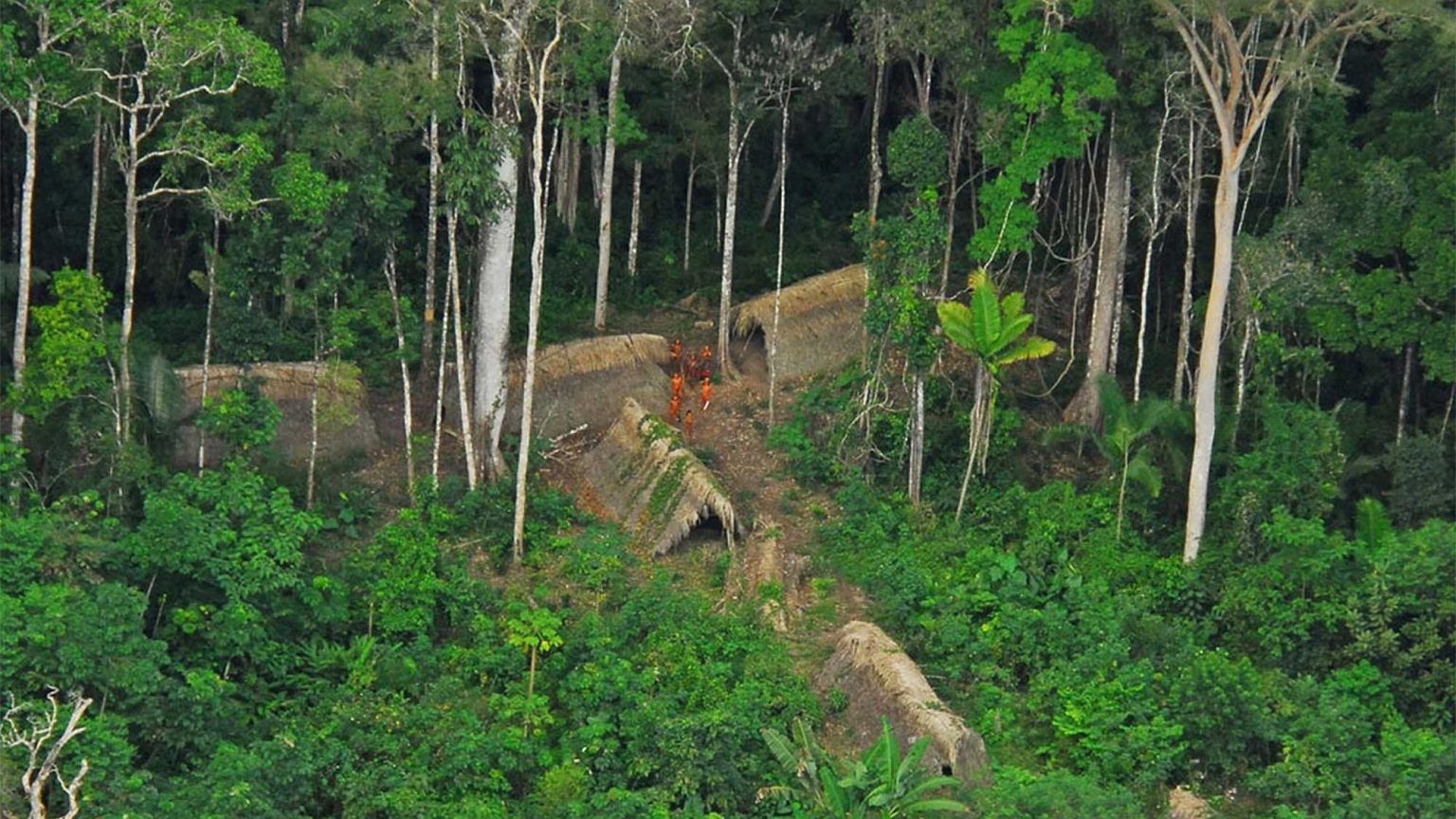
Brazil’s highest court has upheld a ban on missionary activity inside reserves that are home to isolated or recently contacted Indigenous people, in a bid to protect the communities against COVID-19.
Although the country’s official indigenist policy toward these groups since 1987 has been to not engage in any contact, regardless of whether there’s a pandemic, a federal law passed in July 2020 allows religious missionaries to remain inside these reserves. This triggered a lawsuit by Indigenous and political organizations, which the Supreme Federal Court (STF) has now ruled in favor of.
The 2020 law attempted to “legitimize something that is already forbidden,” said Carolina Ribeiro Santana, a lawyer for the Observatory for the Human Rights of Isolated and Recently Contacted Indigenous Peoples (OPI), one of the co-authors of the lawsuit. “As we are under an anti-Indigenous government, it is important to have a decision which reassures the Indigenous policy.”
OPI authored the lawsuit along with the Articulation of the Indigenous Peoples of Brazil (Apib) — the country’s largest Indigenous organization — and the Workers Party (PT). Justice Luís Roberto Barroso issued the court’s ruling on September 24.
Last year, the court had already forbidden the entry of outsiders into these areas while hearing another case where Indigenous organizations urged the federal government to implement measures, including imposing sanitary barriers, to protect the Indigenous population from COVID-19.
“In the current situation, where there is an ongoing pandemic, the peoples in isolation and recent contact are the most exposed to the risk of contagion and extinction,” Barroso said in that earlier ruling.
But threats against uncontacted Indigenous groups have escalated under the government of President Jair Bolsonaro, who has called for Indigenous people to be “integrated into society.” Bolsonaro’s hostility toward Indigenous people is no secret; last year, in his weekly live transmission on social media, he declared that, “more and more, the Indigenous is a human being just like us.”
At the same time, Bolsonaro is hugely popular with Brazil’s evangelicals, who are credited with helping him win the 2018 election. (His middle name translates to “Messiah.”)
Once in office, he appointed evangelical leaders to key posts in his administration, including Ricardo Lopes Dias, who, until November 2020, headed the department responsible for protecting isolated and recently contacted communities at Funai, the Indigenous affairs agency.
Brazzil for more