
by TAYO BERO
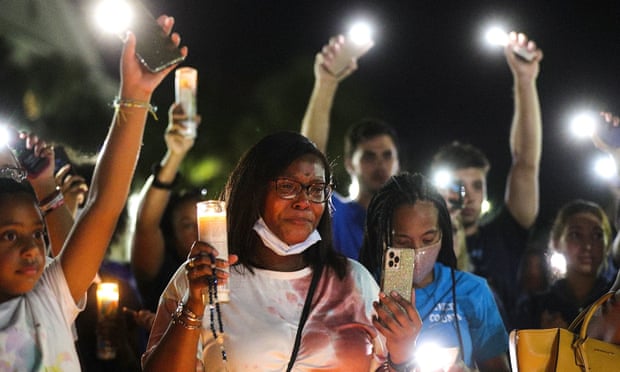
I don’t want to learn how to protect my drink in a club, or buy a contraption to make sure my door stays locked. I want to live in a world where women like Miya Marcano don’t live in fear
Here we go again. Every time a woman is a victim of male violence, there is a major public discussion on how they can “protect” themselves.
Last week, a British police commissioner said that Sarah Everard, an English woman killed in March by a police officer, “never should have submitted” to the false arrest that led to her rape and murder. “Women, first of all, need to be streetwise about when they can be arrested and when they can’t be arrested,” the commissioner said. Everard’s killer, Wayne Couzens, had falsely arrested her for supposedly violating London’s Covid regulations.
This week, Florida police found the body of a missing woman, Miya Marcano. Marcano was being harassed by Armando Manuel Caballero, a maintenance worker in her building whose advances she had turned down several times before she went missing. Police are pretty sure that Caballero, who killed himself before he could be arrested, was responsible for Marcano’s death.
As news of Marcano’s disappearance and death spread, my social media timelines were flooded with posts about how other women can prevent a similar fate from befalling them. While I can understand women’s instinct to figure out how to protect ourselves in a society that clearly won’t, this endless focus on women’s actions is tantamount to victim-blaming, and perpetuates the bizarre idea that women can somehow have agency over the actions of violent men.
It’s also a completely useless way of trying to address gender-based violence. Statistics show that one out of every six American women has been a victim of an attempted or completed rape in her lifetime, and poor, trans and racialized women are disproportionately affected by this. Almost 85% of American Indian and Alaska Native women have experienced some form of sexual violence, stalking or aggression by an intimate partner in their lifetime. In 2015, Black women were two and a half times more likely to be murdered by men than white women.
The Guardian for more