
by JONATHAN COOK
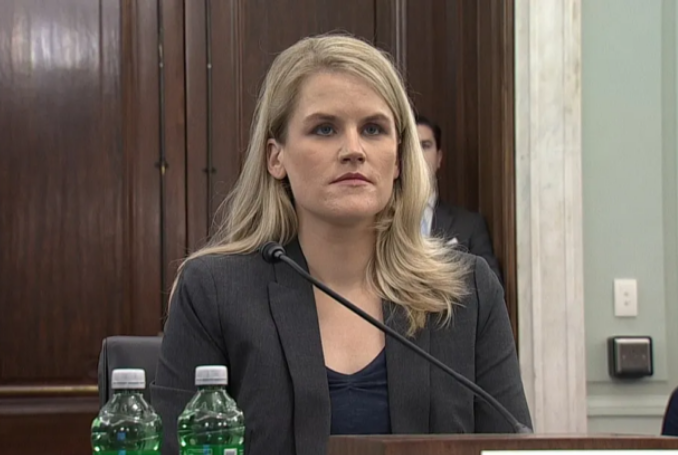
The enthusiasm with which much of the media and political establishment have characterized Frances Haugen as a “Facebook whistleblower” requires that we pause to consider what exactly we think the term “whistleblower” means.
Haugen has brought to the surface a fuzziness in what many of us understand by the idea of whistleblowing.
Even Russell Brand, a comedian turned soothsayer whose critical and compassionate thinking has been invaluable in clarifying our present moment, joined in the cheerleading of Haugen, calling her a “brave whistleblower”.
But what do Brand and other commentators mean when they use that term in relation to Haugen?
Manipulated Feeds
There are clues that Haugen’s “whistleblowing” may not be quite what we assume it is, and that two different kinds of activities are being confused because we use the same word for both.
That might not matter, except that using the term in this all-encompassing manner degrades the status and meaning of whistleblowing in ways that are likely to be harmful both to those doing real whistleblowing and to us, the potential recipients of the secrets they wish to expose.
The first clue is that there seems to be little Haugen is telling us that we do not already know – either based on our own personal experiences of using social media (does anyone really not understand yet that Facebook manipulates our feeds through algorithms?) or from documentaries like The Social Dilemma, where various refugees from Silicon Valley offer dire warnings of where social media is leading society.
We did not call that movie’s many talking heads “whistleblowers”, so why has Haugen suddenly earned a status none of them deserved? (You can read my critique of The Social Dilemma here.)
My latest: Netflix’s The Social Dilemma, featuring Silicon Valley whistleblowers, seeks to explain how Google and Facebook have pushed our societies to the brink of collapse.
The alarm is justified – but the film is able to tell only half the story https://t.co/YZhrcFx3P8
— Jonathan Cook (@Jonathan_K_Cook) September 25, 2020
But the real problem with calling Haugen a “whistleblower” is indicated by the fact that she has been immediately propelled to the center of a partisan political row – yet another example of tribal politics that have become such a feature of the post-Trump era.
Democrats see Haugen as a hero, blowing the whistle not only on overweening tech corporations that are taking possession of our children’s minds and subverting social solidarity but that are also fuelling dangerous Trumpian delusions that paved the way to January’s riot at the Capitol building.
Republicans, by contrast, view Haugen as a Democrat partisan, trying to breathe life into a liberal conspiracy theory – about Republicans. In their view, she is bolstering a leftwing “cancel culture” that will see wholesome conservative values driven from the online public square.
Deep, Dark Dungeon
Let’s set aside this tribalism for the moment (we will return to it soon) and consider first what we imagine whistleblowing involves.
Palestine Chronicle for more