
by PETER-ASTRID KANE
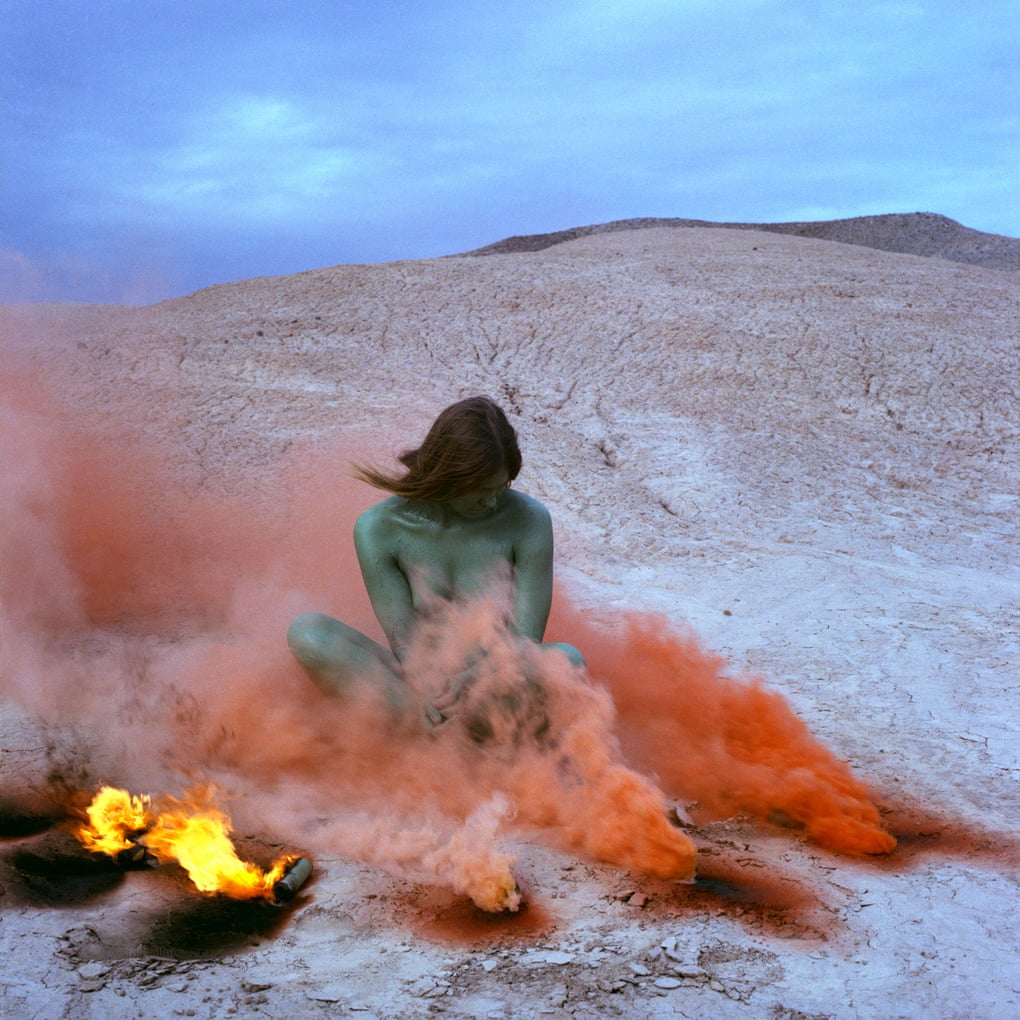
San Francisco’s de Young Museum honors the creator of The Dinner Party and a vast body of urgent work
Criticized at the time for an over-emphasis on white women and its stylized representations of vaginas, Judy Chicago’s room-sized installation The Dinner Party has only recently come to be seen as a canonical example of late-20th-century art.
Created over a five-year period (1974-79) and consisting of 39 elaborate place settings, it imagines a meal shared by notable women throughout history, such as Elizabeth I, Sojourner Truth, and the goddess Ishtar.
At times, The Dinner Party has overshadowed the rest of Chicago’s prodigious output, and she has professed a distaste for revisiting it or rethinking the list of invitees. When a museum director informed Chicago 40 years ago that it would be the culmination of her career, she says she responded with, “I’m just getting started.”
Indeed, she went on to create whole series on challenging or uncomfortable themes such as the Holocaust, birth, and toxic masculinity (long before that phrased gained currency).
A sweeping career survey at San Francisco’s de Young Museum confirms that The Dinner Party is only one of a number of Chicago’s monumental and often overlooked works, spanning painting, sculpture and needlecraft. Simply titled Judy Chicago: A Retrospective, it chronicles a six-decade career by an indefatigable artist who founded not one but two feminist-art programs, and adopted her name after a 1970 full-page ad in Artforum.
With little regard for the dictates of the art market, Chicago often worked at a very large scale, provoking audiences to have visceral responses to her pieces. Yet in spite of her facility with various media, she toiled in comparative obscurity for many years, her pieces languishing in storage or destroyed. The de Young’s exhibition is an overdue corrective.
“I used to refer to Rainbow Pickett as the piece that broke my heart, because now people refer to it as a masterpiece. But there was no interest in it in the ’60s, and I destroyed it,” Chicago told the Guardian at the retrospective’s opening last week. “It’s been very interesting to discover that work I did a long time ago had aesthetic potential that I didn’t understand at the time.”
Curator Claudia Schmuckli chose to present Chicago’s works in reverse chronological order. This stylistic decision foregrounds The End, Chicago’s series on extinction and environmental plunder, leading to her needlework-heavy Birth Series and the dynamic male faces and bodies of PowerPlay.
The Guardian for more