
by VACLAV MASEK
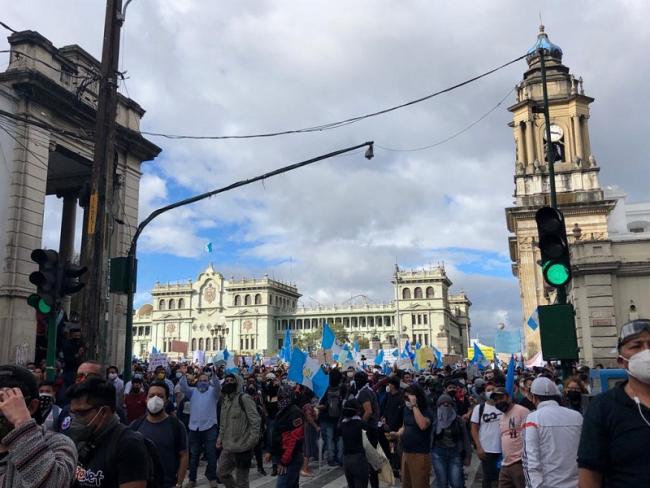
Congress suspended the latest budget bill following widespread protests against political elites and their self-serving pursuit of wealth and power.
Thousands of Guatemalans took to the streets on November 21, in a historic day of unrest against an austerity budget approved under secretive conditions.
The events that unfolded over the weekend will be etched into collective memory of Guatemalans, with the iconic images of flames engulfing Congress as the embodiment of rage against the stale political class. Thousands peacefully assembled in the middle of a pandemic to urge an end to incompetence and corruption at the highest echelons of the Guatemalan state.
At midnight Sunday, Congress suspended the spending bill, not without calling for “the harshest penalties” to those involved in the “terrorists acts” against the legislative building in Guatemala City’s Zona 1.
Regrettably, for Guatemalans and victims of counterinsurgent violence elsewhere, the authoritarian vestiges of the repressive state apparatus were also on full display: plainclothes security officers infiltrating among the demonstrators; riot police firing tear gas at peaceful crowds; arbitrary detentions of independent journalists; and outright police brutality against idle bystanders.
The nonviolent anti-government protests ended with at least 43 arrests, mostly university students who put their bodies on the frontlines to protect crowds gathered in front of the National Palace. Two protestors were operated on after sustaining eye injuries, and both lost their left eye.
Now, the demands that thousands rallied behind go beyond budgetary concerns. Guatemalans won’t back down until meaningful change is realized.
Five years ago a similar moment culminated in the ousting of disgraced president Otto Pérez Molina and vice president Roxana Baldetti. Guatemalans inevitably entertain the idea that these compounding crises, which now include a severe legitimacy issue and an enraged public, might ultimately result in a similar outcome.
The Budget Vote As Boiling Point
The main slogan that drove the masses to take the streets was clear and actionable: veto the legislature’s proposed austerity budget for 2021. Ironically, at Q99.7 billion (US$12.8 billion) the spending plan is the largest in Guatemala’s history, much of it financed by public debt incurred by IMF loans.