
by VERONICA HURTADO LOZADA
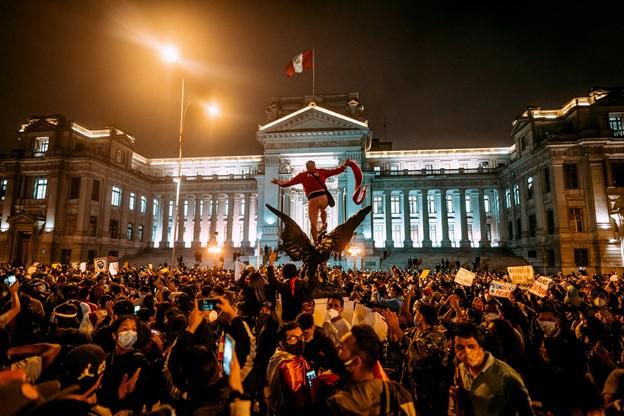
After President Martín Vizcarra’s impeachment, decentralized networks broke through Peru’s fragmented political landscape and mobilized unprecedented protests.
A year of escalating tensions between the legislative and executive branches of the Peruvian government came to a breaking point on November 9, when President Martín Vizcarra was impeached on grounds of “moral incapacity.” For the second time in two months,a coalition of lawmakers threatened by the anti-corruption investigations and policy reform that Vizcarra spearheaded attempted to remove him from office. Moments after the vote was called, Peruvians took to the streets to denounce what they viewed as an anti-democratic power grab.
Among them was a young Peruvian feminist named Diana Levi, who joined the protesters in Lima’s historic city center to voice her discontent with the Congress’s illegitimate move. Diana is part of the Brigada Verde (Green Brigade), a newly organized group of young activists who provide medical assistance to victims of police repression during protests.
Like Brigada Verde, hundreds of small, decentralized organizations formed through social media to coordinate the week-long mobilizations that ousted the interim president, Manuel Merino, his cabinet, and the Congress’ board of directors on November 15. On Tuesday, Francisco Sagasti was sworn in as president, replacing Merino. In a country characterized by fragmented and uncoordinated mobilization, the scale of the movement against Vizcarra’s impeachment was unprecedented. Why did discontent boil over now, and what is the future for this mobilization?
The day after the impeachment, people flooded Instagram, Twitter, and TikTok with the hashtag #MerinoNoMeRepresenta (#MerinoDoesNotRepresentMe) to shareinformation about protests around the country. In Lima, protesters met at 9 AM, during Merino’s swearing in ceremony, to express their disagreement with the impeachment.
Hundreds of Peruvians gathered with posters, flags, and musical instruments, and marched peacefully around the city center. However, once protesters approached Congress, police reacted using tear gas and batons. The first images of police repression inundated social media later that day and motivated massive participation in demonstrations across the country. Diana and a group of friends decided to create Brigada Verde shortly after.
In a network of feminists who share job opportunities online, Diana discussed the impeachment process and the unfairness of the outcome. For her, protesting was important to denounce Congress’s constant attack on democracy through populist policies, an endless battle with the president over the economic response to Covid-19, and corruption scandals that involved lawmakers and party leaders.