
by JOHN MARENBON
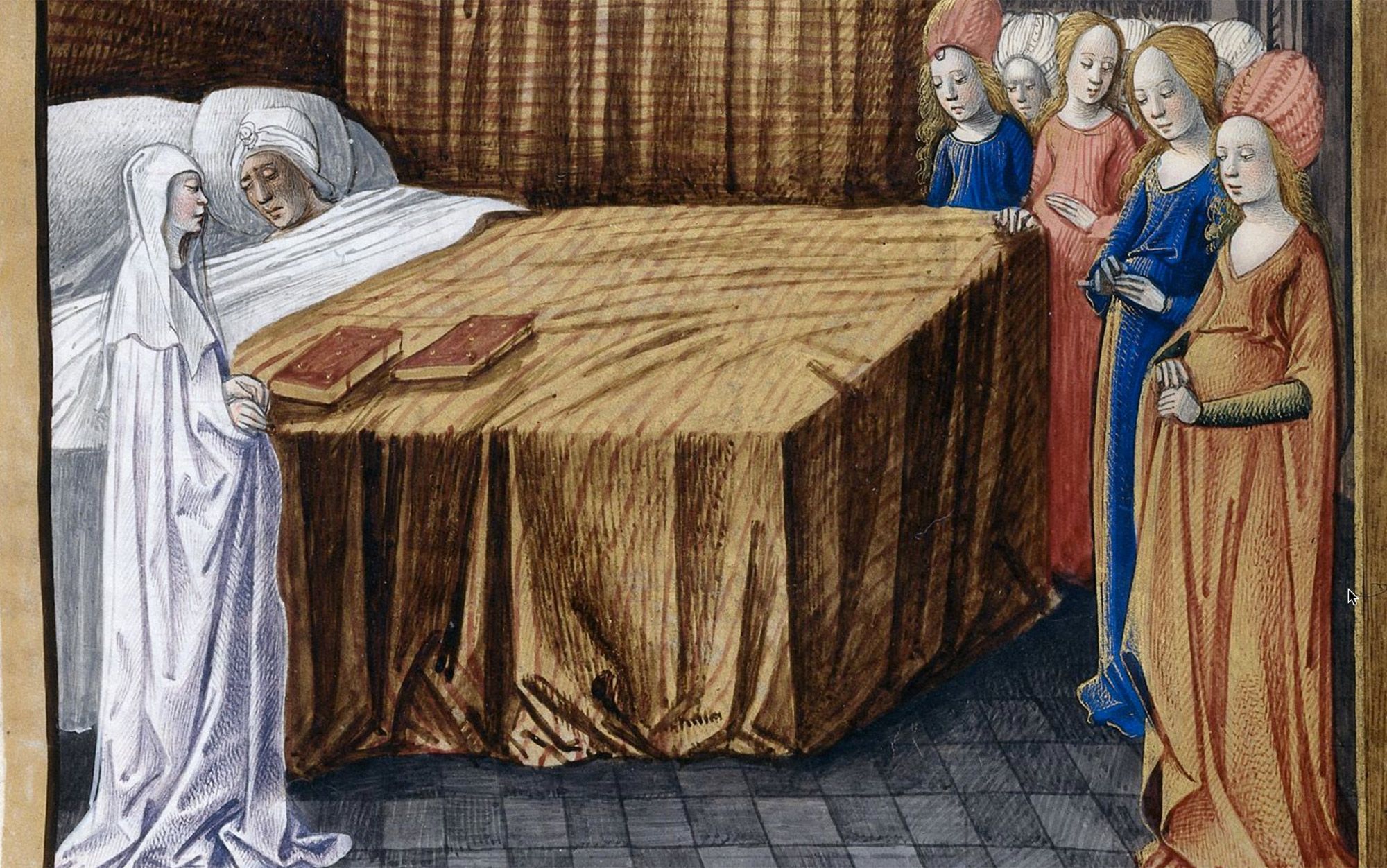
Written while awaiting execution, the Consolation of Philosophy poses questions about human reason that remain urgent today
For nearly a millennium, The Consolation of Philosophy by Boethius was a bestseller throughout Europe. It was read not only by those who could understand its 6th-century Latin original but also those who studied it in any of a multiplicity of translations, into Old and Middle English, Old French, Old High German, Italian, Spanish and many other languages, including Greek and Hebrew. Although Aristotle’s texts shaped the university curriculum, and Augustine’s thought was ubiquitous, in the period from 800 until about 1600 no other philosophical text could compete with the Consolation in its appeal – not just to the intellectual elite but to a much wider audience too. Yet now the work is the preserve of scholarly medievalists. Unlike Plato’s dialogues, for instance, or René Descartes’s Meditations, it no longer seems to carry a broad philosophical appeal. But, if read carefully, in its historical and literary context, it should do. The Consolation is a far more subtle work than it at first seems to be. While the medieval audience, for the most part, responded to its more obvious features, its hidden complexities and subtleties are what can open its appeal to readers now.
The Consolation is the product of the dramatic circumstances that ended its author’s life. Born around 476 CE, Boethius belonged to a rich, prestigious Roman family, and he lived most of his life enjoying the privileges of his class, participating in the ceremonies of the Senate, writing works and commentaries on mathematics, music and logic with the help of his education in Greek culture, and, though not a priest, taking part in theological controversies. But his birth had coincided with the beginning of Ostrogothic rule in Italy. Theodoric, the Gothic king, wanted good relations with the native Roman aristocrats, but they remained a threat to him. In the early 520s, he invited Boethius to become Master of Offices, his most important official. Boethius accepted, but his determination to root out corruption soon made him enemies, and Theodoric was willing to believe that Boethius was plotting against him. Found guilty of treason and other charges, Boethius was imprisoned, awaiting execution. This was when he wrote the Consolation, with his own circumstances as a condemned prisoner providing the setting.
The work is a dialogue between Boethius the Prisoner and a personification of Philosophy, in the shape of a beautiful woman who appears to him in his cell. The discussion is in prose, but it is interspersed with poems that summarise, comment on, take forward or provide another perspective to, the main line of the argument.
Aeon for more