
by THALIF DEEN
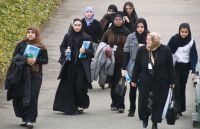 Women wearing the traditional Hijab attend the Commission on the Status of Women conference at U.N. headquarters. PHOTO/Bomoon Lee/IPS
UNITED NATIONS, Mar 4, 2010 (IPS) – The status of women in a predominantly male-chauvinistic Arab world continues to fluctuate from one extreme to another.
The political and cultural life in the region, by and large, has been characterised by the good, the bad and the ugly.
On the one hand are child marriages and honour killings (deemed barbaric) in the rigidly conservative countries, and on the other, are the appointment and/or election of women to high office (hailed as impressive success stories) in the relatively liberal countries.
“Women can already been seen in greater numbers in our parliament, ministries, judiciary, armed forces and police, and they have also assumed very senior positions in both public office and the private sector,” says Hala Latouf, head of the Jordanian delegation to the Commission on the Status of Women.
She also proudly notes that Jordan now has women governors, mayors, judges and ambassadors, in addition to women chief executive officers (CEOs) in key industries and businesses, consultative bodies and chambers of commerce and industry.
“The new draft law on elections is expected to allocate even greater number of (parliamentary) seats for women,” she declared.
On an equally positive note, Dr. Jouhaina Sultan Seif El-Issa, vice chairperson of Qatar’s supreme council for family affairs, points out that Qatari business women account for more than 50 percent of the total equity investors and dealers in the Doha Stock Market.
At the same time, the number of women-owned companies in Qatar now amount to nearly 1,500.
She said Qatar has established two Foundations: one, for child and women protection, and the other, to combat human trafficking.
Still, says Nadya Khalife of Human Rights Watch, most governments in the region discriminate against women in personal status laws which govern their everyday lives, including issues of marriage, divorce, custody and guardianship, and inheritance.
Inter Press Service for more