
by EVANS RUBARA
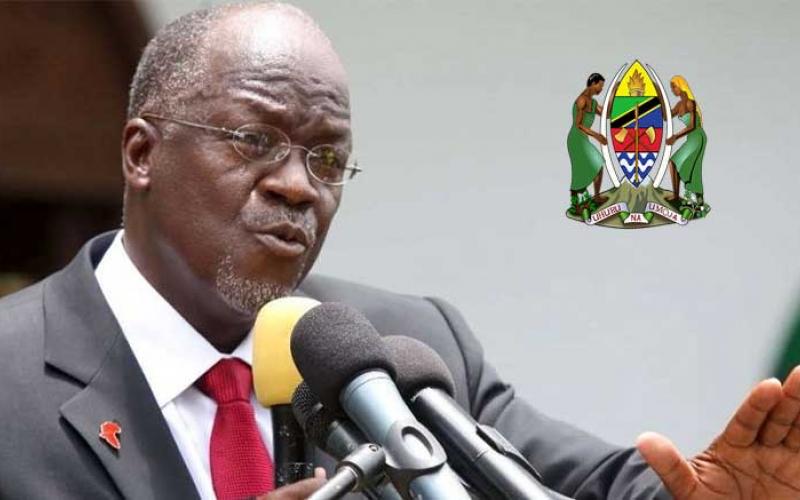 President John Magufuli of Tanzania PHOTO/Tanzania Invest
President John Magufuli of Tanzania aka the Bulldozer has embarked on a campaign to end the abusive exploitation of the country’s natural resources by greedy multinational extractivists. Caught in Magufuli’s cross hairs is the Canadian mining group Barrick Gold whose record globally is a litany of human, economic and environmental abuses.
“If I am dreaming, don’t wake me up…”, sang Afrikan reggae maestro Lucky Dube. On his mind was the celebration of the annunciation of the ‘revocation’ of the “Group Areas Act” in South Afrika, the apartheid law that restricted movement and residence of black people. It is not a surprise that I felt the same sentiments. For a different, yet similar, reason.
In my case, it was when the President of the United Republic of Tanzania, John Pombe Magufuli said words to the effect that: ‘massive pillaging of Tanzanian resources and oppression of already marginalised Tanzanians by multinational corporations must stop’. Since March 2017 when this Afrikan statesman, famously known as the “Bulldozer”, spoke words to that effect, a lot has been written and said. The discussion hasn’t stopped.
One thing that I have to clearly state is: I did not, at any time, imagine that at some point in my lifetime, I could witness a President in Tanzania who would openly criticise Barrick Gold Corporation and its subsidiaries. The Canadian multibillion-dollar miner has operations worldwide that are blighted by a litany of human, economic and environmental abuses.
A litany of rights violations
In the case of Tanzania, this whole discussion has brought to the fore, at least in my mind, the Bulyanhulu Case of 1996. Reports in the aftermath of this massacre shows that over 50 Tanzanian artisanal miners were buried alive. However, the headcount of people killed violently during ‘the clearing site’ in Bulyanhulu is a lot more.
Accounts from those who witnessed and experienced this first-hand, which have been denied and termed as lies by Barrick Gold Corporation and collaborators over the years, support the fact that those who died were more than the ‘accepted’ 52. Now, we are definitely not supposed to talk about this. Digging out dead bones is not forward looking, so the duty bearers claim. And the citizenry have accepted, out of fear.
I am also reminded of the ‘daily’ killings of fellow Tanzanians and the deliberate environmental pollution in the mining areas where Barrick Gold Corporation and its subsidiaries, such as what is now known as Acacia Mining, operate. Writing about it again, I suppose, only makes the hearers’ and readers’ aesthetics numb. Yet one hopes that somewhere in the hidden sections of the reader’s mind, such rewrites as these would aid a proactive readership to seek ways to act.
But even before such violent trends came in the wake of neoliberal capitalist market-led economic trajectories in the mid-1990s, Canadian ‘development’ projects in Tanzania had adverse impacts on local communities.
Here I am reminded of the Tanzania-Canada Wheat Complex (TCWC) project in the 1970s. This project facilitated the alienation of vast tracts of land from community members in Hanan’g. The same could potentially be said about mining operations by the Canadian extractive industry in Tanzania.
Even more prominent, my thoughts went to the story of the 13-year-old girl who, several years ago, was forced into a sexual act with a dog owned by an exploration staff working for Barrick Gold Corporation at a field in Sengerema. Reading through the Judge’s decision, all comes to mind is imagination of a girl bellowing in excruciating pain and a sense of disgust, “mayo nacha” (mother I am dying!).
It reads like a tale from some horror movie when the veterinary doctor who was asked for a report on his part said, “The dog just came from a medical check-up in south Africa, therefore no need to worry for any sexually transmitted disease!” Let alone the women who were raped by the Acacia Mining’s security personnel.
I call this ‘the Canadian historical human and economic rights violation in Tanzania’. A muddy yet true characterisation of the supposedly noble, human rights adherent and human dignity upholding Canadian government pursuing trade relations with the resource-rich yet economically poor Tanzania.
Pambuzuka for more