
by SUZI WEISSMAN
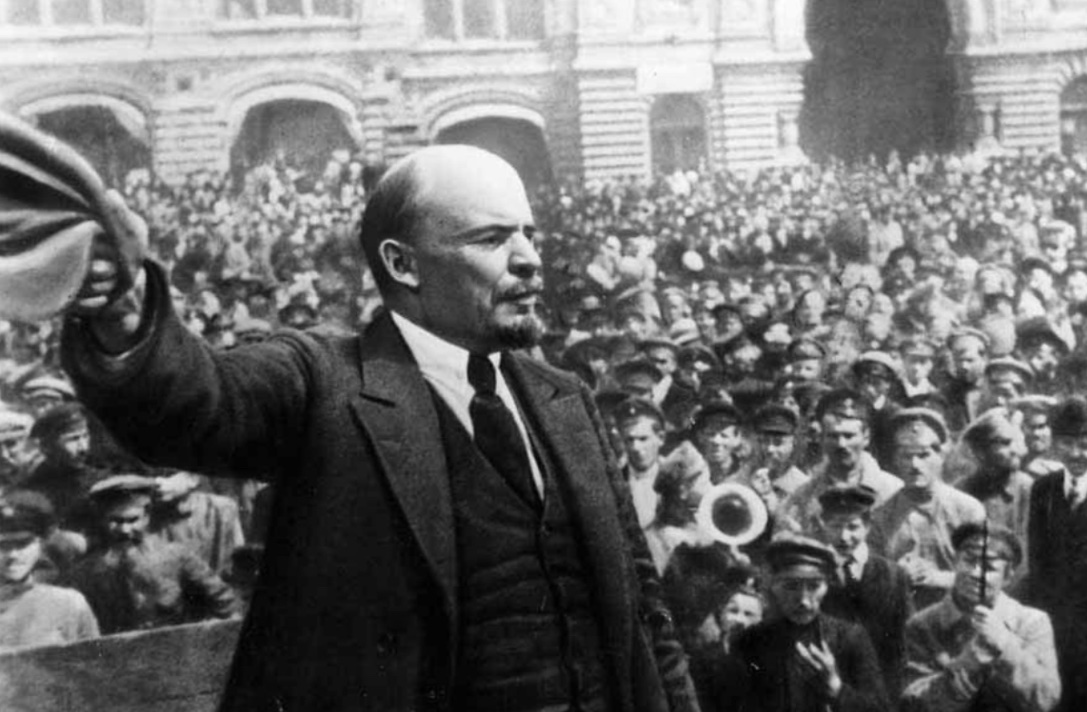 Russian leader Vladimir Lenin (1870-1924)
An interview with Tariq Ali
One hundred years after the Russian Revolution, Vladimir Lenin’s ideas on democracy, terrorism, and revolution still matter.
Writer, filmmaker, and journalist Tariq Ali’s new book The Dilemmas of Lenin: Terrorism, War, Empire, Love, Revolution, came out last month, in the centenary year of the Russian Revolution — and in April, exactly one hundred years since Lenin’s April Theses, the call to arms after the successful February Revolution which brought down the czar but didn’t bring the soviets to power.
Tariq’s book brings out an unknown Lenin, one who loved Latin literature and classical music, who was profoundly influenced by the political convulsions of the time that intimately affected his own family.
History sees Lenin as a ruthless dictator, so it may be surprising to hear about his commitment to democracy. In this interview with Jacobin Radio’s Suzi Weissman, Ali unravels the myths and slanders about Lenin’s role in history, helps us assess Lenin’s ideas and actions, and asks what relevance they have for today.
Suzi Weissman: In your new book, you give us a Lenin that we haven’t normally seen: his love of literature and Latin, and chess, and the impact of his brother’s death.
Tariq Ali: These are the things people don’t talk about, and for a variety of reasons. One reason is what the Soviet leadership did to Lenin after he died. This was a decision taken by the Politburo to mummify him, to display his body in public, to transform him into a Byzantine saint. It’s very much a tradition of the Orthodox Church. Even though some people on the Politburo were not in favor of it, they couldn’t fight it because it would have seemed very sectarian.
Lenin’s widow, Nadia Krupskaya, and his two sisters, pleaded with the leadership and said, “He would have hated it. He loathed all this sort of deification. Please bury him underneath the Kremlin walls where other leaders and activists have been buried. Do not do this to him.”
But they did do this to him, and it was a clever move. They could use Lenin, especially in the Stalin years — rebuild him as someone he wasn’t, forge photographs with him.
Stalin in particular did this. He of course met Lenin quite a lot at Politburo meetings, but to show that they were friends, a lot of photography was faked. Fake paintings were done to show that there’s a total continuity between Lenin, his thought, and what existed in the Soviet Union in the thirties.
Two different groups of people believed or believe this. One was the Stalinist leadership in Russia, and the second was the West.
In this, they had an unholy alliance. The Stalinists said, “What we are doing is a continuation of the work of comrade Lenin,” and what the West and its leaders and ideologues said was “Yes, Lenin is the basis of what is going on in the Soviet Union now.” These two giant state and ideological apparatuses combined to make people forget the real Lenin.
Underneath it all, there lay a very different political leader and theoretician.
Jacobin for more