
Dr. Hassan Nawaz Gardezi (19 February 1933 – 20 April 2017)
by IJAZ SYED
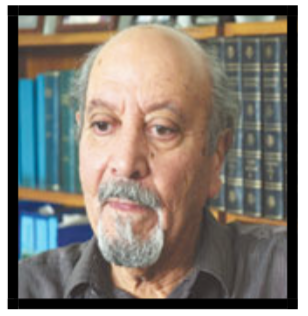 PHOTO/Pakistani Canadians
(Friends: Last time I personally spoke to him [Dr. Hassan Nawaz Gardezi (19 February 1933 – 20 April 2017)] was about two years ago. He was frail but very attentive. He remembered Pakistan Progressive (1976-1993- a quarterly political journal) very well, in which we had the honor of publishing several of his articles.
I want to thank Ijaz Syed for shedding light on his life and giving me the sad news.Asad Zaidi)
Dr. Hassan Nawaz Gardezi, one of the founding members of the Committeeof Progressive Pakistani-Canadians, passed on early this morning in Peterborough General Hospital. He truly had remained a lifelong and a tireless activist for justice, peace, secularism, and socialism, a huge inspiration to its members, friends, and associates. Death of a human being is always a sad affair. Somehow death of an individual always creates big craters in the lives of those who survive to see another day. But, when a person of such an intellectual and academic presence and stature, like Professor Gardezi, leaves from our midst the void left is simply impossible to bridge, the sorrow that follows exacts an enormous toll, the scars of the loss become indelible. Although his loss is impossible to even fathom, his contributions shall forever live to produce a universe of possibilities, a pathway to a just and a fair society.
Professor Gardezi had taught sociology to several cohorts in the reputable Canadian, American, and Pakistani universities. A large number of his students went on to become professors, journalists, writers, judges, lawyers, trade unionists. Many developed and maintained a lifelong relationship with him and his thoughtful spouse, Rosalie Gardezi. Whether in Pakistan or in Ontario or any place else that the Gardezis lived, their home was always a meeting place where intellectuals, activists, mandarins, and bohemians congregated. Lively discussions and debates were always welcomed. Hassan and Rosalie’s calming presence and amazing hospitality was a constant at these events.
After his retirement from being the head of the Department of Sociology at Algoma University at Sault Ste. Marie, Dr. Gardezi and Rosalie moved to Peterborough, Ontario. The choice of Peterborough was logical to them as their children were attending at the nearby universities. During his years of retirement, Hassan, maintained an exemplary life of an intellectual. Publishing regularly, attending and presenting papers at international conferences, engaging in activism for justice, peace, secularism, and socialism. He also wrote beautiful poems in his first language, Siraiki. He translated some classic Sufi tracts from the Siraiki language into the English language. His two-volume biography of Dada Amir Haider Khan, a leader of the Communist Party of India, presents a remarkable account of the emancipatory movements in the colonized South Asia and their nexus with the workers and peasant movements throughout the world.
As a visionary, Hassan always encouraged younger comrades and friends to organize. He indeed played a big part in organization of numerous organisations and associations struggling for just, fair, and peaceful society. Indeed, Hassan was instrumental in the organization of the CPPC. His vision is reflected in the mission of the CPPC. While we are still struggling to cope with the loss of this remarkable person, we continue to bask in the light of his vision, his compassionate and thoughtful fellowship and friendship, his unfathomable wisdom and generosity. Our hearts are with Rosalie and their beautiful children. May we all and may the Gardezis find peace.
Ijaz Syed can be reached at ijasyed@gmail.com & syedi@sbcglobal.net
Sufi mysticism of the Indus Valley
by HASSAN GARDEZI
 Activist/dancer Sheema Kermani performs at Lal Shahbaz Qalandar’s shrine just days after the bomb blast PHOTO/ Waheed Ali/Dawn
From the tyranny of religious dogma
Love will set you free.
_ Fakir Bedil (A Sindhi Sufi)
The rise of militant Islamic fundamentalism in conjunction with geo-political conflicts in different parts of the non-Western world has become the major focus of media and scholarly comment for the last few decades. What is being lost sight of in the process is the existence of a vibrant tradition of Islamic Sufi mysticism which still informs the daily lives and shared understandings of millions of ordinary Muslims around the world, with its message of love, tolerance, peace, equality, and respect for all creation.
The association of the words Sufi and Sufism with the English usage of the term mysticism often leaves the impression on those not too well acquainted with the Sufi way that it is some kind of a mysterious cult centred around enigmatic figures called Sufis. This impression may be reinforced if one approaches Sufism as a system of abstract ideas, but when encountered in real life the Sufi way turns out to be a body of practical wisdom or knowledge employed by people to live harmoniously with one another, with their natural environment and the world beyond. In contrast to the monolithic and doctrinaire projection of orthodox Islam the Sufi tradition exists in a rich variety of real life expressions blended with local cultures, and their semiotics, imagery and symbolism. The way of the Sufi can be best understood by looking at how it is articulated within a specific culture, country and climate (Shah, Idries, p. 9).
This paper will attempt to introduce the Sufi way by exploring one of its specific traditions that has taken shape over centuries, outside the mosque and the academy, in the Indus valley which now constitutes the heartland of Pakistan. The exponents of this tradition are a long line of Sufi poets of few pretensions but much wisdom who have made a creative use of the native languages of their land to establish a shared universe of discourse which brings close together people of different religions and ethnic backgrounds. But before we explore the content of this poetic tradition and its significance for the contemporary human communities, a few words about the geophysical and cultural history of the Indus Valley will be helpful to visualise the setting.
The Indus Valley The hing from the north-western foothills of the Himalayas to the Arabian sea in the middle of which the mighty Indus river has for centuries run a meandering course in a multitude of channels. The shifting landscape around the Indus also varies greatly ranging from verdant farmlands and orchards to forbidding deserts and barren mountain folds. In these constantly changing natural habitats have flourished and blended many cultural traditions since time immemorial. There are scattered throughout the land several sites of a neolithic urban civilization dating back to c3000 B. C. Mass migrations and invasions since 1500 B. C. brought into the Indus valley a great diversity of human races and cultural traditions including the Vedic Aryans, Greeks, Mongols, Turks, Persians, Afghans and Arabs. During the middle ages of Islam many contemplating and religious minded persons were attracted to the towns and cities of the Indus valley for their reputation for peaceful life and respect for the learned, thus setting the stage for the emergence of a rich tradition of Sufi poetry that has served to unify and synthesise the diverse cultural heritage of the people and their folk wisdom.
A Pioneer
A pioneering sage to compose Sufi poetry in Siraiki, one of the oldest native languages of the Indus valley was Shaikh Faridudin Shakarganj popularly known as Baba Fareed. A Sufi of the Chishti order, Fareed was born in c. 1175 A. D. of parents who had immigrated from Persia. Today a substantial part of his verse is incorporated in Adi Garanth, the most sacred book of the Sikh religion. He preached that the path to Divine Union that all Sufis seek lies in love of fellow human beings irrespective of colour creed or status. The following verse in Siraiki captures the motto of his life and the essence of his spirituality.
Every human heart is a pearl
If you seek the beloved, do not break anyone’s heart
No religion has monopoly of the path to God, neither do prestige and status make one human being superior than the other. This theme finds expression in a verse with much simplicity which is the hallmark of his style.
In conceit, I have kept the turban on my head free of dirt
Forgetful that my very head is to be consumed by dirt one day.
The metaphor of a clean turban is used here to debunk the illusion of prestige and superiority over others in the face of a common fate awaiting all human beings.
The Golden Age
What might be called the Golden Age of the Indus valley Sufi poetry spans some three hundred years beginning with the verse of Madhu Lal Hussain or Shah Hussain (c. 1539-1594 A.D.) who lived during the time of Moghal Emperor Akbar. From here on a succession of renowned Sufis composed poetry of rare beauty in the native language of the valley, Sindhi, Siraiki, Balochi and Punjabi to spread their message of love and tolerance. Although many of these poets came from a background of rigorous instruction in orthodox Islamic tradition and were well-versed in Persian and Arabic, they chose native languages of ordinary peasants and workers, as a medium of their literary expression. Unlike the Arab and Persian Sufi poets who use a great deal of complex symbolic expression, these poets use the straight idiom of their people. Their poetry is composed in lyrical forms set to the tunes of local folk music. Their mission is to reach the hearts of ordinary men and women. The similes and metaphors that they do employ are drawn from the vocations of the largely rural people, their domestic industries, kinship relations and social customs. For example, charkha, the spinning wheel, is a common symbol for this world, and the poets’s persona is represented as a maiden whose work of spinning cotton stands for good deeds. The “good deeds” in turn represent any time spent in contemplation of the Divine Beloved, the “God” of the monotheistic religions or the supreme deity of any religion, also represented as Truth or Eternal Reality. It should be noted here that the male Sufi in this tradition uses the female gender for himself or his surrogate and male gender for the object of his love. This tradition is consistent with the conventions of the ancient Indus Valley civilization where females were not dominated by men. Down the ages Hindus have celebrated the love of Radha for Krishna, and the legendary heroic lovers in the Punjabi and Sindhi folk-tales have been women; Heer pursued Ranjha, Sasi and Sohni gave their lives trying to unite with their male beloveds, Punnu and Mahiwal. Symbolically the beloved stands for God, the supreme deity of any religion or Universal Spirit, but in its human manifestation the male beloved in the Sufi poetry is a highly sensuous person of real life. This extends the appeal of Sufi love poems much beyond the circles of the initiated. `The love of another human being and divine love are not mutually exclusive. The love of another human being can be conceived as a bridge that leads to love of the Divine. Conversely a person who hates other human beings is devoid of true religious or spiritual experience and can never hope to receive divine blessing, no matter how much time spent on ritual prayers and worship.
Apna for more